
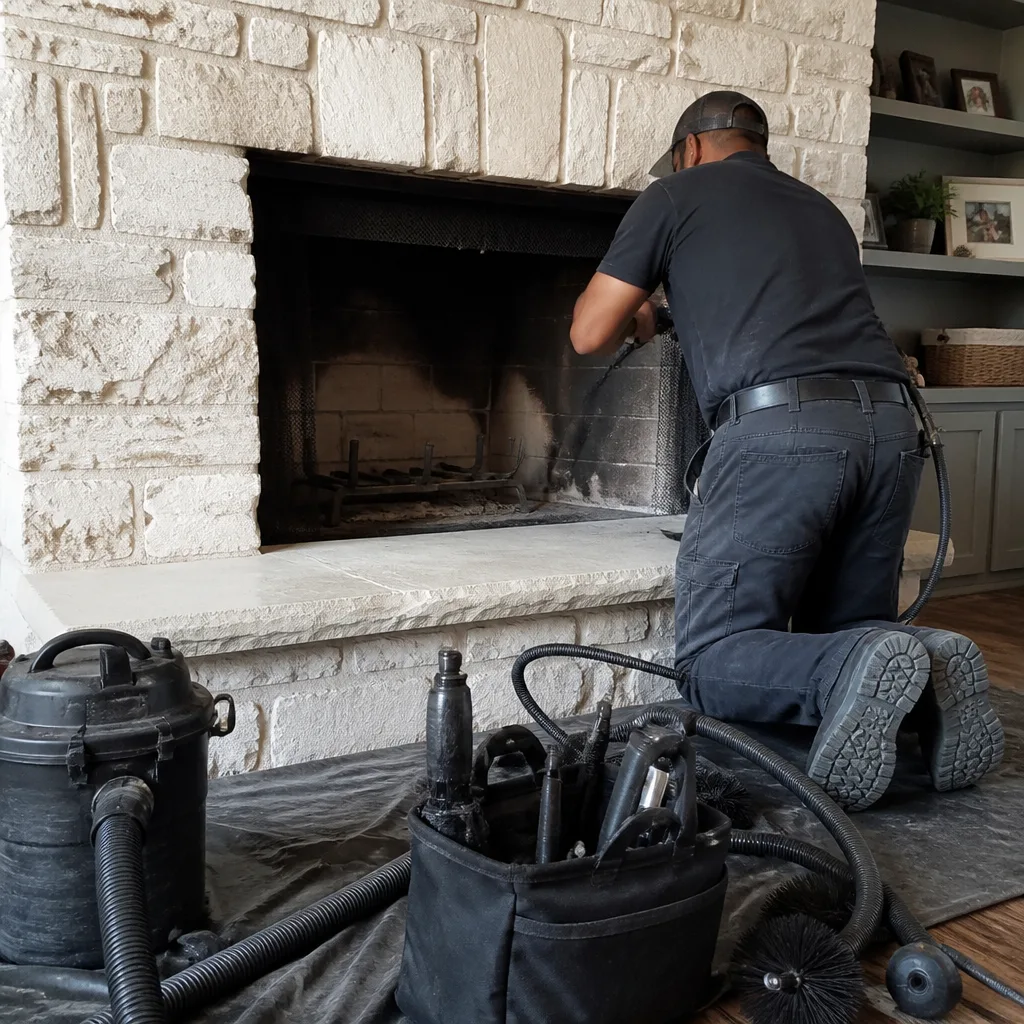
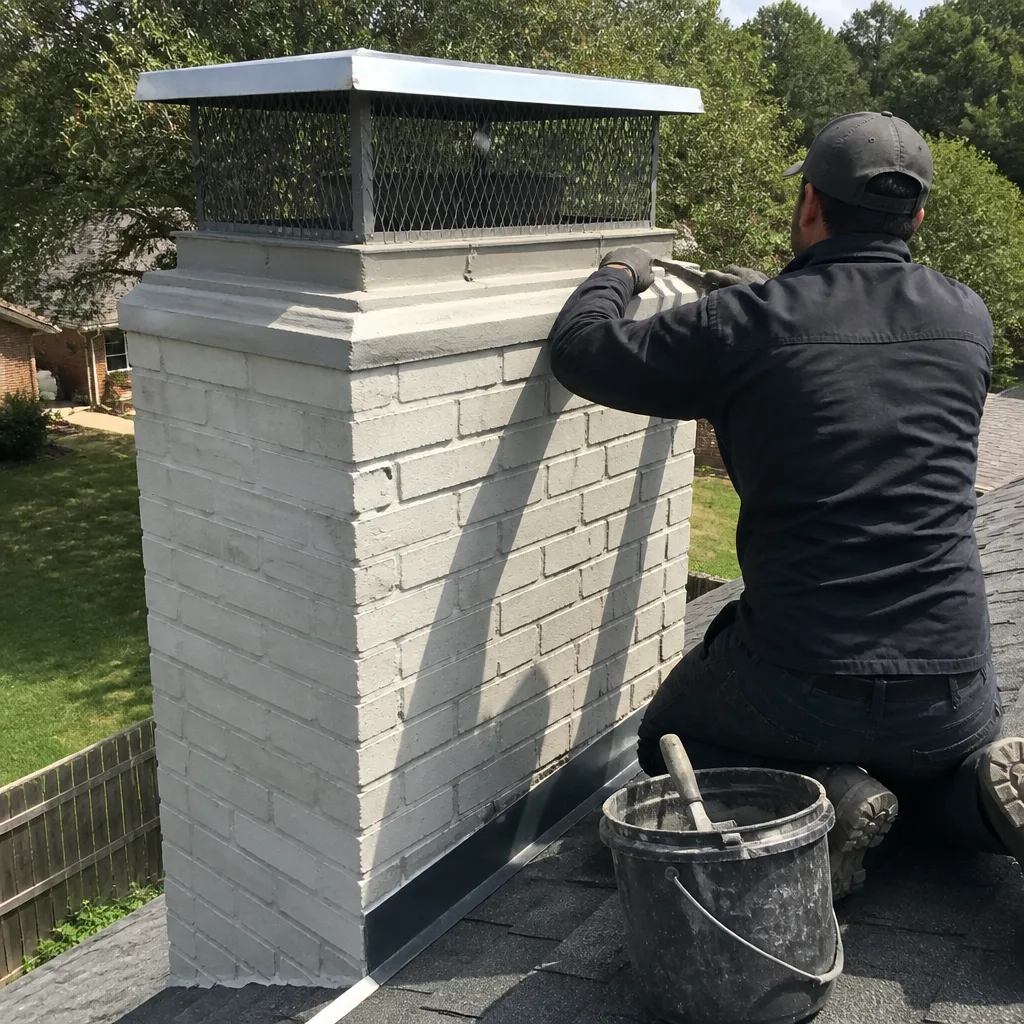
Level 1 sweep and inspection to the NFPA 211 annual standard - flue, crown, cap, and flashing checked and photographed
Chimney sweep logs do not sweep chimneys. They loosen some creosote - which then falls where a brush and vacuum still have to collect it.
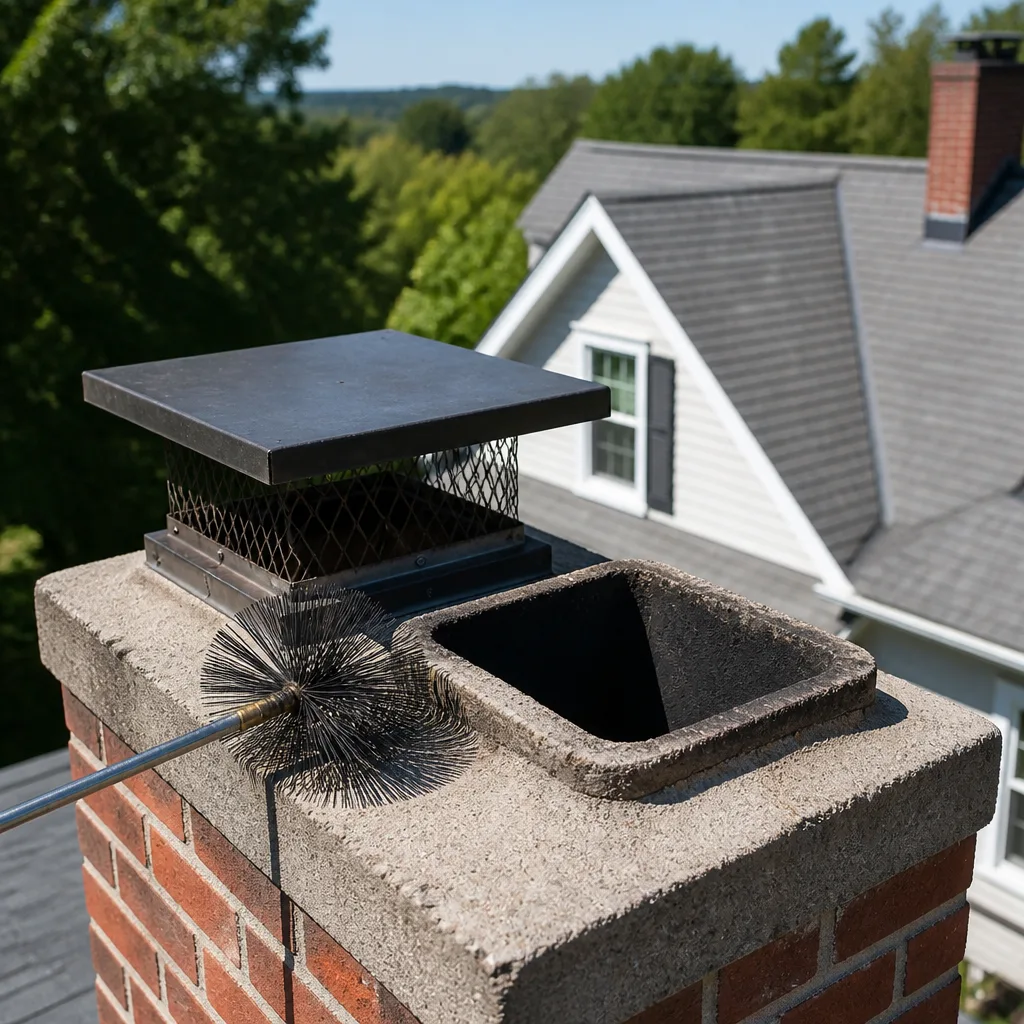
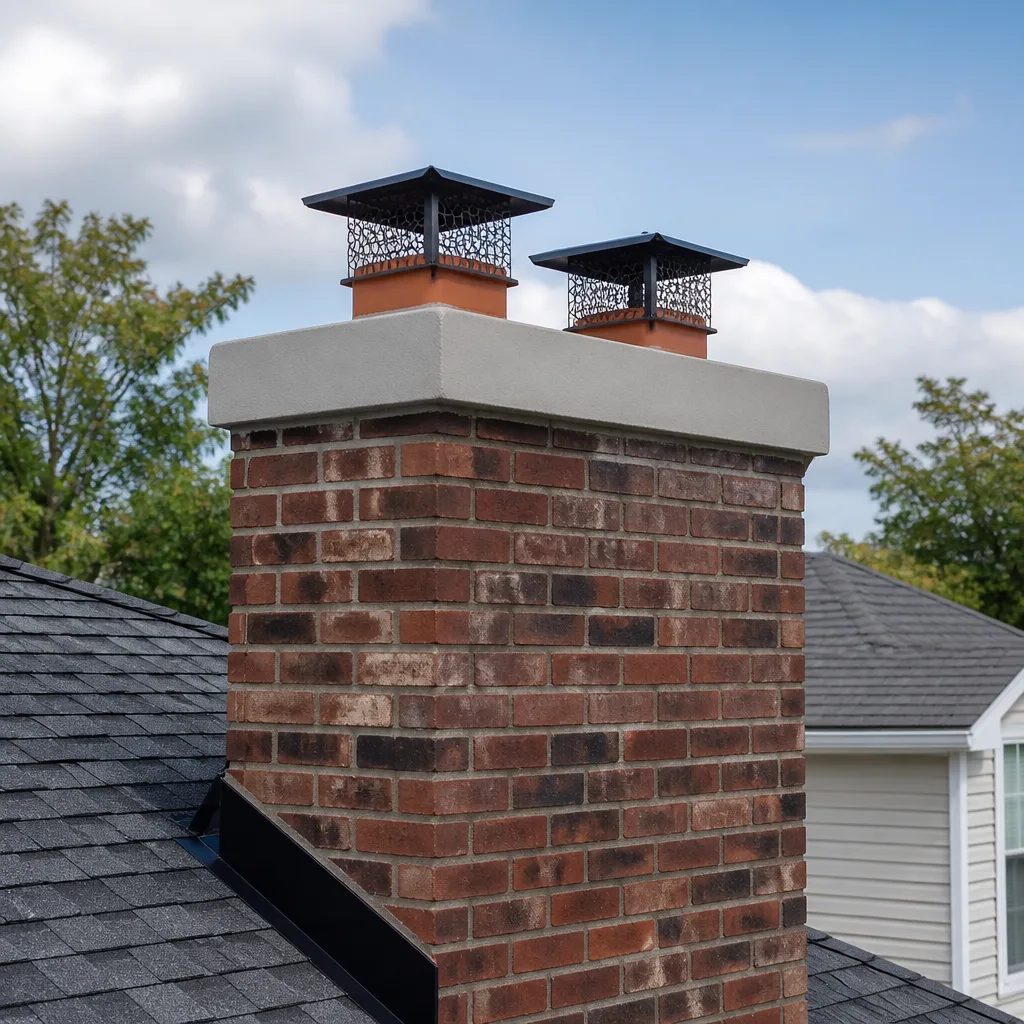
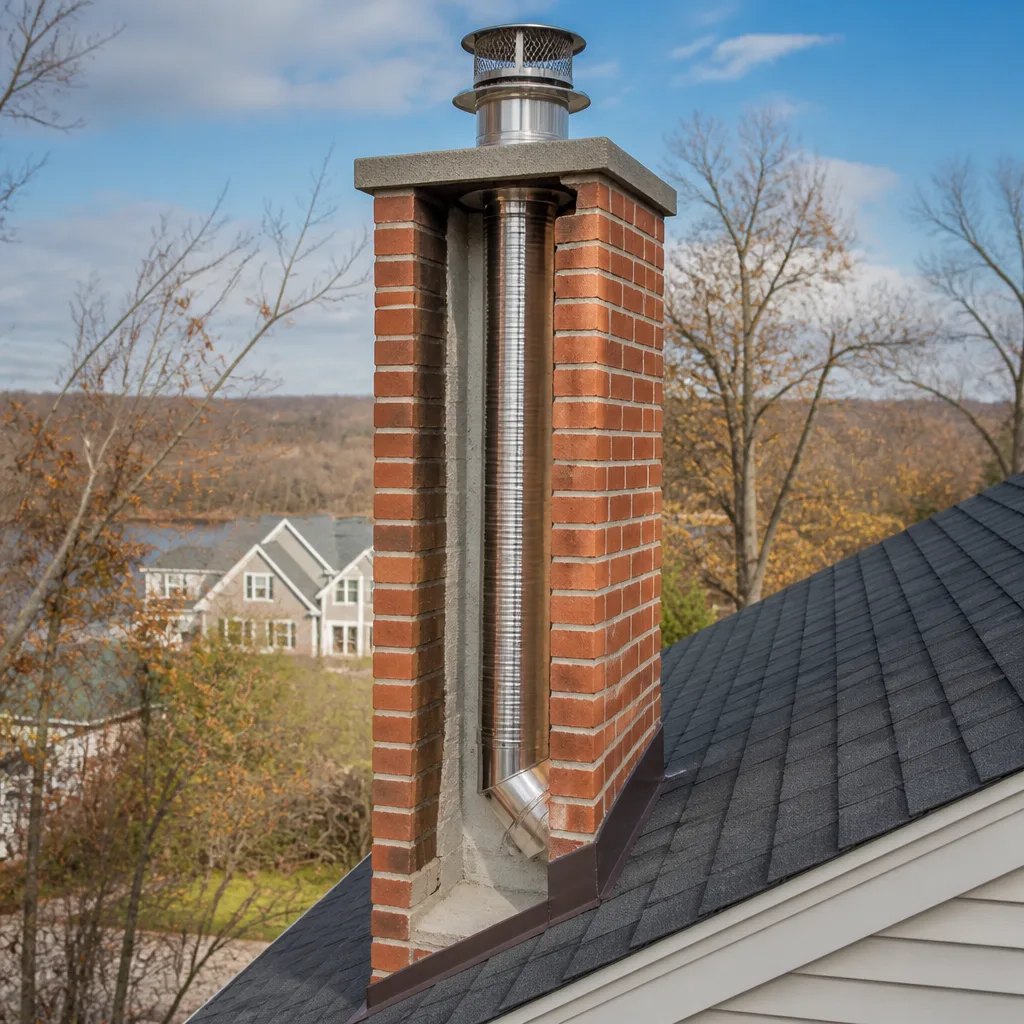
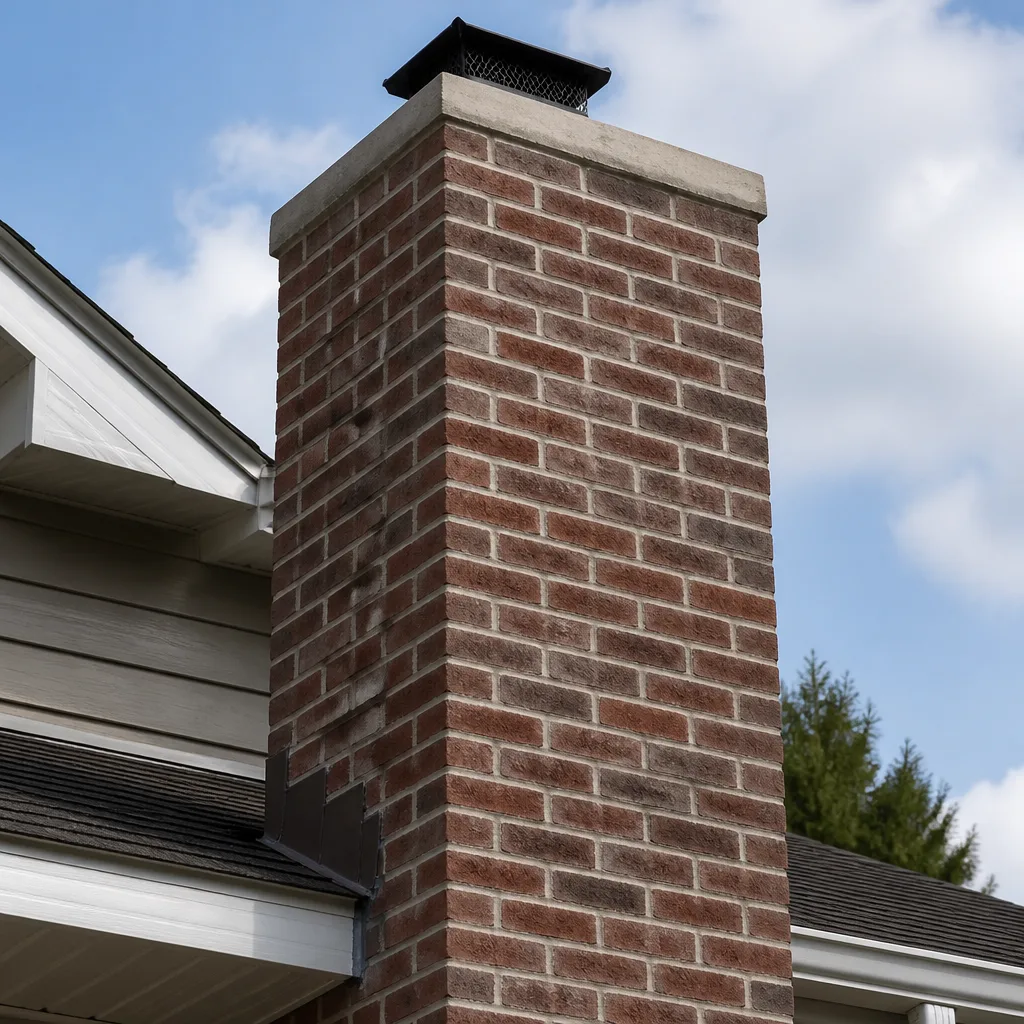
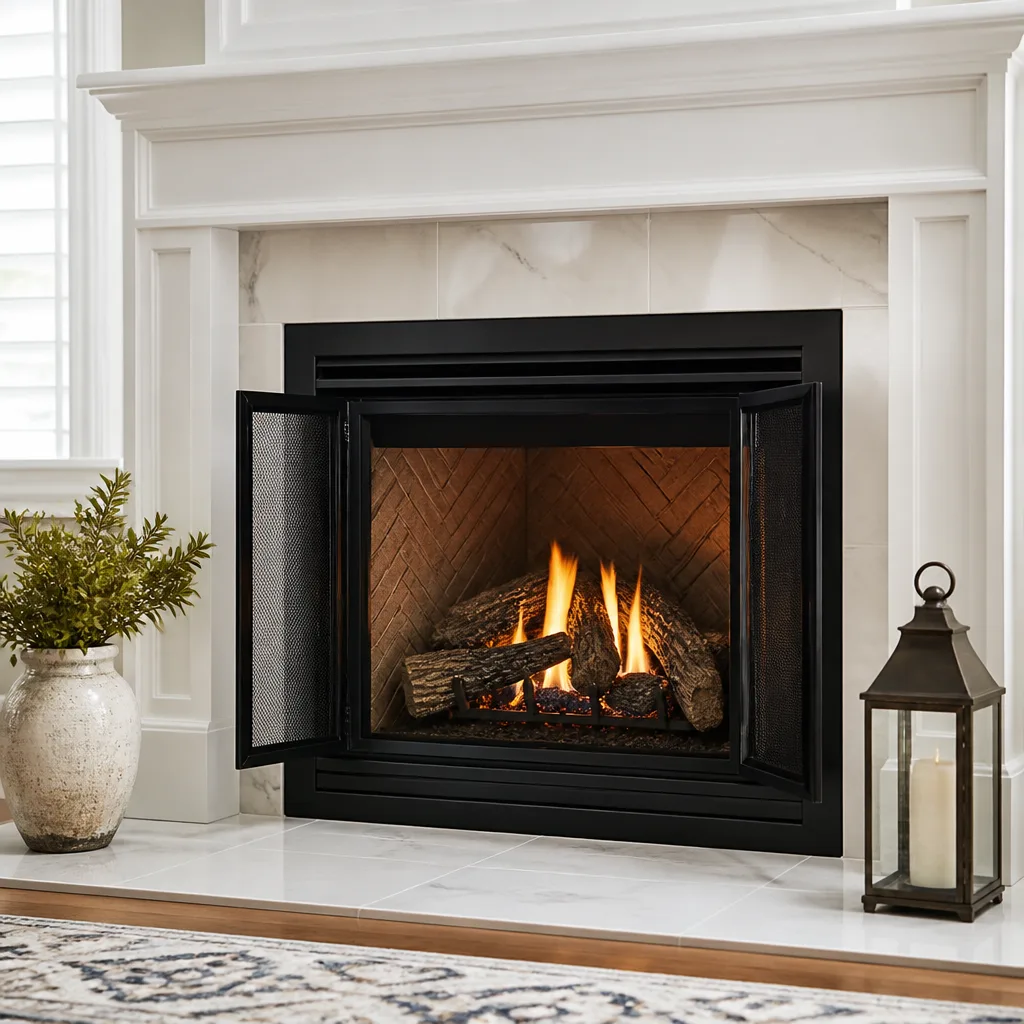
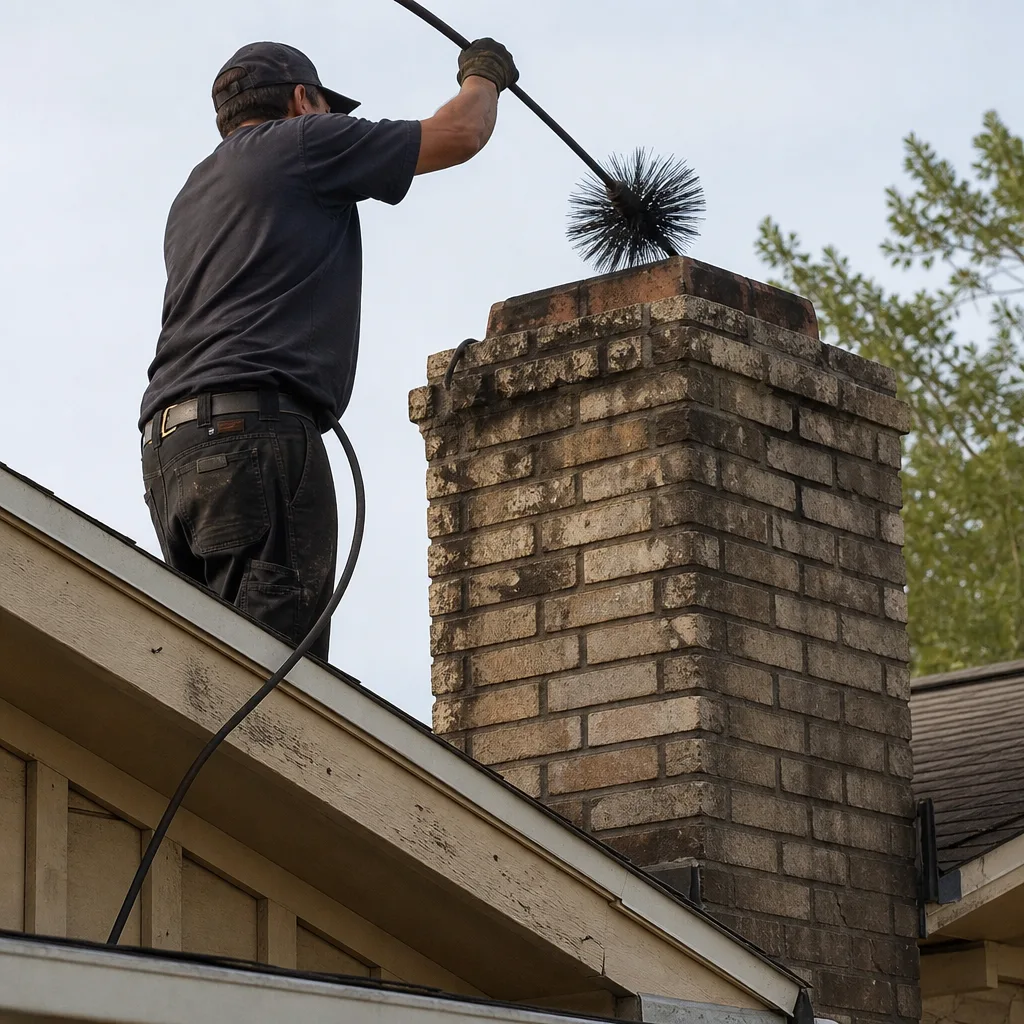 Before
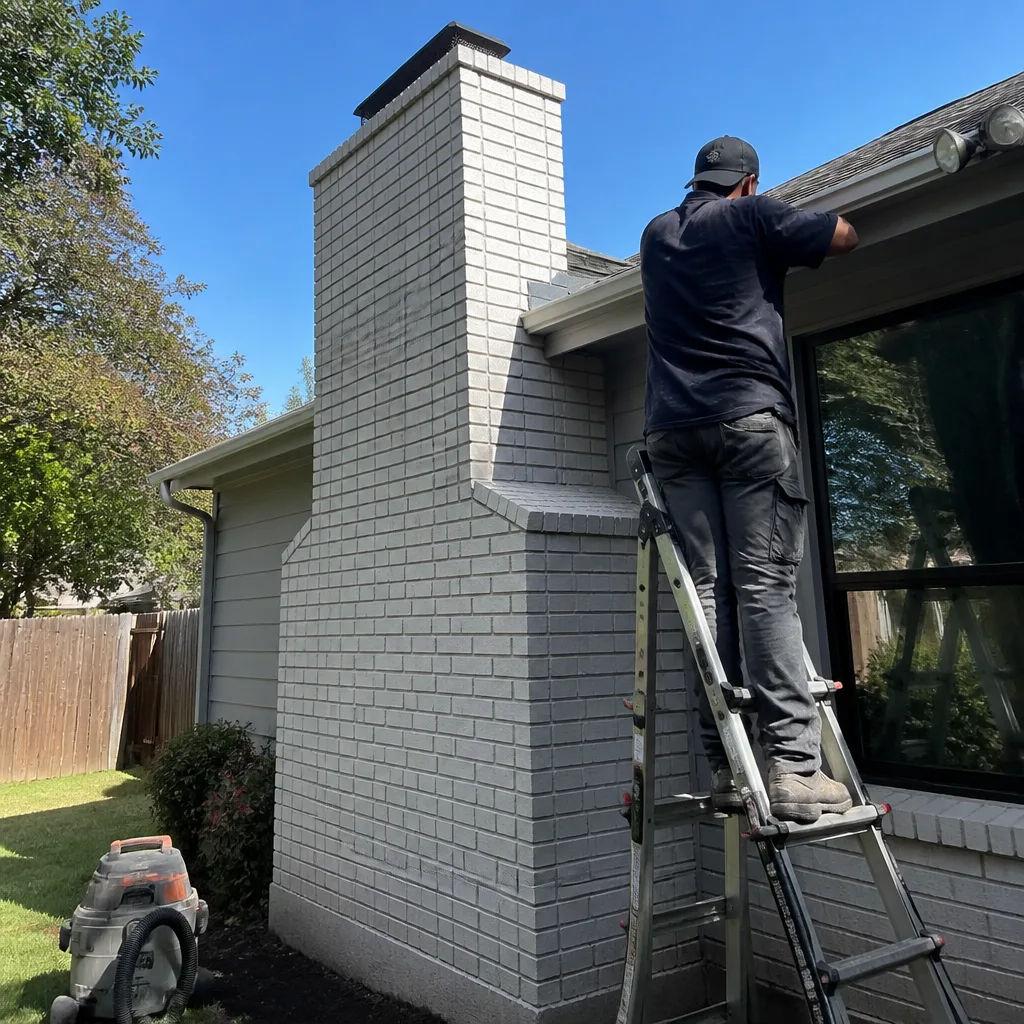 After
After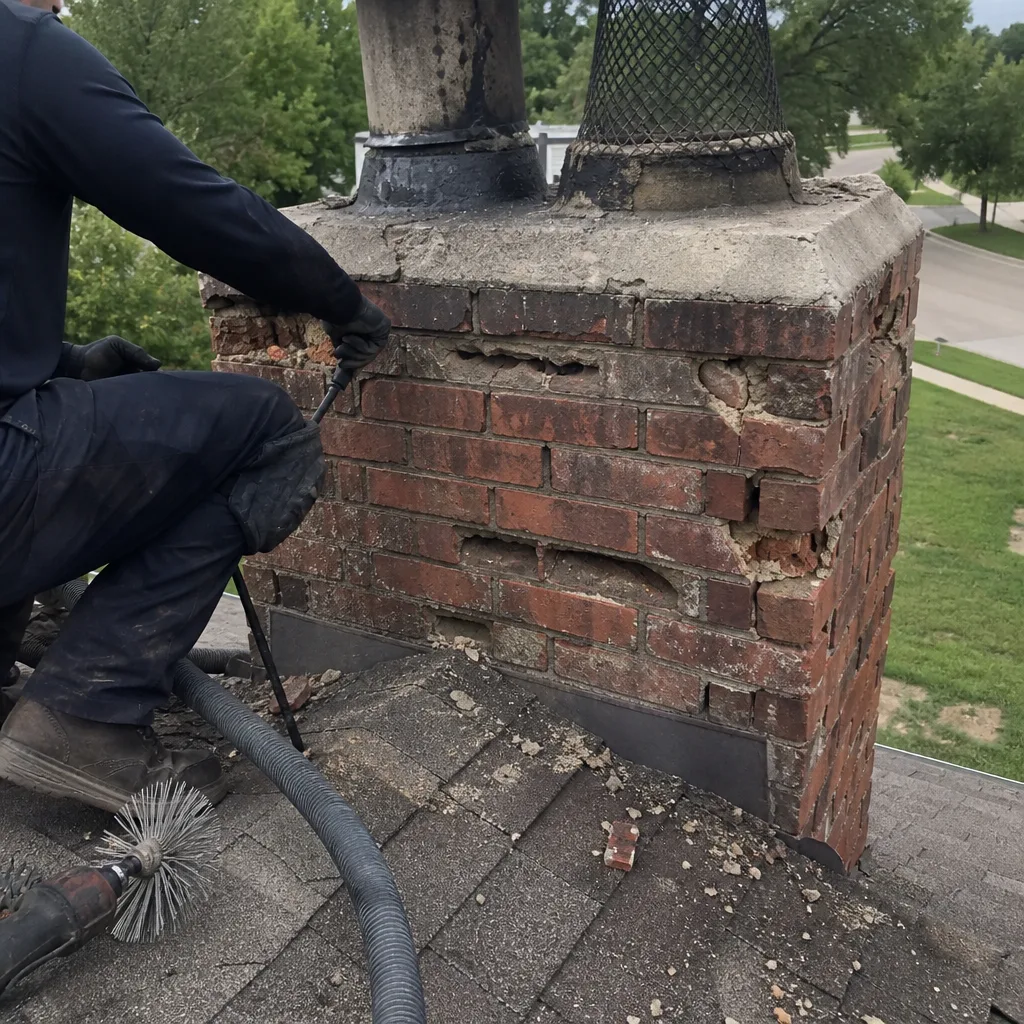 Before
 After
After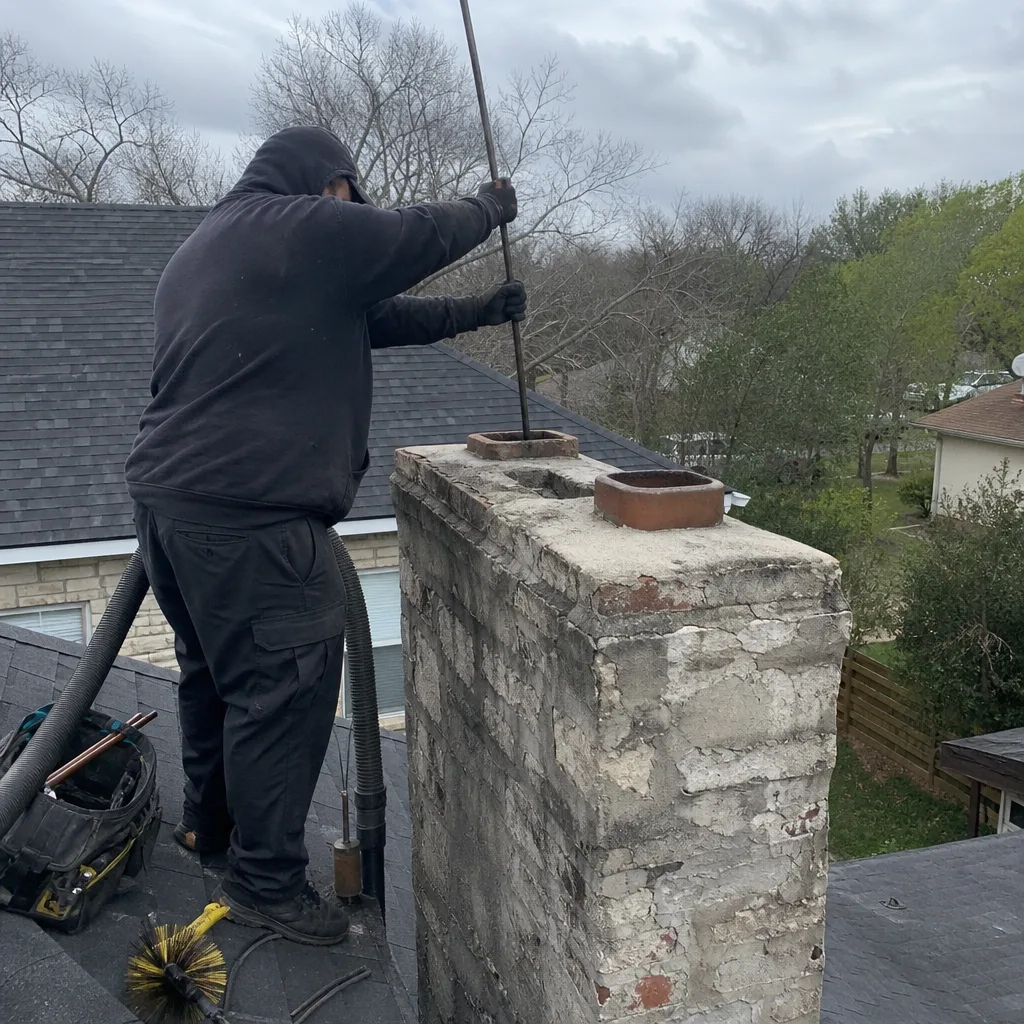 Before
 After
AfterCreosote Removal in Denton, TX
Creosote removal in Denton typically runs $149 to $499 depending on how much buildup is present and what class it has reached. Most chimney cleaning appointments are completed in a single visit, and every job starts with a camera-scan inspection so you know exactly what you’re dealing with before any work begins.
If your fireplace has been getting regular use and it’s been more than a year since your last cleaning, there’s a good chance creosote has been building up in your flue liner. That’s normal – wood combustion always leaves something behind. What isn’t normal is letting it advance past Class I without addressing it, and that happens more often than it should in Denton, especially in homes where the fireplace gets heavy use during the mild but real winters we see out here in North Texas.
At Emberly Chimney Cleaners Denton, we’ve inspected and cleaned more than 38,000 chimneys since 2009. Every single one came with a written price before anyone picked up a brush, and a documented photo record when the job was done. Our Chimney Sweep in Denton service covers the full flue – creosote removal is part of that, not an add-on billed after the tech is already in your home. If you want to talk through what you’re seeing, call (940) 373-6912 – a live person answers, any time of day.
What Creosote Actually Is – and Why Its Class Matters
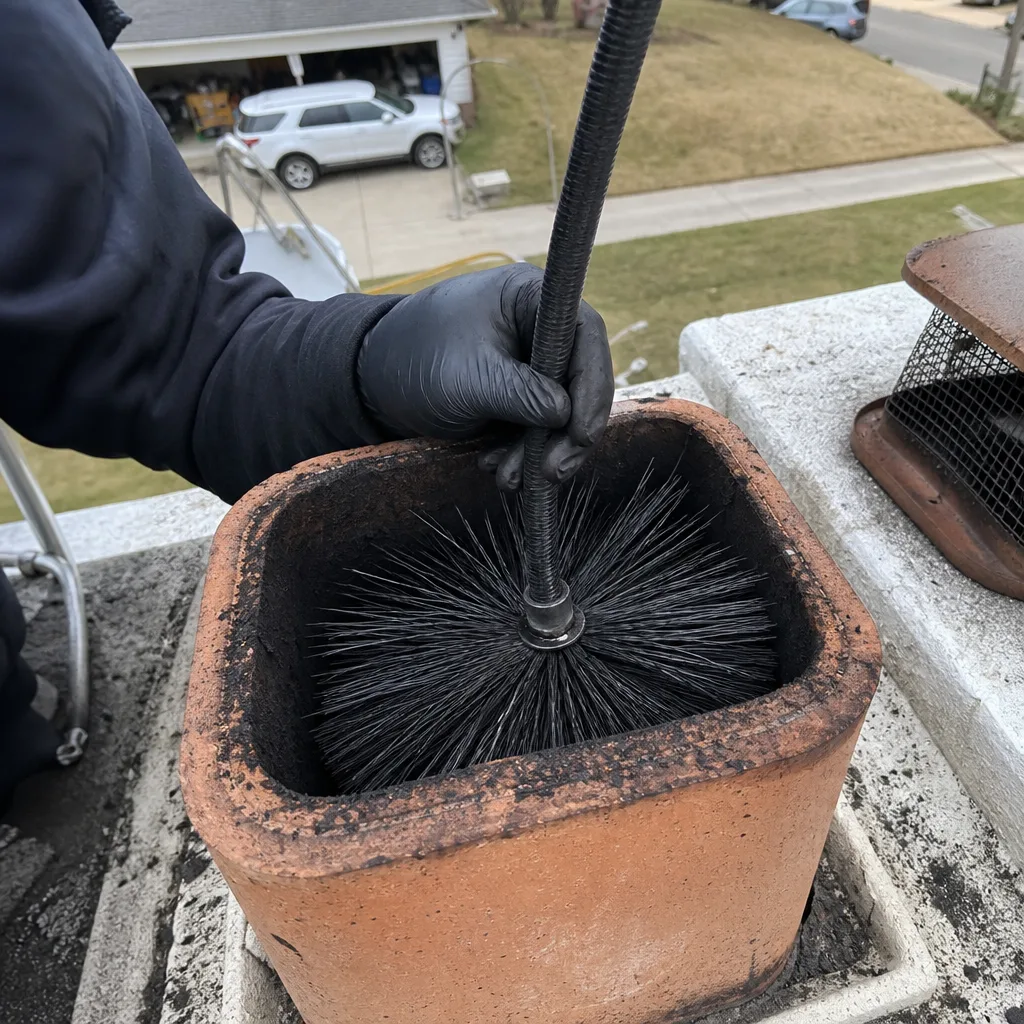
Creosote is the residue left when combustion gases cool and condense on the inside walls of your flue liner. It starts as a light, dusty deposit and becomes progressively denser, stickier, and harder to remove as it advances through three distinct stages.
- Class I (First Degree): Loose, flaky soot. Comes off with a standard chimney brush. This is what a well-maintained flue looks like after a regular burning season.
- Class II (Second Degree): A harder, tar-like glaze or crunchy, porous buildup. A wire brush alone won’t cut it – rotary cleaning systems or chemical treatments are usually needed. This is the most common finding on Denton homes that have gone two or more seasons without a cleaning.
- Class III (Third Degree): A dense, shiny, black glaze that has essentially baked onto the flue liner. Class III is not a cleaning problem – it’s a fire risk and a liner problem. At this stage, chemical conversion followed by a camera-verified clean is the protocol, and in some cases the liner itself needs to be assessed for heat damage before the fireplace can be used again.
Knowing the class before quoting is exactly why we run a camera scan first. A flashlight look from the firebox opening can’t tell you whether you’re dealing with Class I or Class III. The camera can, and the difference in scope – and cost – is significant enough that you deserve to see it documented before you agree to anything.
When You Need Creosote Removal
- It’s been 12 months or more since your last cleaning. The National Fire Protection Association’s NFPA 211 standard recommends annual inspection and cleaning for any fireplace in active use. In Denton, where fireplaces get concentrated use from November through February, a year between cleanings is the right interval – not a suggestion.
- You smell something acrid or oily when the fireplace is running. That odor is usually Class II creosote off-gassing as it heats up. It doesn’t mean you’re about to have a chimney fire, but it’s a reliable signal that buildup has advanced past the flaky stage.
- Your fires are harder to start or the draw feels sluggish. A significant creosote layer narrows the flue’s effective opening and disrupts airflow. Homes in older Denton neighborhoods like Oak-Hickory Historic District often have smaller-diameter clay tile liners that become noticeably restricted even at moderate buildup levels.
- You’ve been burning green or unseasoned wood. Wet wood produces far more smoke and combustion byproducts than properly seasoned firewood. If the cord you bought last fall was still damp when it went on the grate, expect more creosote than a typical season would leave behind.
- You recently had a chimney fire. Even a small, fast-burning chimney fire (many homeowners don’t realize one occurred) generates intense heat that can convert existing creosote deposits into hardened, glazed Class III buildup in minutes. After any chimney fire, a Level 2 camera inspection is required before you light another fire – not optional.
- A home inspection flagged creosote during a real estate transaction. This comes up regularly in Denton’s active resale market. A note on an inspection report saying “heavy creosote buildup observed” needs a camera-verified assessment and documented cleaning before the fireplace can be represented as serviceable.
BeforeAfterOur Creosote Removal Process
- Camera-scan inspection before any work starts. We send a camera down the full length of your flue liner before we quote you. You see what we see – the class of creosote, any cracks or liner damage beneath the buildup, and the condition of the smoke chamber and smoke shelf. This is the NFPA 211 Level 2 standard, and it’s included on every visit, not billed separately. The images go into your documented photo record under Clause 4 of the Haven Standard.
- Written price delivered before work begins. Once the camera tells us what class and volume we’re dealing with, we write the scope and the price. You see the number, the method, and the warranty on paper before anyone picks up a tool. Haven Standard Clause 1 – written price, written scope, written warranty, no exceptions. This is not a conditional estimate that grows once the tech is inside.
- Dust-controlled cleaning using the right method for the class. Class I deposits come off with professional rotary brushes and a HEPA-filtered vacuum system that keeps the mess inside the equipment, not inside your living room. Class II buildup requires rotary power equipment – sometimes combined with a chemical treatment applied the day before to break down the tar layer. We source chemical treatments through Copperfield’s professional supply line, which gives us access to formulations not sold at the hardware store.
- Class III glazing treatment and conversion protocol. If the camera shows Class III creosote, we apply a chemical glazing agent that converts the hardened deposit into a more friable material that can be brushed away in a follow-up cleaning. We’ll tell you plainly if this is a two-visit job. We won’t oversell a single-visit fix when the chemistry doesn’t support it.
- Post-cleaning camera verification. After cleaning, the camera goes back down. You see the before and the after – both documented, both in your file. If there’s a spot we weren’t satisfied with, we address it before we call the job done. The 365-Day Done Right Promise covers everything we touch: if it isn’t right, we make it right, full stop.
- Written documentation on the way out. You receive a copy of the inspection findings, the cleaning record, the before-and-after photo set, and the warranty before we leave. If your homeowner’s insurance or a future buyer ever asks for service history on the chimney, you have it in writing.
Creosote Removal Pricing in Denton
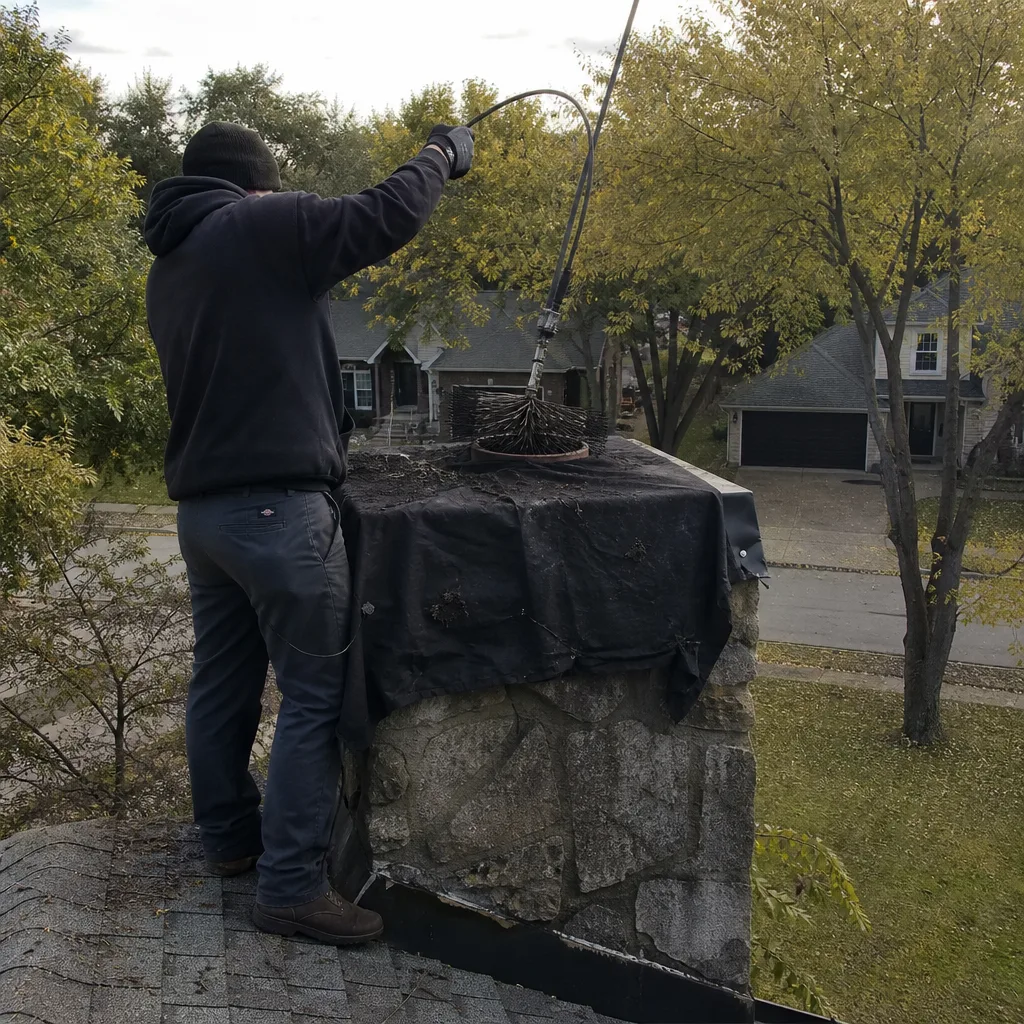
Creosote removal in Denton runs between $149 and $499 for most residential jobs. The range is wide because the class of creosote, the height and diameter of the flue, and the number of burning appliances connected to the system all affect what the job actually takes. Here’s how it generally breaks down:
| Scenario | Typical Price Range |
|---|---|
| Class I removal (light soot, standard brush cleaning) | $149 – $229 |
| Class II removal (tar glaze, rotary equipment required) | $229 – $349 |
| Class III removal (chemical conversion + multi-visit protocol) | $349 – $499+ |
| Camera-scan inspection (included on every visit) | $0 additional |
| Documented photo record (included, Haven Standard Clause 4) | $0 additional |
A few things that move the number: taller flues cost more to clean because they take longer and require more equipment travel. Homes in Denton’s newer subdivisions west of I-35 often have two-story great rooms with longer flue runs than the single-story homes common in older central Denton neighborhoods – that difference is real in terms of time and material. Stovepipe connectors, smoke chambers with significant glazing, and accessible-but-restricted cleanout points all affect scope. You’ll see all of it on the written quote before we start.
If you’ve already received a written estimate from another company, bring it to us. We offer a free second opinion on any written estimate – no obligation, no sales pitch, just a camera-verified look and a straight comparison.
Call (940) 373-6912 to schedule. Estimates are free, and the price you’re quoted is the price on the invoice.
Why Denton’s Climate Makes This More Relevant Than You Might Think
Denton sits at an interesting intersection climatically. Winters here are short enough that many homeowners treat their fireplace as an occasional-use appliance rather than a primary heat source – but cold snaps in January and February push real wood-burning use, sometimes intensively over just a few weeks. That pattern – infrequent but concentrated burning – actually produces more creosote per cord than steady, moderate use throughout a longer season, because the flue spends more time cold and the combustion gases condense faster on cooler liner walls.
We see this pattern consistently across Denton neighborhoods: homes in Robson Ranch, Savannah, and the older streets around TWU’s campus where mature trees mean firewood is locally plentiful and cheap. The fireplace runs hard for six weeks, then sits cold until next November. By the time we get in there the following fall, Class II buildup is common even in well-maintained systems.
The clay tile liners common in Denton’s pre-2000 construction are also more prone to creosote adhesion than stainless steel liners, because the tile surface is more porous. If your home was built before 2000 and has never had a Level 1 inspection, the camera scan is especially worth doing before you assume the buildup is light.
What’s Included in Every Emberly Creosote Removal Visit
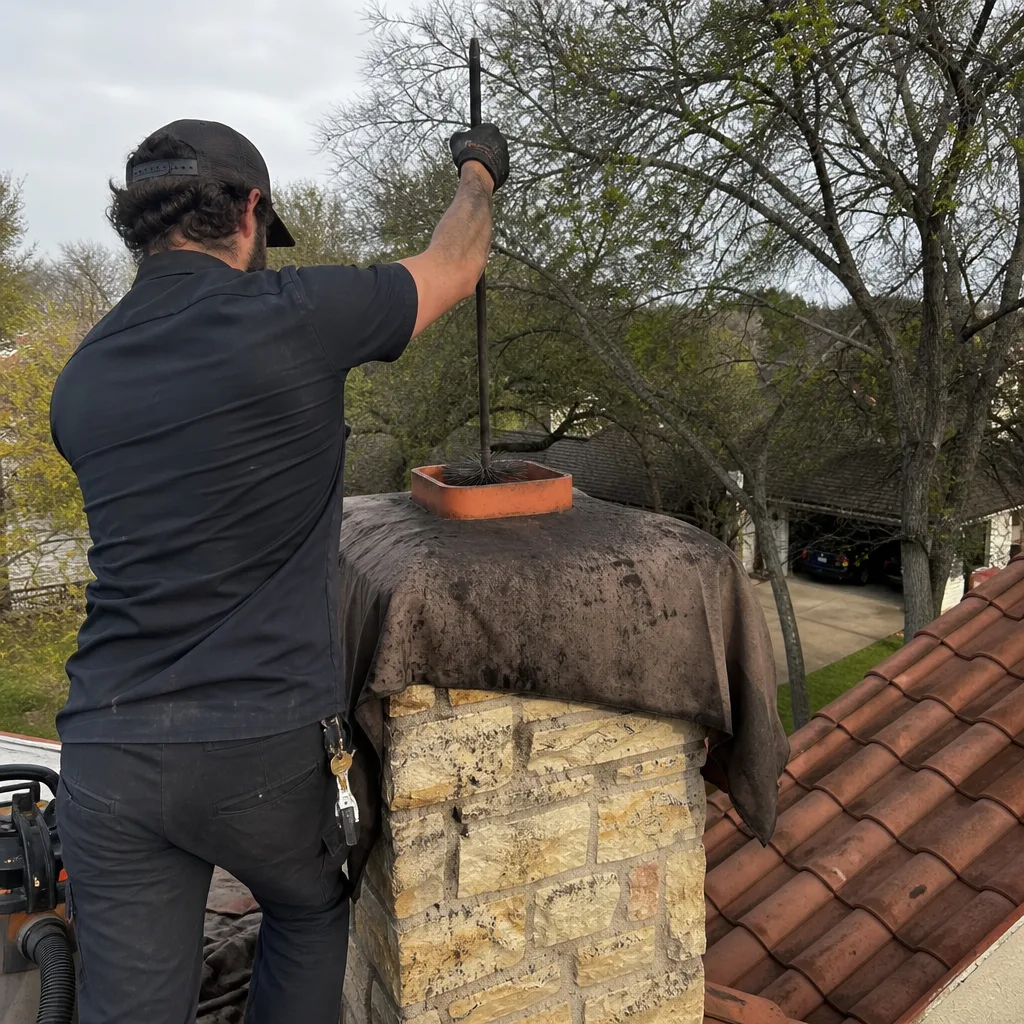
- Full camera-scan inspection of the flue liner, smoke chamber, and firebox before any cleaning begins (NFPA 211 Level 2 standard)
- Written price and written scope delivered before work starts – no revisions after the tech is inside your home
- Dust-controlled cleaning using HEPA-filtered equipment appropriate to the creosote class found
- Chemical treatments where warranted, sourced through professional supply networks including Copperfield and Gelco
- Post-cleaning camera verification and before-and-after photo documentation
- Written warranty and job record left with you at the end of the visit
- 365-Day Done Right Promise on every job – if it isn’t right, we make it right
FAQs – Creosote Removal in Denton
How much does creosote removal cost in Denton?
Creosote removal in Denton costs between $149 and $499 for most residential jobs, depending on whether the buildup is Class I, II, or III and how long the flue is. Class I is the low end – standard rotary brushing and HEPA vacuum. Class III is the high end and may require a two-visit chemical conversion protocol. The camera scan that tells us which class you have is included at no additional charge. Call (940) 373-6912 and we’ll give you a written price based on what the camera actually shows – not a guess from the curb.
Is creosote removal dangerous to do myself?
Class I creosote removal with a chimney brush kit sold at hardware stores is low-risk if you follow the equipment instructions, but there are real limits to what a consumer brush can do and real limits to what you can see without a camera. Class II and Class III deposits require rotary power equipment and, in the case of Class III, chemical treatments that need to dwell and then be removed in a follow-up visit. More to the point: if there’s a crack in your flue liner beneath the buildup, you won’t see it without a camera, and that crack is a fire and CO hazard that a brush job won’t fix. A professional inspection and cleaning isn’t about the brushing – it’s about the documentation that tells you the system is actually safe to use.
How often does creosote need to be removed in Denton?
Annual cleaning and inspection is the NFPA 211 standard for any fireplace in regular use, and it’s the right interval for most Denton homes. If you burn heavily over a short winter season – as many households in Denton do, since our cold months are concentrated – a single annual cleaning at the start or end of each season keeps creosote from advancing past Class I. Homes that burn more than two or three cords per season, or that use their fireplace daily during cold snaps, are worth checking mid-season as well. A camera scan between seasons takes about an hour and costs far less than a Class III cleaning.
What happens if I don’t remove creosote from my chimney?
Class I buildup advances to Class II as combustion heat cycles over it repeatedly. Class II advances to Class III. Class III creosote – the dense, glazed type – is the primary fuel in a chimney fire. A chimney fire can reach temperatures above 2,000 degrees Fahrenheit inside the flue, which is enough to crack clay tile liners, damage mortar joints, and in some cases ignite framing in adjacent walls. Beyond the fire risk, creosote also restricts airflow, which degrades combustion efficiency and can contribute to carbon monoxide entering the living space. If your flue has gone more than one season without a documented cleaning, schedule the camera scan before your next fire. Call (940) 373-6912 and we’ll get you scheduled.
Ready to Schedule Creosote Removal in Denton?
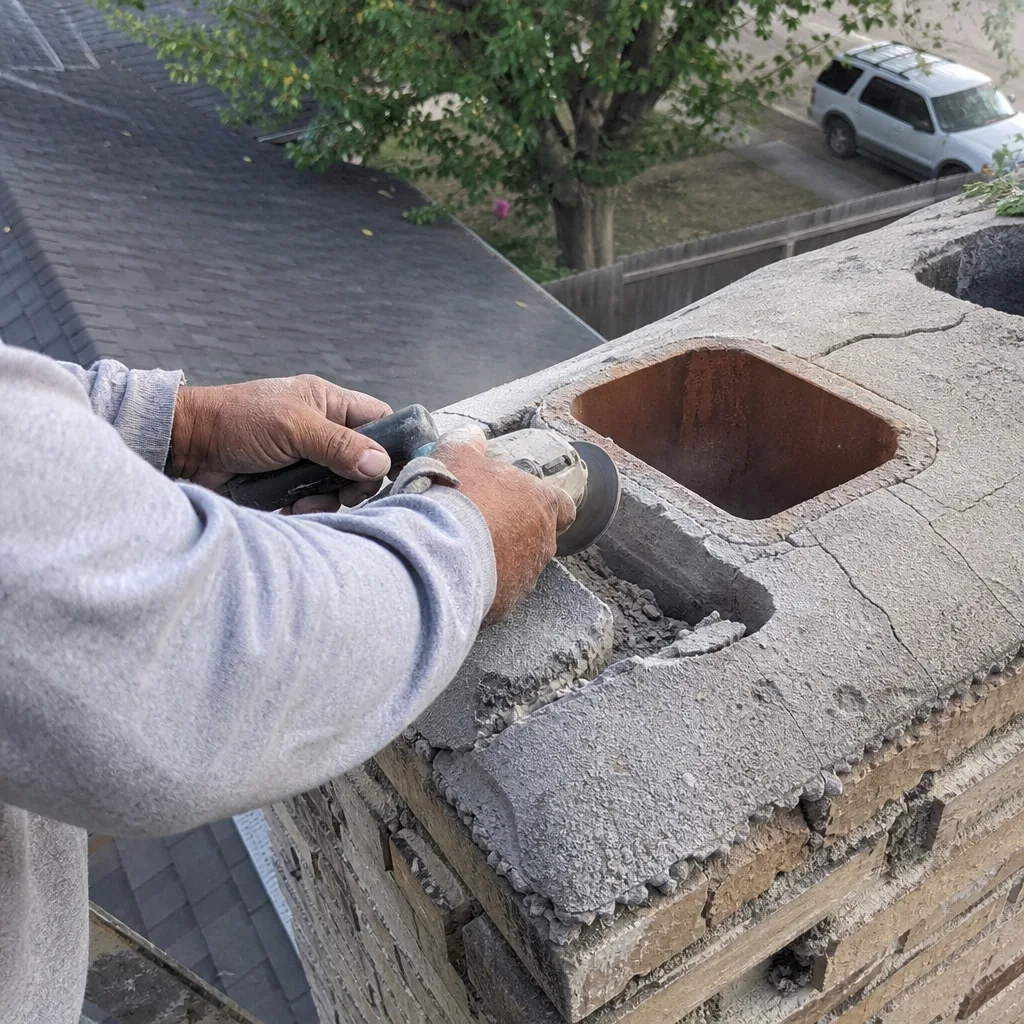
Whether your Denton fireplace needs a standard Class I brush-out or a more involved Class III chemical conversion, the process starts the same way: a camera scan, a written price, and a documented record when we’re done. No guessing, no surprise charges after the work is already started.
Emberly Chimney Cleaners Denton has been working to the NFPA 211 Level 2 standard since 2009 – more than 38,000 chimneys inspected and cleaned across the area, every one quoted in writing before work began. Corrine Halstead built this operation around a simple premise: show the customer what you found, tell them what it costs, and give them the documentation to prove it’s done. That’s still exactly how every job runs.
To schedule your creosote removal or camera inspection in Denton, call (940) 373-6912. A live person answers 24 hours a day, 7 days a week. Your estimate is free, and the written price you receive before work starts is the price on your invoice – not a starting point for negotiation upward once a tech is in your home. You can also learn more about our full approach on the home page.
Written by Corrine Halstead, Owner at Emberly Chimney Cleaners Denton, serving Denton.