
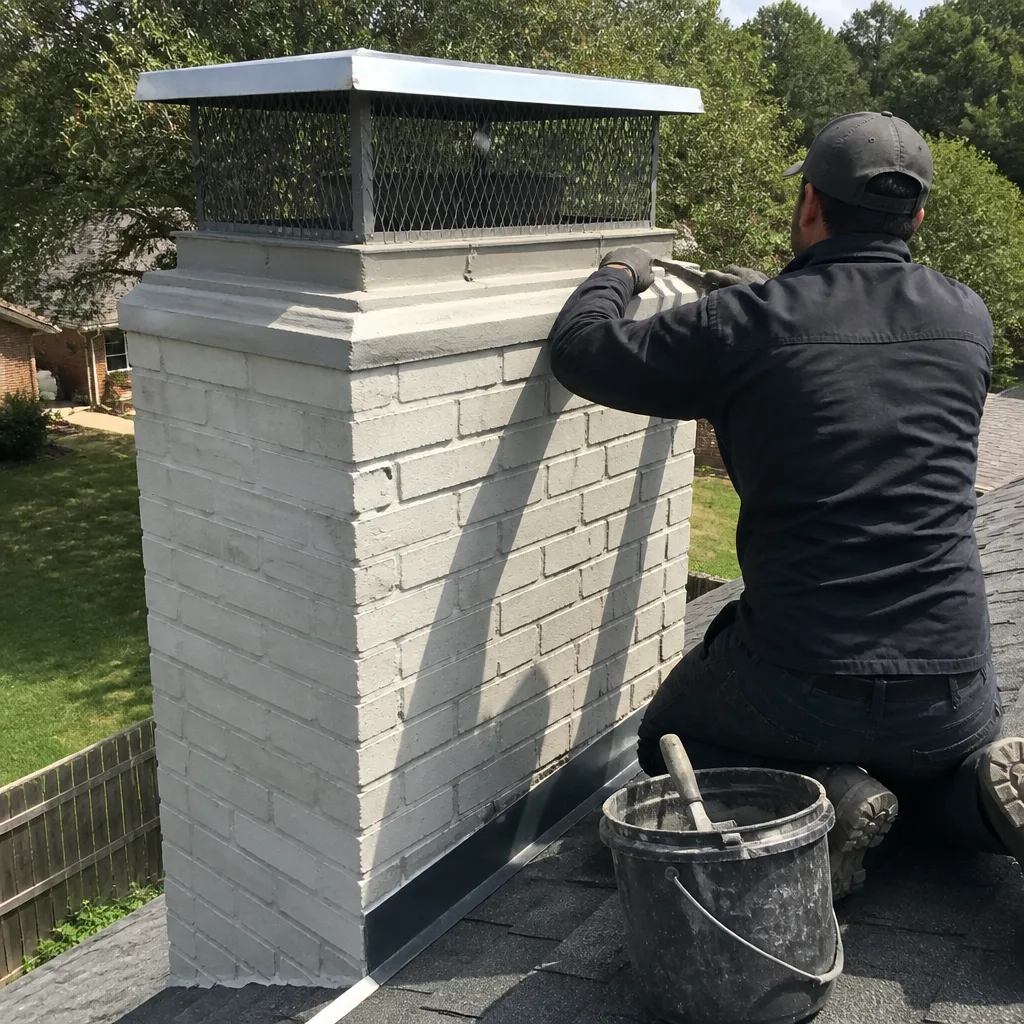
Level 1 sweep and inspection to the NFPA 211 annual standard - flue, crown, cap, and flashing checked and photographed
Chimney sweep logs do not sweep chimneys. They loosen some creosote - which then falls where a brush and vacuum still have to collect it.
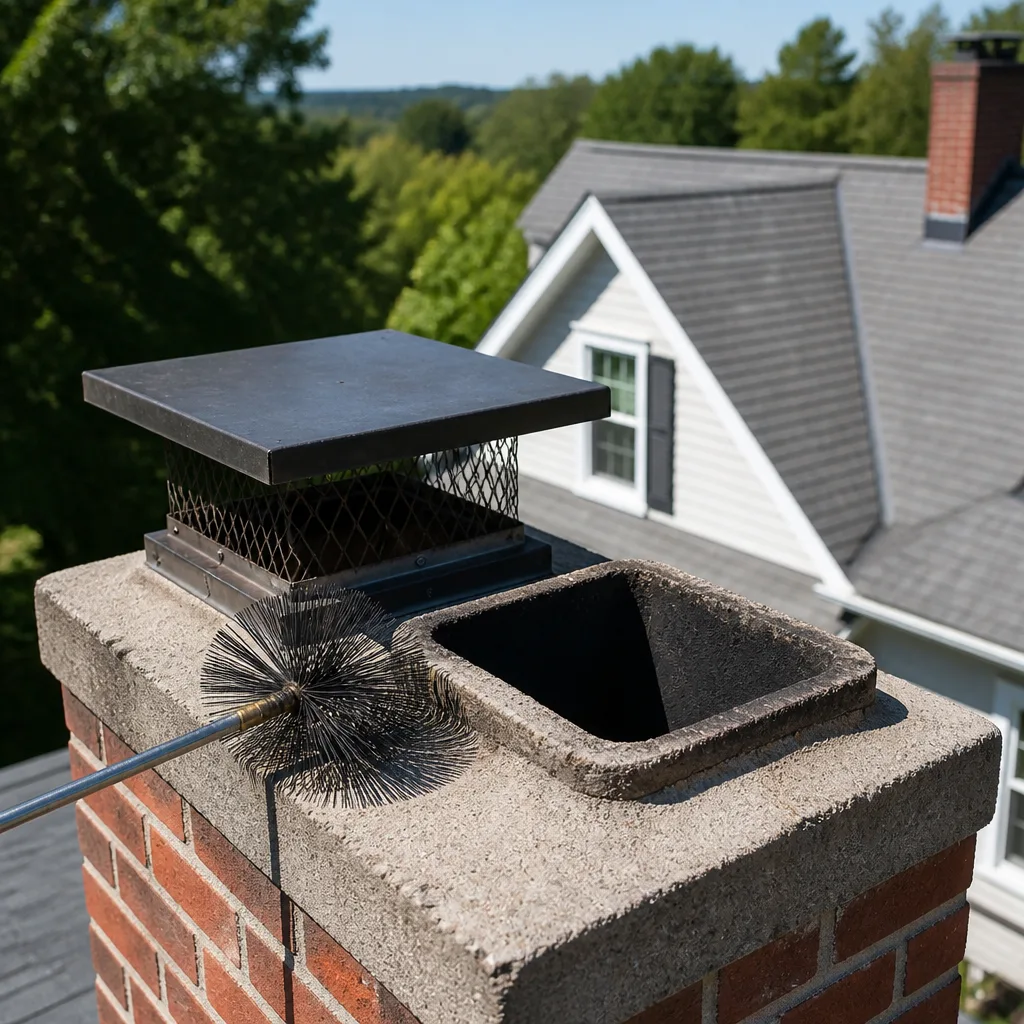
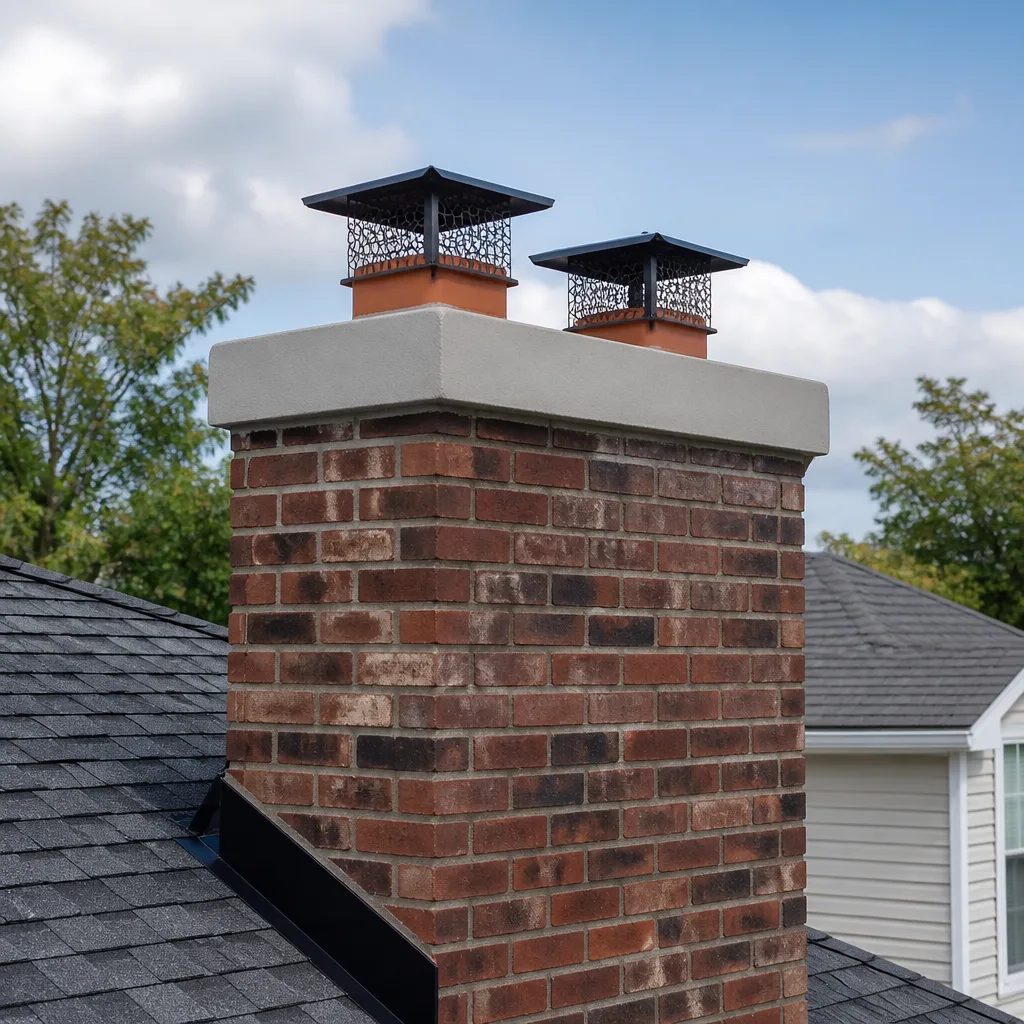
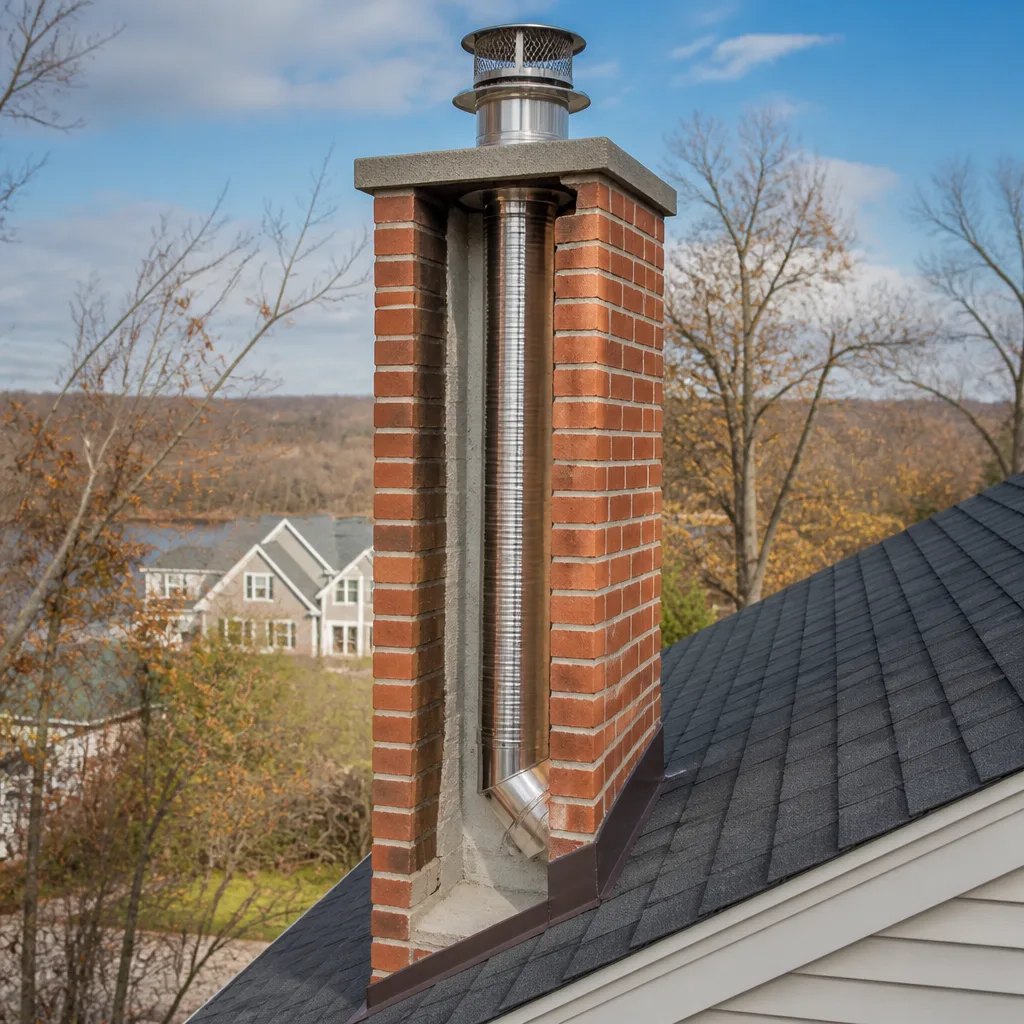
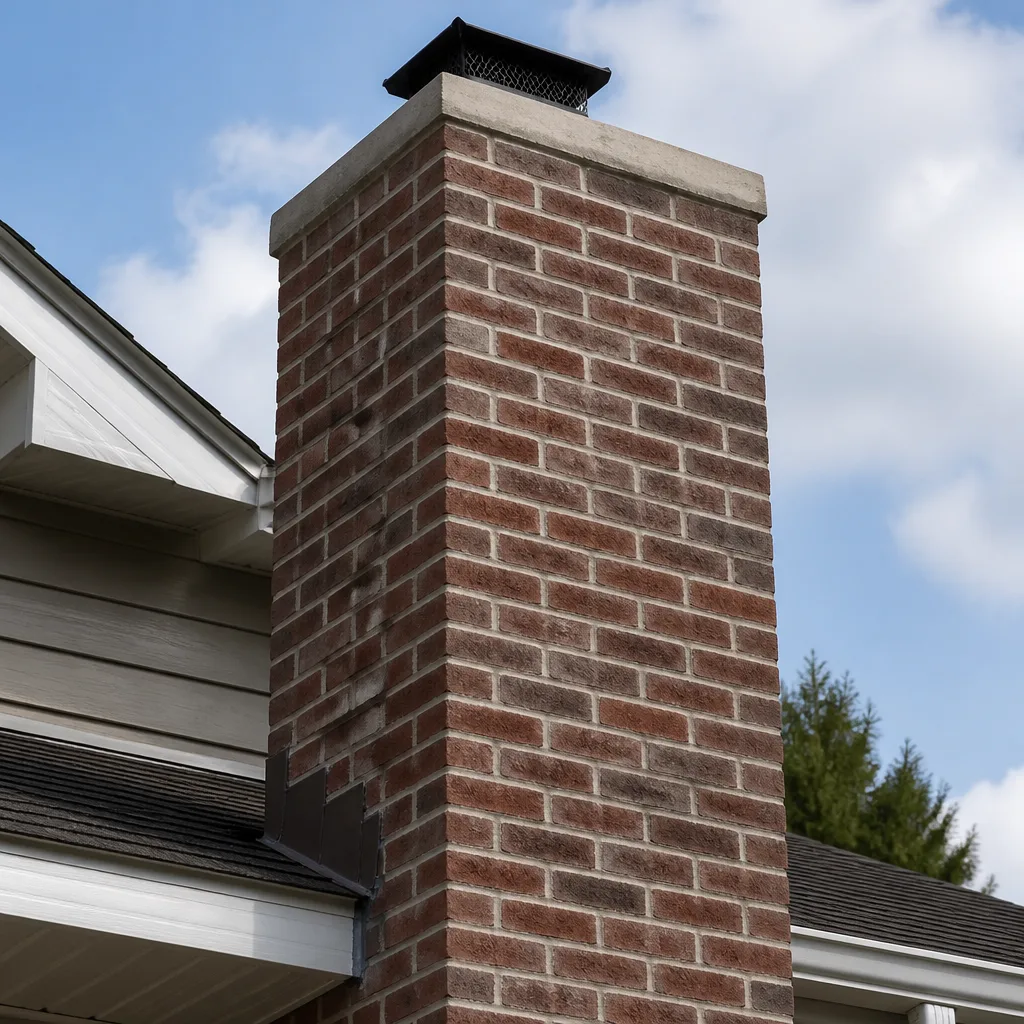
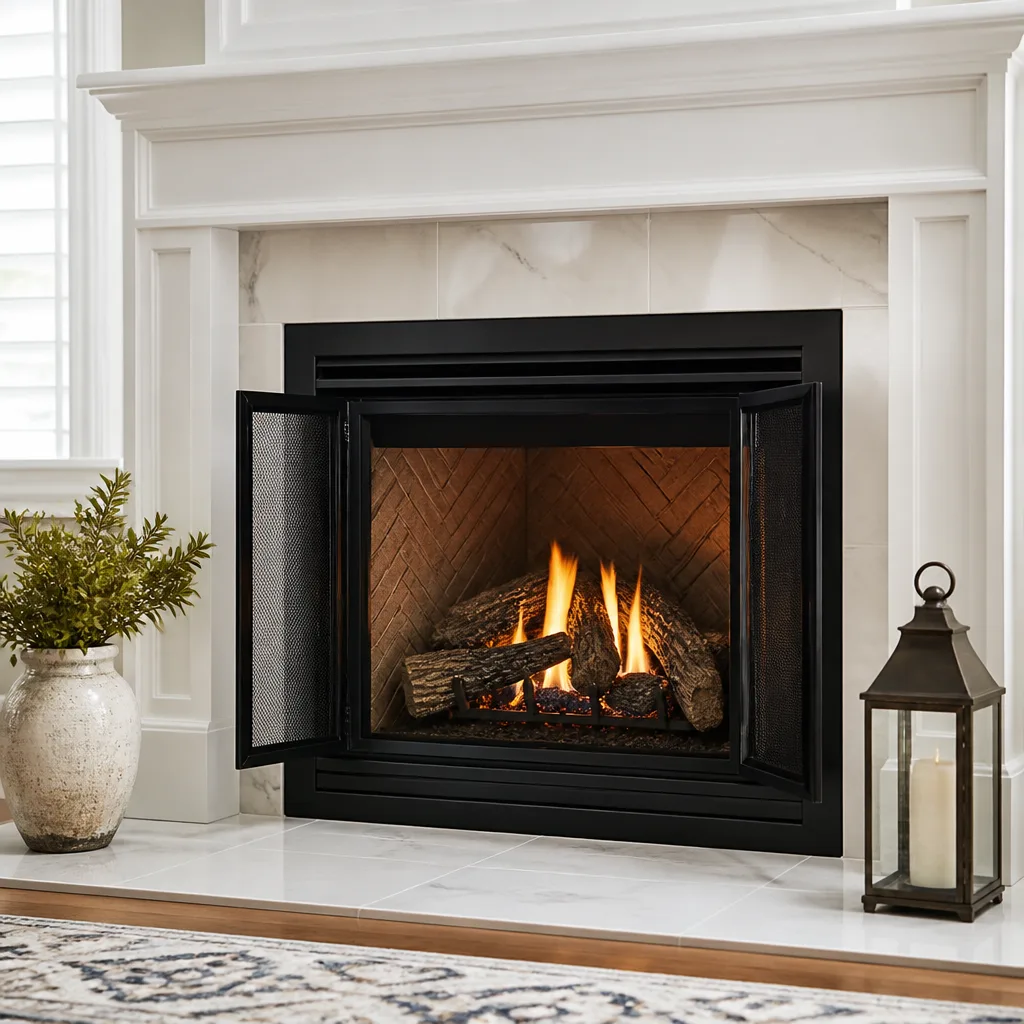
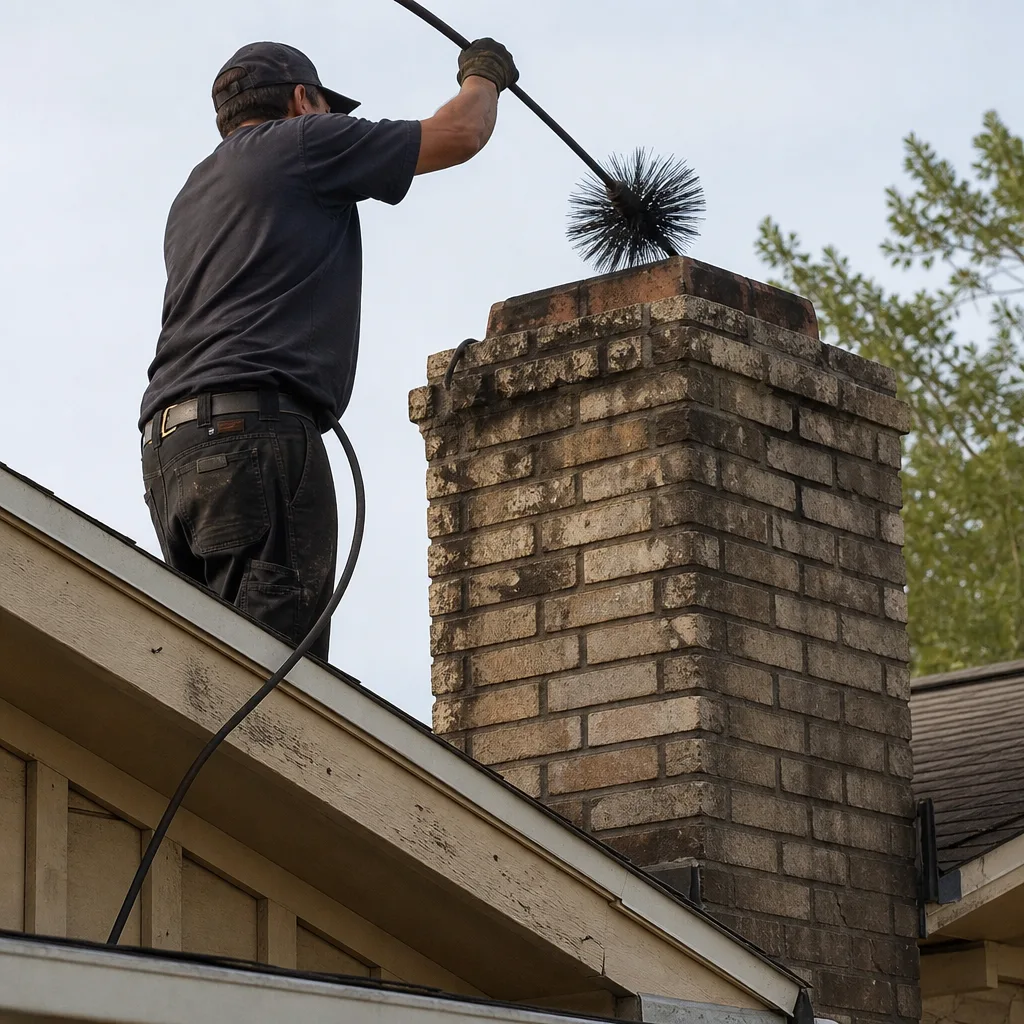 Before
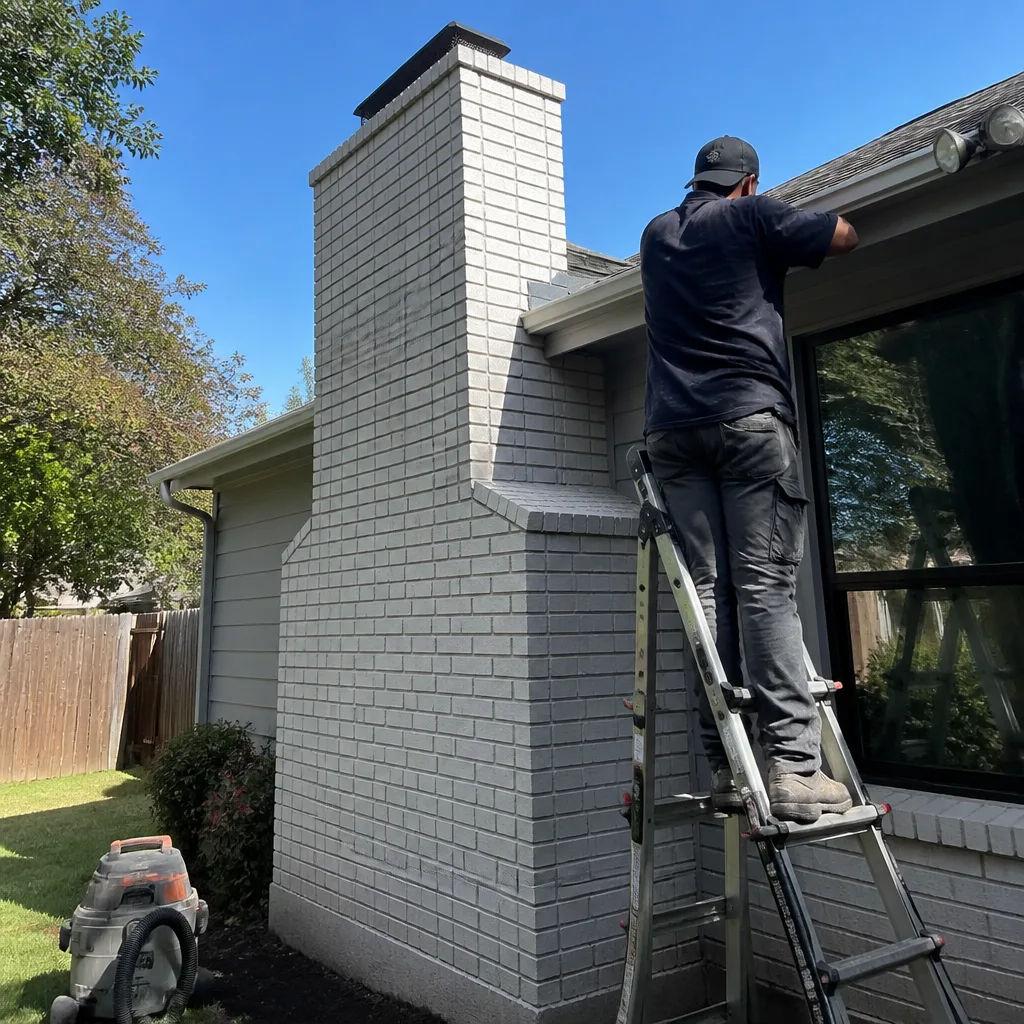 After
After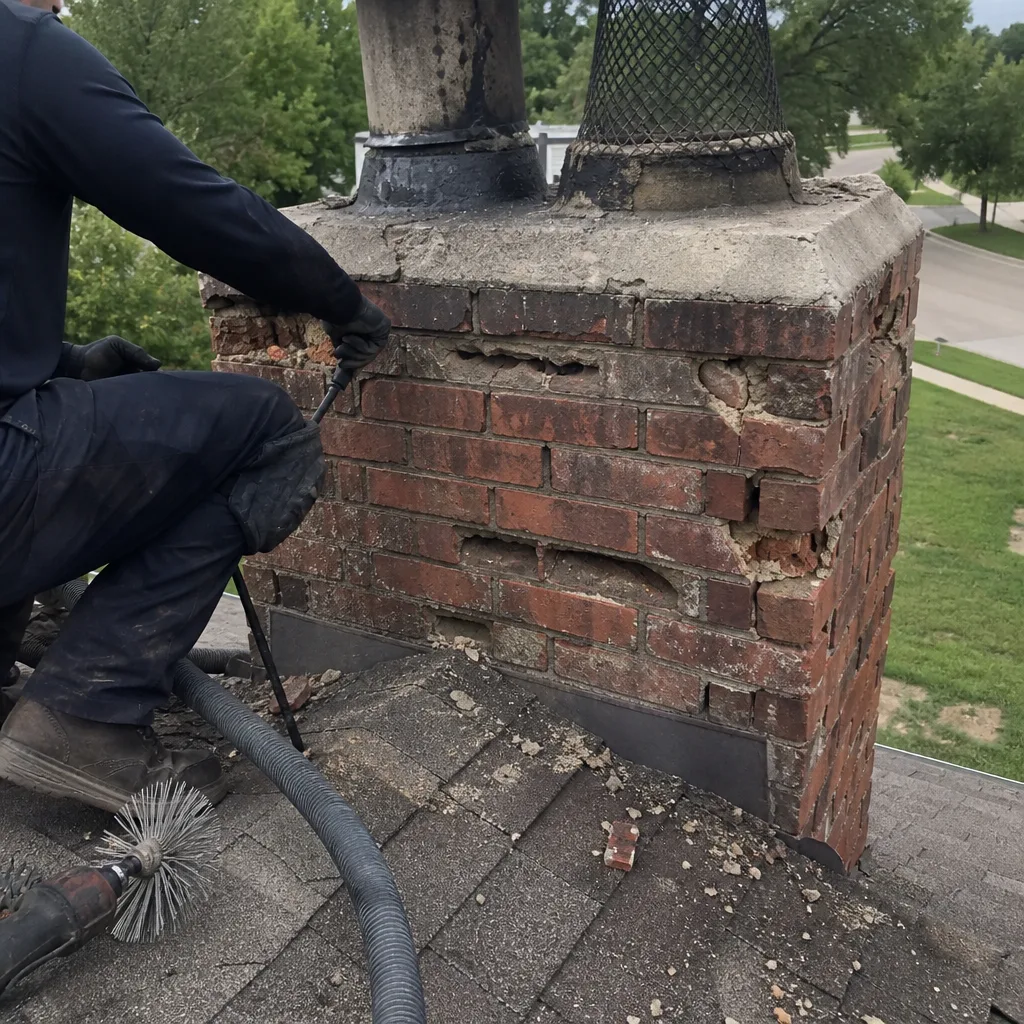 Before
 After
After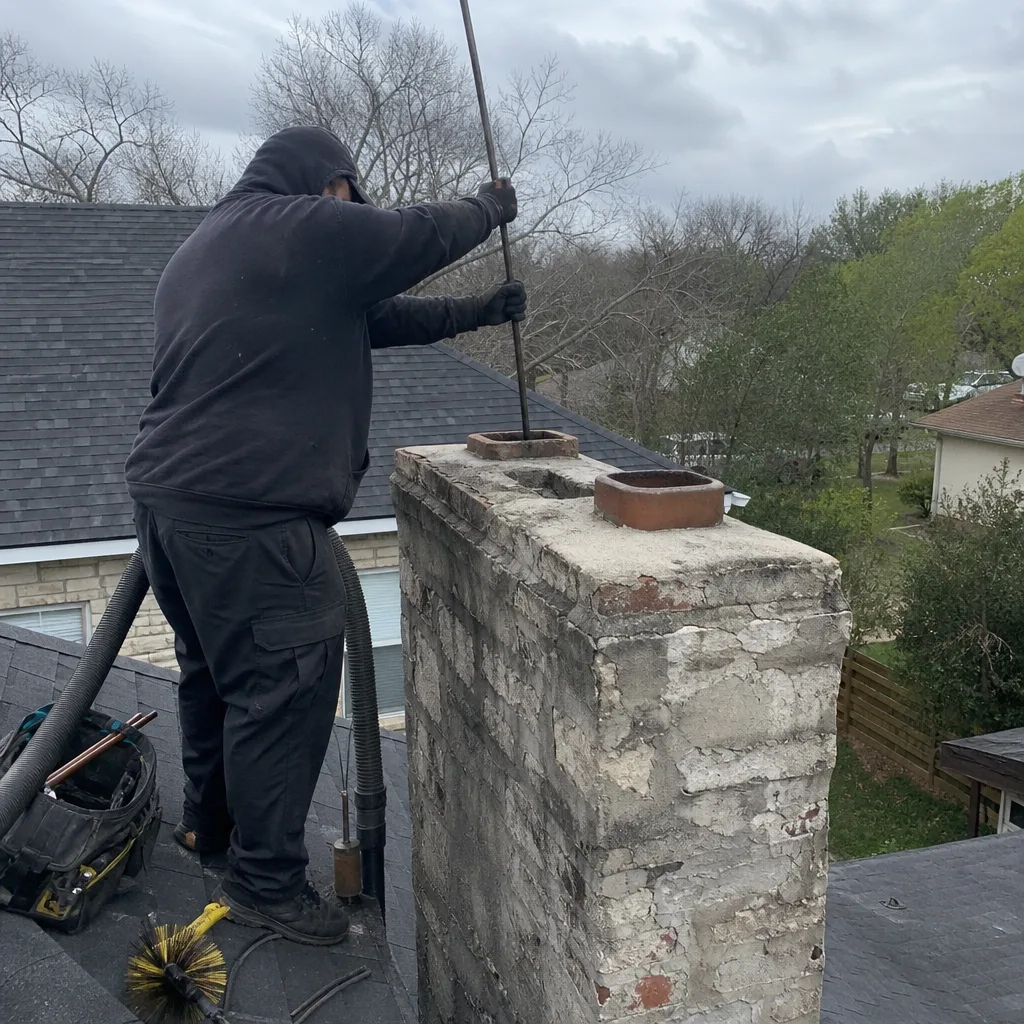 Before
 After
AfterSoot Removal in Denton, TX
Soot removal in Denton typically runs $149 to $349, depending on how much soot has built up, how many flues are involved, and whether the firebox or smoke chamber needs attention beyond the liner. Most jobs are completed in a single visit, and every one starts with a written price before any work begins.
Soot is the fine, powdery black residue left behind when wood or gas combustion is incomplete. It collects on flue liner walls, smoke chamber surfaces, damper plates, and firebox brick. A thin seasonal layer is normal. When it gets dense enough to restrict airflow or starts carrying polycyclic aromatic hydrocarbons into your living space, it becomes a ventilation problem – and an air-quality one. At Emberly Chimney Cleaners Denton, soot removal is part of our standard Chimney Cleaning & Sweep in Denton workflow, not an upsell tacked on after the tech is already in your home.
If you’re seeing dark dust around the fireplace surround or smelling a smoky odor when the fireplace isn’t running, call us at (940) 373-6912. A live person answers every time – no voicemail, no web-form queue.
When You Need Soot Removal
- Black dust or smudging on the fireplace surround. If soot is migrating past the firebox opening and leaving marks on the hearth face or nearby walls, the flue isn’t drawing properly and the deposits inside are likely heavy enough to contribute to the draft problem.
- Smoky or stale odor when the fireplace is cold. Denton homes see significant humidity swings between December and March, and moist air pulls soot odors down through the flue. What smells like “old fireplace” in the living room is usually soot absorbing ambient moisture in the smoke chamber.
- You haven’t had the chimney cleaned in more than 12 months. One cord of wood burned through a North Texas winter can deposit enough soot and light creosote to warrant a full cleaning before the next heating season. Skipping a year compounds the buildup.
- Recent renovation work near the fireplace. Contractors working in the area – even just painting or drywall sanding – can dislodge soot from firebox crevices. If your Denton home had any fireplace-adjacent work done, a post-project cleaning is worth scheduling.
- Your gas fireplace has a milky film on the glass or a sulfur-like smell. Gas logs produce less soot than wood, but they still deposit particulates on the glass panel, burner ports, and firebox liner. The sulfur note usually means incomplete combustion, and soot is accumulating faster than normal.
- The previous owners’ maintenance history is unknown. This is common in Denton’s older neighborhoods – Quail Creek, North Lakes, near TWU – where homes with original masonry fireplaces changed hands and records weren’t passed along. A camera scan and cleaning gives you a documented baseline.
Our Soot Removal Process
- Written scope and price before anything is touched. Under Haven Standard Clause 1 – the “Have it in writing” clause – you receive a written price, written scope of work, and written warranty before the tech opens a single drop cloth. No verbal estimates, no price-shift at the end.
- NFPA 211 Level 2 camera inspection of the flue liner. We run the camera down the flue first. This tells us exactly where soot is concentrated, whether there’s any creosote layering on top of it, and whether the liner itself (clay tile, cast-in-place, or stainless flex liner) shows any cracking or joint separation that the cleaning needs to work around. You see the footage. We describe what the camera shows in plain terms before we pick up a brush.
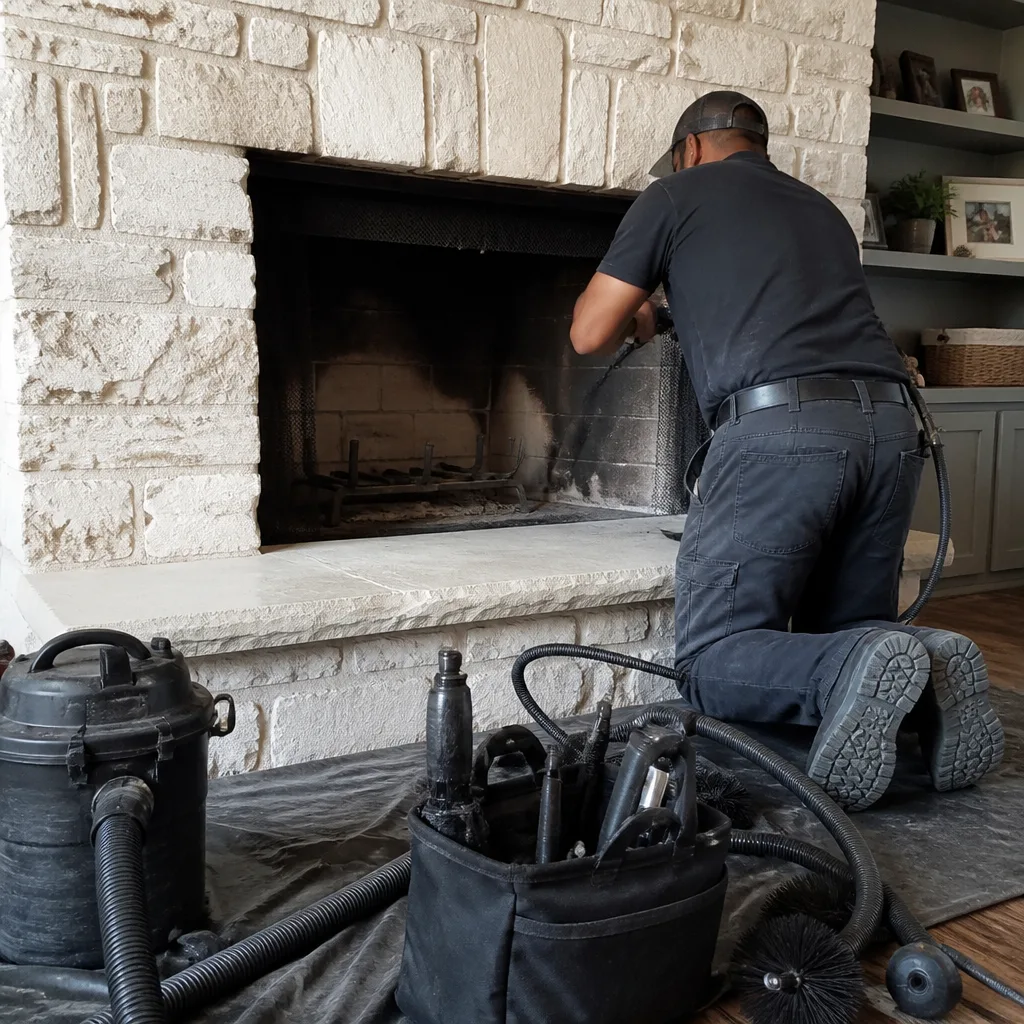
- Firebox and smoke chamber prep. A properly fitted drop cloth seals the fireplace opening. This is a basic step that a lot of operations skip on quick calls – the result is soot dust spread across the hearth, carpet, and nearby furniture. We don’t skip it. The smoke chamber – the sloped transition zone above the damper – is one of the highest-accumulation areas in a wood-burning system, and it gets brushed and vacuumed as part of the standard process, not as a separate line item.
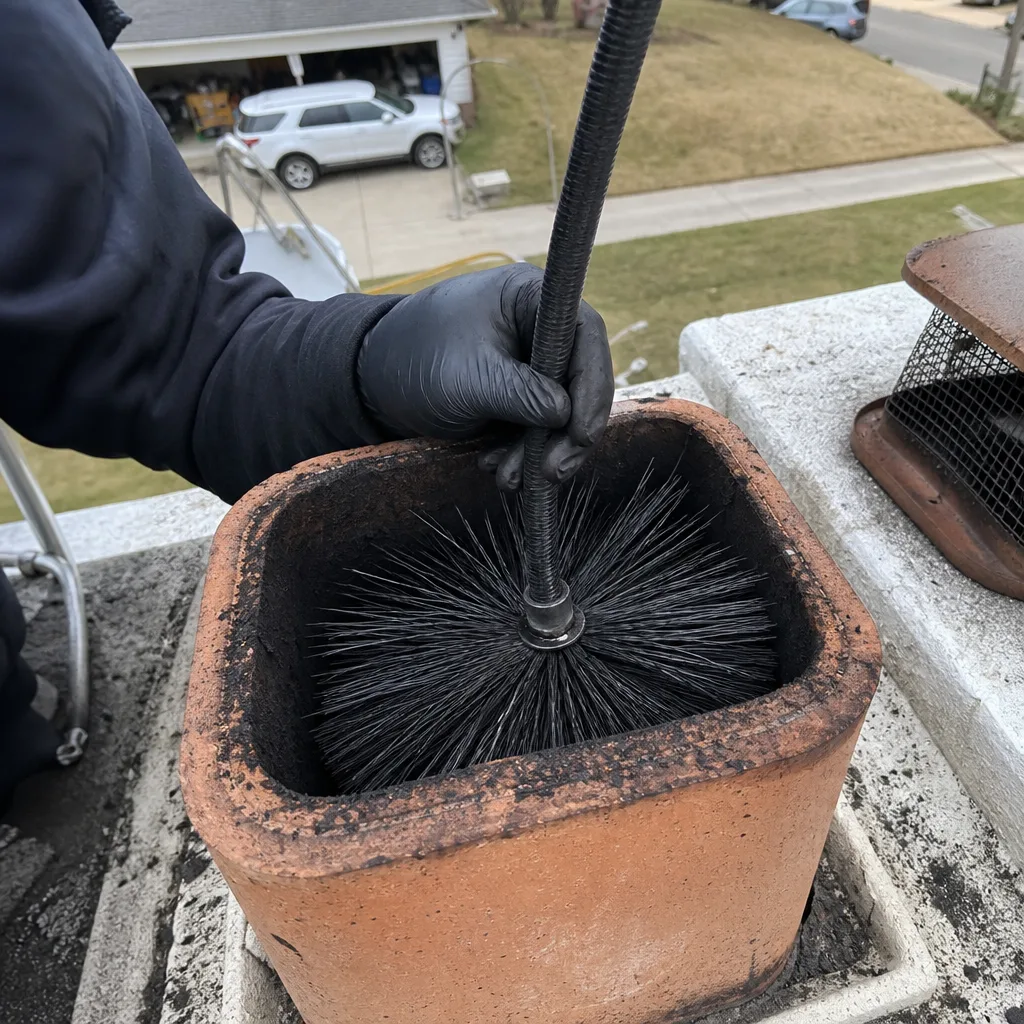
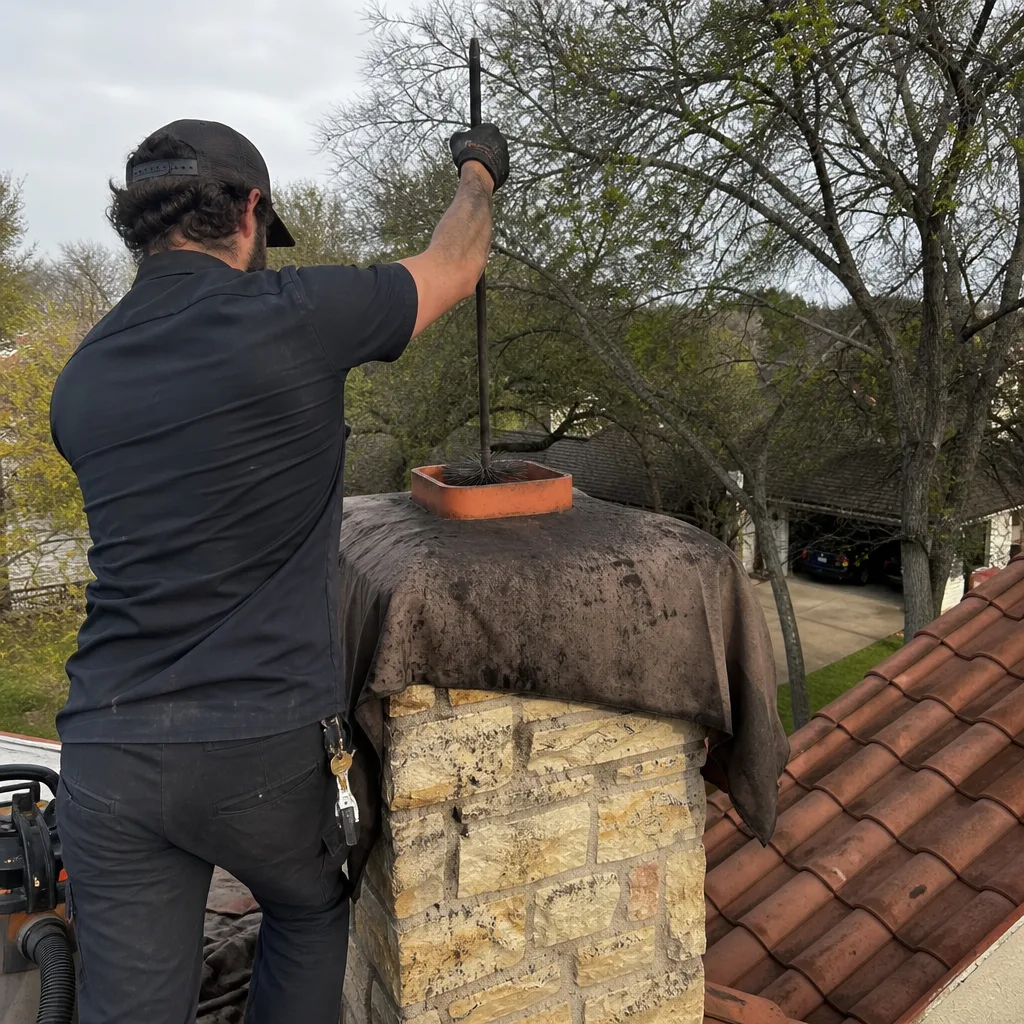
- Rotary brush cleaning of the flue liner from top down. We work from the chimney crown downward using chimney brushes sized to the liner dimension. For most Denton homes with 8×8 or 8×12 clay tile liners, this means a full-length pass on the liner interior. HEPA-filtered vacuum equipment running at the firebox opening captures dislodged material as it falls. Soot doesn’t get the chance to migrate into the room.
- Damper plate, smoke shelf, and firebox surfaces. Once the liner is clean, the damper plate, smoke shelf, and firebox walls get a brush-and-vacuum pass. The smoke shelf – the horizontal ledge directly behind the damper – collects soot and debris that drops down from the flue but doesn’t make it into the firebox. It’s a step that gets skipped on rushed jobs; we include it in the standard process.
- Documented photo record and written summary. Clause 4 of the Haven Standard requires a photo record on every job – not optional, not an upgrade. You receive photos of the liner condition before and after cleaning, damper condition, crown and cap status, and any areas of note. The written summary names what was found, what was done, and what (if anything) needs follow-up attention. That record is yours to keep, share with an insurer, or hand to the next owner when you sell.
BeforeAfterSoot Removal Pricing in Denton
Soot removal in Denton runs $149 to $349 for a standard single-flue wood-burning fireplace. Here’s what moves the number:
| Scenario | Typical Range |
|---|---|
| Single flue, light seasonal soot, annual cleaning | $149 – $199 |
| Single flue, moderate buildup (12-24 months since last cleaning) | $199 – $249 |
| Single flue, heavy accumulation or smoke chamber detail needed | $249 – $349 |
| Gas fireplace soot and glass cleaning | $149 – $219 |
| Second flue (same visit) | Add $99 – $149 |
| NFPA 211 Level 2 camera inspection (included standard) | Included |
| Documented photo record (included standard) | Included |
A few things that push the price toward the higher end: a flue that hasn’t been cleaned in several years, a smoke chamber with significant soot pack on the corbeled brick, or a liner that needs careful brush selection because of prior damage. All of that gets identified in the camera scan before we quote – so the written price you sign off on already accounts for it.
If a competitor gave you a written estimate, bring it. We offer a free second opinion on any written quote – no obligation to book, no pressure. Call (940) 373-6912 and we’ll review it with you.
Materials, when they’re part of the visit – brush sets, HEPA filter elements, or minor cap hardware from suppliers like Gelco or Copperfield – are priced into the written quote upfront. There’s no “plus materials” line that appears at the end.
What Makes Denton’s Soot Picture a Little Different
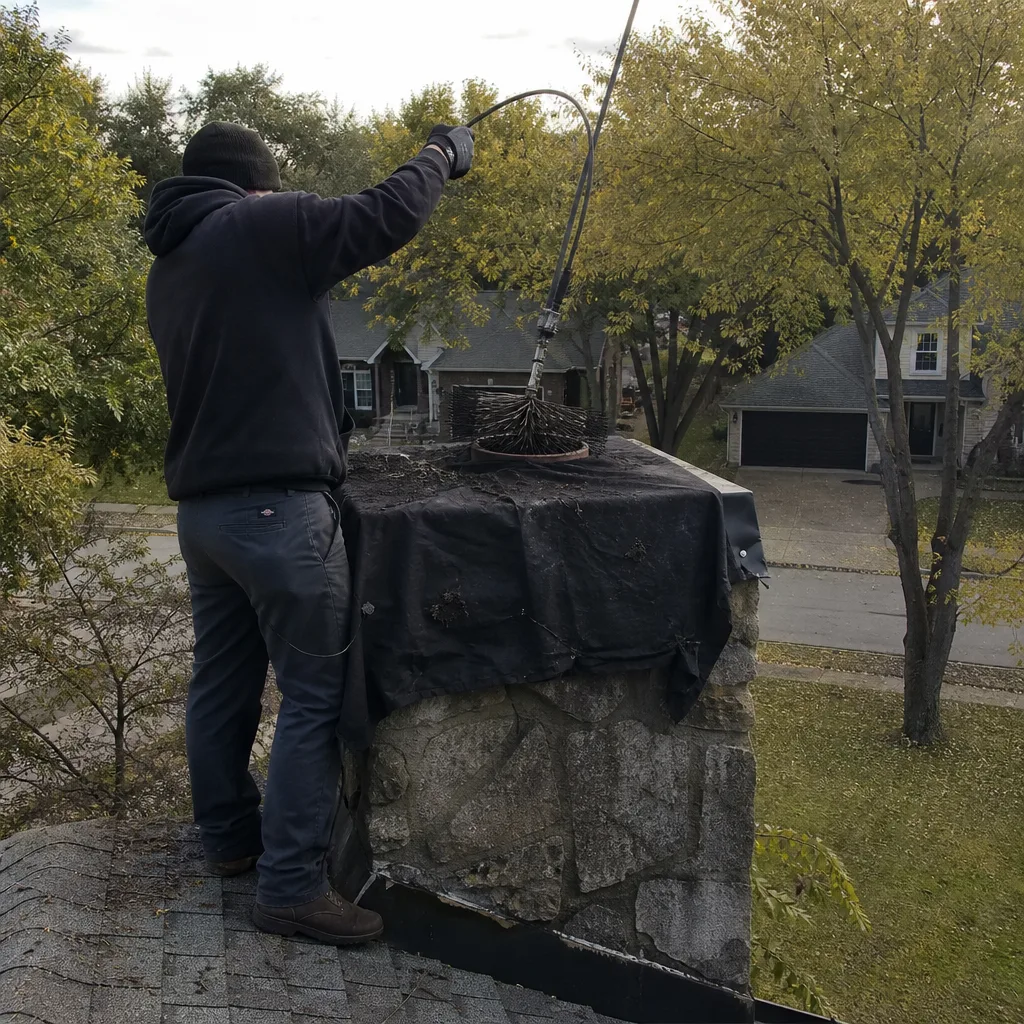
Denton sits at the edge of the Cross Timbers ecoregion, and a lot of local homeowners burn post oak, blackjack oak, and eastern red cedar – all native to the area and readily available from local suppliers. Cedar in particular burns hot and aromatic, which homeowners like, but it also produces more particulate than hardwoods. That particulate-heavy smoke translates to faster soot accumulation on liner walls, especially in shorter or lower-draft flues common in the ranch-style and mid-century homes around neighborhoods like Ridgecrest and Woodrow.
Denton also sees temperature inversions during November through February that suppress chimney draft on cold, still mornings. When draft is suppressed, combustion products linger longer in the flue instead of exhausting cleanly. That slower evacuation deposits more soot per fire. It’s a normal North Texas weather pattern – it just means Denton chimneys that burn wood regularly often need Annual Sweep service every season rather than every other year.
We’ve been documenting this pattern in Denton flues since 2009, across more than 38,000 chimney inspections and cleanings. That volume of camera footage gives us a real picture of what Denton liner conditions actually look like at 12, 24, and 36 months of use – not a generalized national estimate.
Soot vs. Creosote: What the Camera Tells Us
Soot and creosote are related but not the same thing. Soot is fine particulate carbon – light, powdery, and relatively easy to remove with rotary brush equipment. Creosote is a condensed, tar-like byproduct that forms when flue temperatures drop below about 250°F and pyrolysis gases condense on liner surfaces. It comes in three classes:
- Class I: Flaky, light deposits. Brushes out cleanly. This is what most well-maintained Denton fireplaces show at annual cleaning.
- Class II: Tar-like or crunchy glaze. Requires chemical treatment before mechanical removal. Rotary brushing alone won’t clear it.
- Class III: Hardened, shiny glaze that’s essentially carbonized. This is a fire hazard. Removal requires specialized chemical application over multiple visits, and the liner needs to be reassessed for integrity afterward.
The camera scan tells us which class we’re dealing with before the price is written. If what looked like a standard soot cleaning turns out to involve Class II or Class III creosote, we stop, show you the footage, revise the scope, and rewrite the price. You don’t find out at the end that the job was more involved than quoted – you find out before work resumes.
Soot mixed with early-stage creosote is common in Denton homes that burn frequently but at lower temperatures – slower, overnight burns in a firebox that’s slightly oversized for the space. If the camera shows that pattern, we’ll note it in the written summary along with draft and burn-temperature recommendations that can slow future accumulation.
FAQs – Soot Removal
How much does soot removal cost in Denton, TX?
How Much Does Chimney Cleaning & Sweep Cost? (2026 Price Guide) - Denton, TX: soot removal runs $149 to $349 for a single-flue wood-burning fireplace, depending on the level of buildup and whether the smoke chamber needs detailed cleaning. Gas fireplace cleaning runs $149 to $219. The written price is set before any work starts – not estimated afterward. Call (940) 373-6912 for a no-surprise quote.
Is soot removal something I can do myself?
Sweeping light surface soot from a firebox with a brush and ash vacuum is low-risk. Getting soot off flue liner walls, the smoke shelf, and the smoke chamber interior is a different task: it requires rotary brush equipment fitted to the liner dimension, HEPA filtration to prevent fine particulate from spreading into the home, and a camera scan to distinguish soot from creosote before you start brushing. Misreading Class II creosote as soot and brushing it mechanically can fracture the deposit into shards that drop into the firebox instead of removing the underlying problem. We don’t recommend full DIY flue cleaning for anything beyond the firebox itself.
How often do Denton chimneys need soot removal?
The NFPA recommends Chimney Cleaning & Sweep services once per year for any chimney in regular use. In Denton specifically, homeowners who burn wood – particularly cedar or mixed hardwood/cedar loads – often see enough accumulation in a single heating season to warrant an annual cleaning rather than a biennial one. Homes that burn two or more cords per season should treat annual cleaning as a minimum. Gas fireplaces that run regularly need cleaning every one to two years, though the glass panel may need attention more often.
What’s included in Emberly Chimney Cleaners Denton’s soot removal service?
A standard soot removal visit includes: a written price and scope before work starts, an NFPA 211 Level 2 camera inspection of the flue liner, rotary brush cleaning of the flue from crown to firebox, smoke chamber and smoke shelf cleaning, damper plate inspection, HEPA-vacuum capture of all dislodged material, and a documented photo record delivered to you when the job is complete. The camera inspection and photo record are included as standard – Haven Standard Clause 4 – not priced separately.
The Emberly Chimney Cleaners Denton Difference on Soot Work
A lot of Denton homeowners who’ve used other services describe the same experience: the tech arrives, spends twenty minutes with a brush and a shop vac, collects payment, and leaves. No camera. No written price before starting. No documentation of what condition the liner was in when the job was done. If a problem shows up later – a crack that was already there, a creosote pocket that wasn’t cleared – there’s no record to refer to and no promise backing the work.
Emberly Chimney Cleaners made camera-scan documentation the default in 2009, before regulators or insurers asked for it. That practice became Clause 4 of the Haven Standard and has run on every single job since. The photo record isn’t a premium option. It’s what you get because it’s what honest documentation looks like.
The 365-Day Done Right Promise means that if the soot removal work isn’t right – if something was missed, if a problem was present on the day of service that wasn’t noted – we come back and make it right. That promise is stamped on every job, not offered as a verbal reassurance at the door.
Corrine Halstead leads the team at Emberly Chimney Cleaners Denton, and the standard she holds the operation to is the same one we apply to every visit: a named tech, a text when they’re on the way, a written price before work starts, and a documented record when it’s done. That’s not a sales pitch – it’s the structure we’ve operated under since the beginning, across more than 38,000 inspections and cleanings.
For more on what’s included in a full chimney cleaning visit, see our Chimney Cleaning & Sweep in Denton page, or visit the Emberly Chimney Cleaners Denton home page to see the full range of services.
Schedule Soot Removal in Denton
If your Denton fireplace hasn’t been cleaned this season – or if you’re not sure when it was last done – search Chimney Cleaning & Sweep Near Me in Denton, TX or call (940) 373-6912. A live person answers every call, every day. We’ll get a written price in front of you before a single drop cloth goes down, and you’ll have a documented photo record of the liner condition when we’re finished. No surprises at the end, and a 365-day promise backing the work.
Written by Corrine Halstead, Owner at Emberly Chimney Cleaners Denton, serving Denton.