
Last updated September 22, 2026
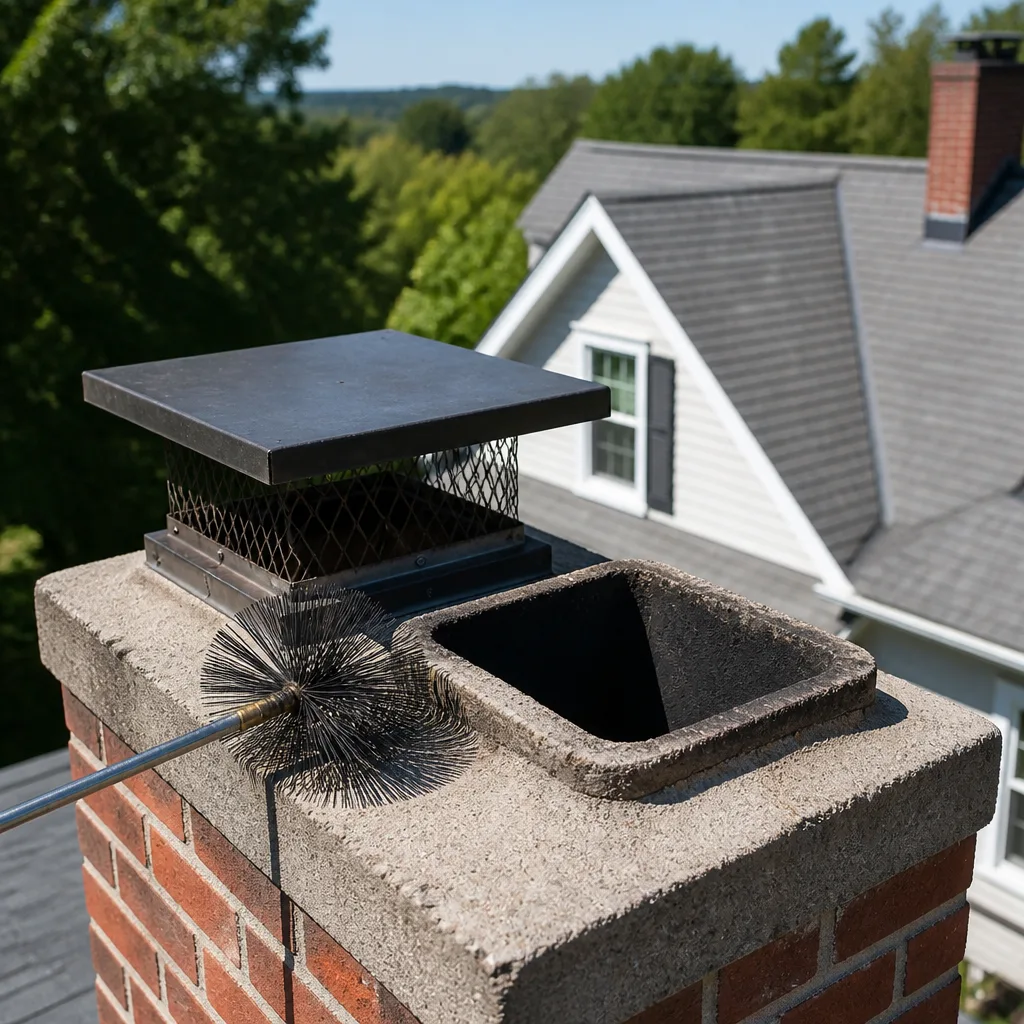
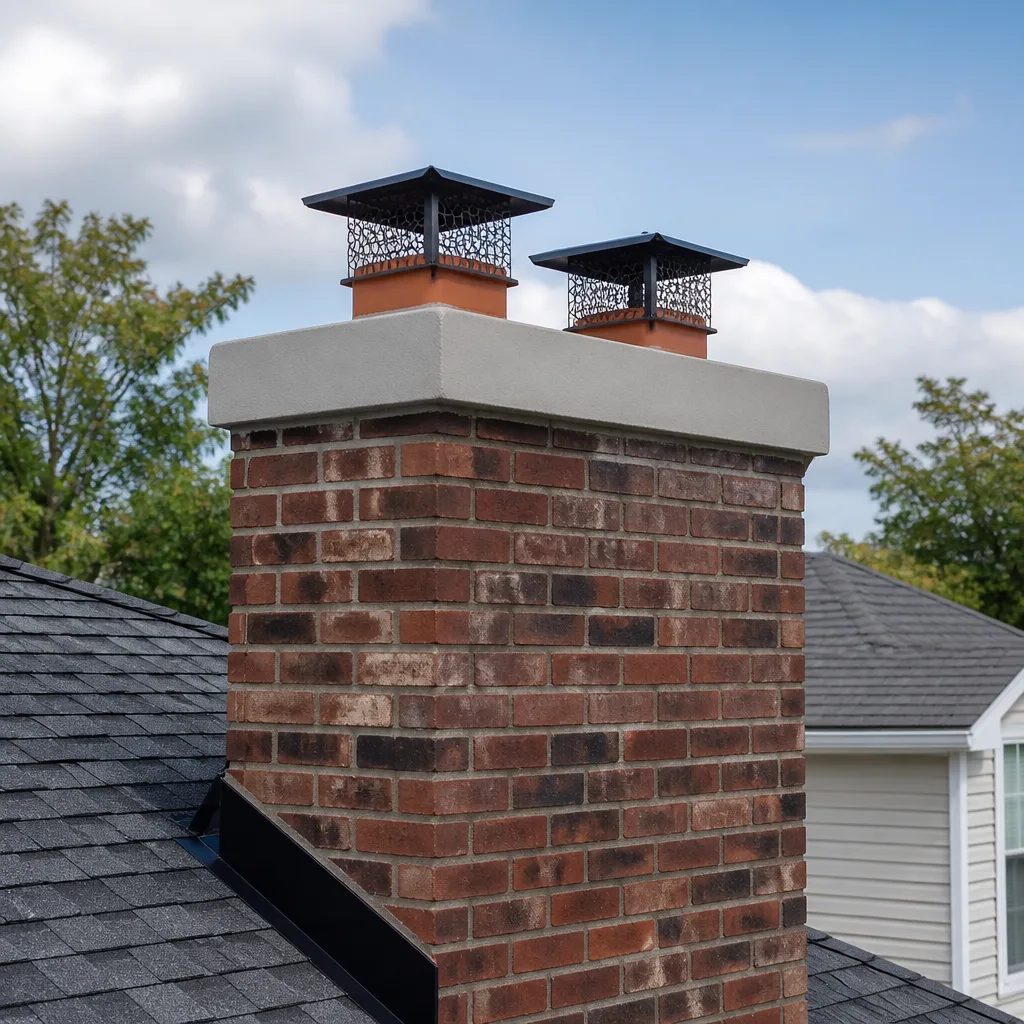
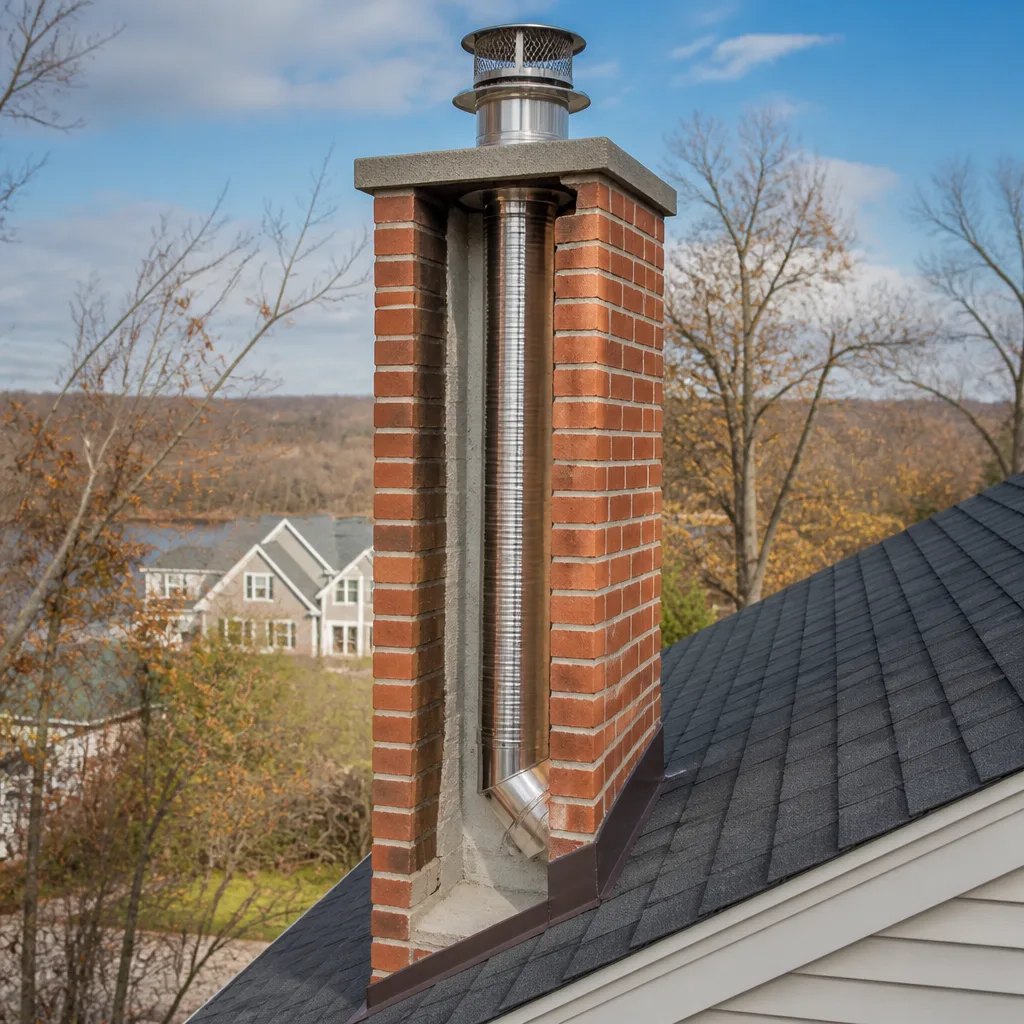
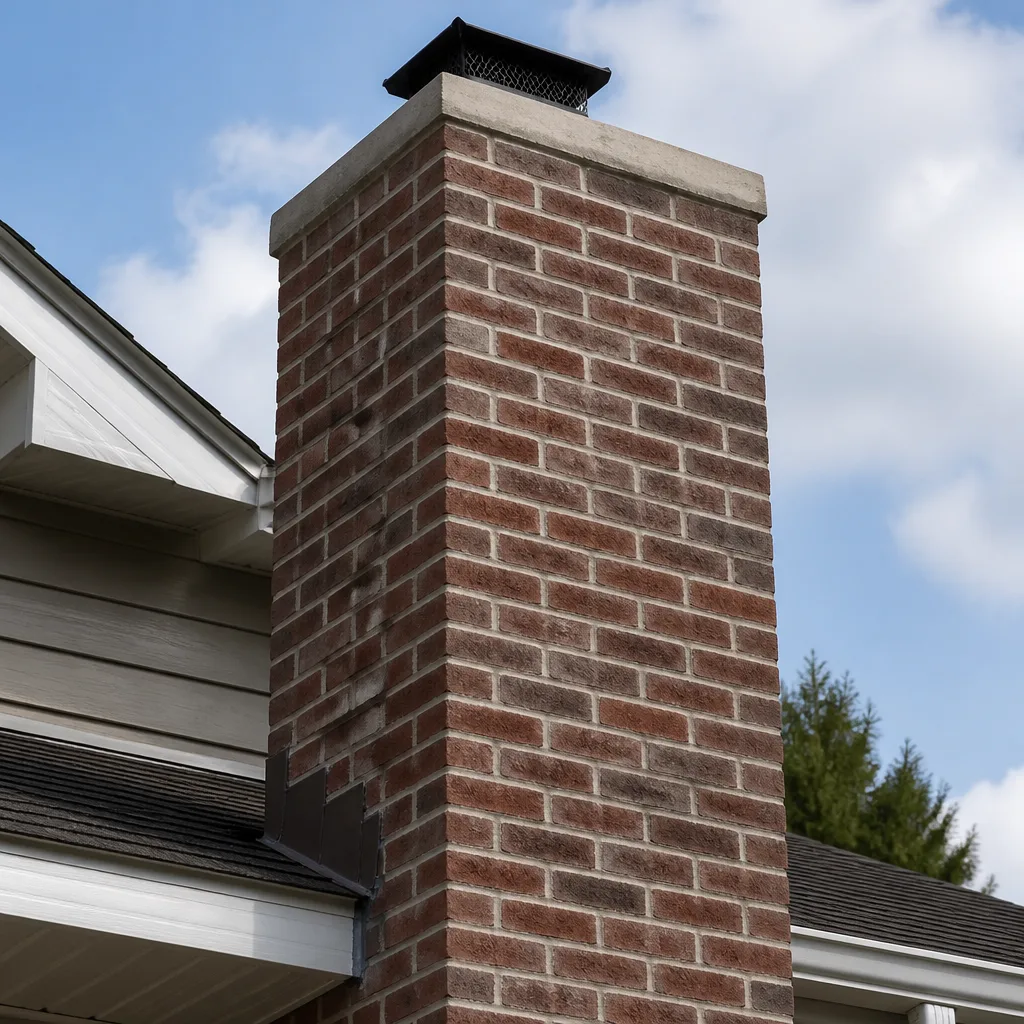
Level 1 sweep and inspection to the NFPA 211 annual standard - flue, crown, cap, and flashing checked and photographed
Chimney sweep logs do not sweep chimneys. They loosen some creosote - which then falls where a brush and vacuum still have to collect it.
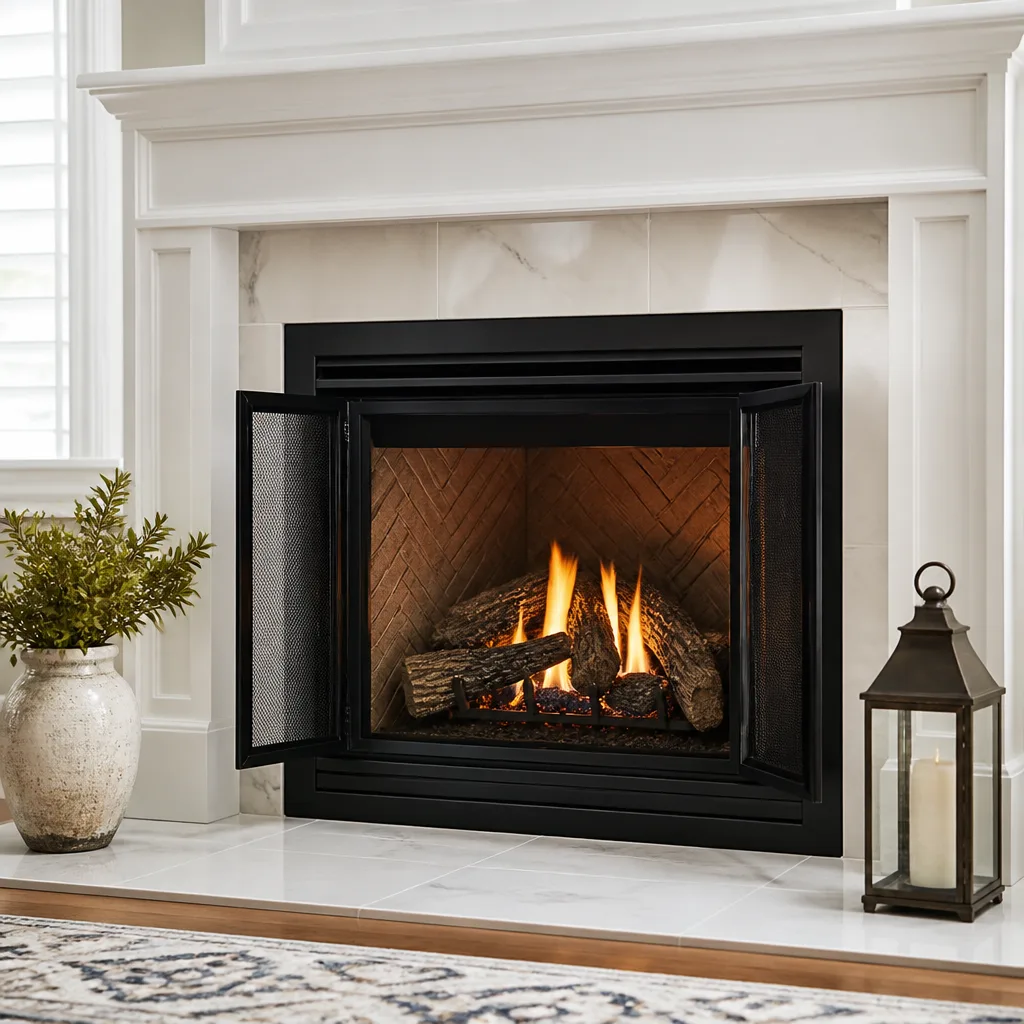
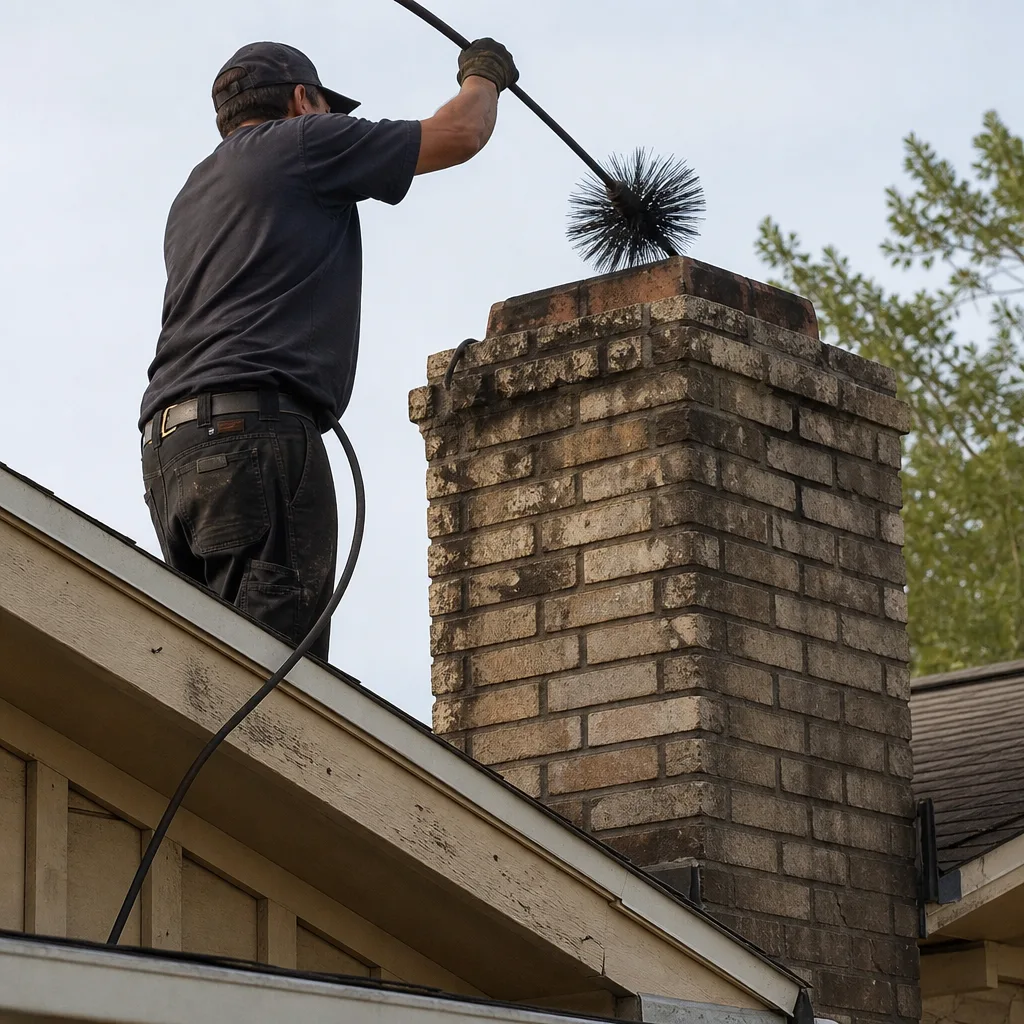 Before
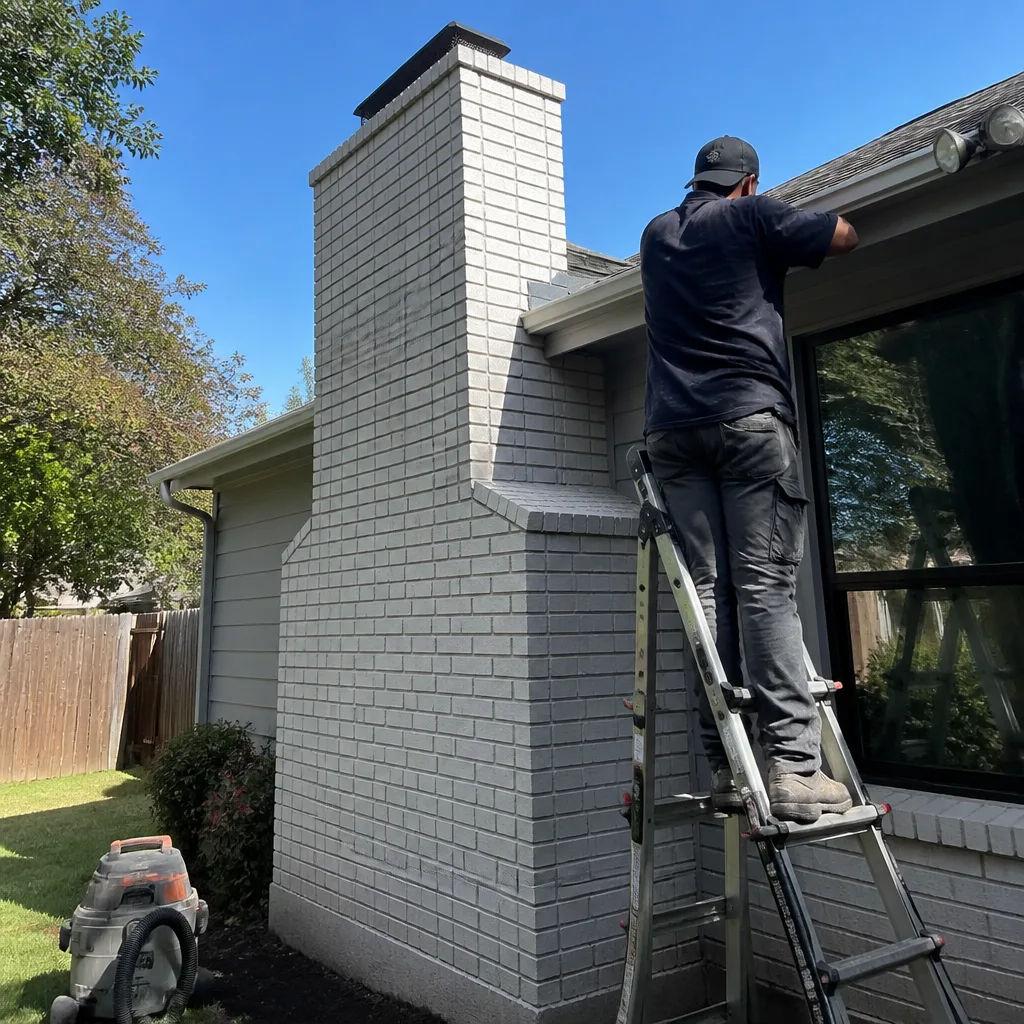 After
After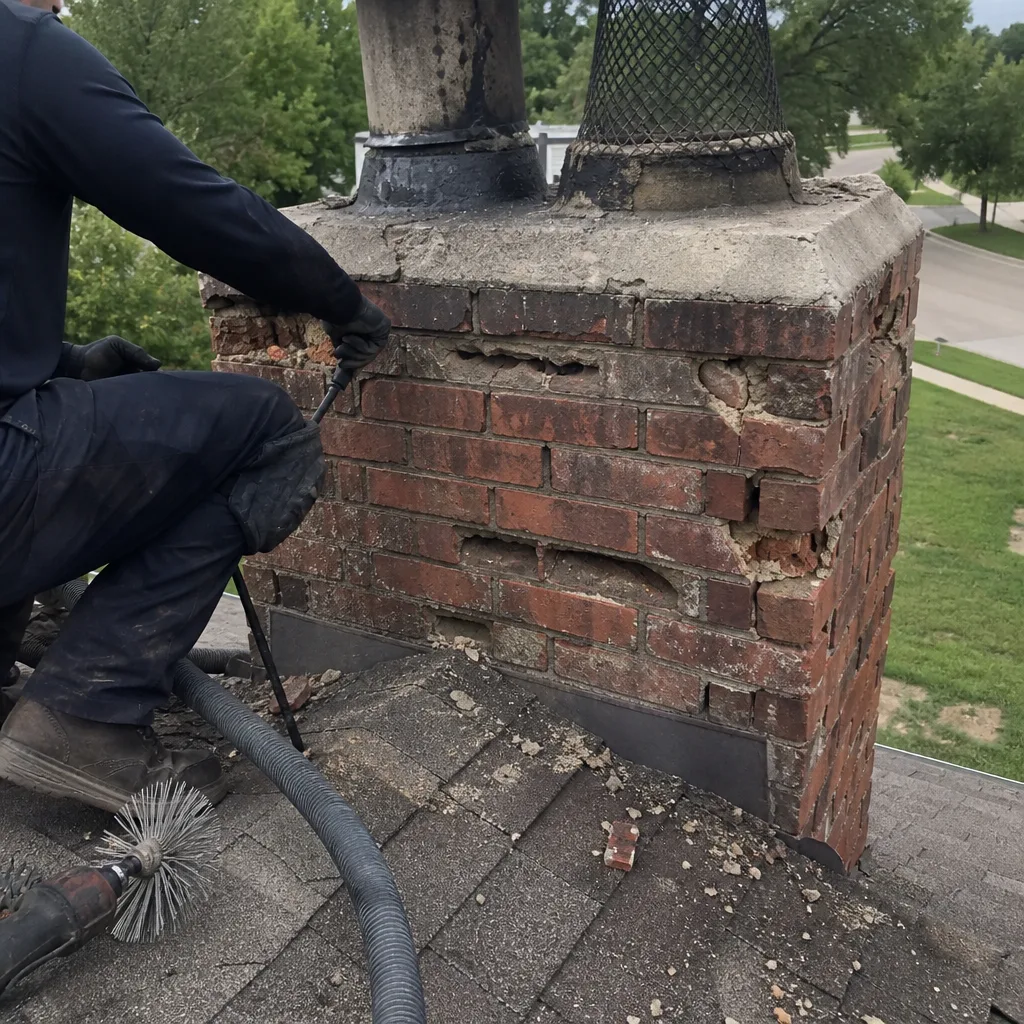 Before
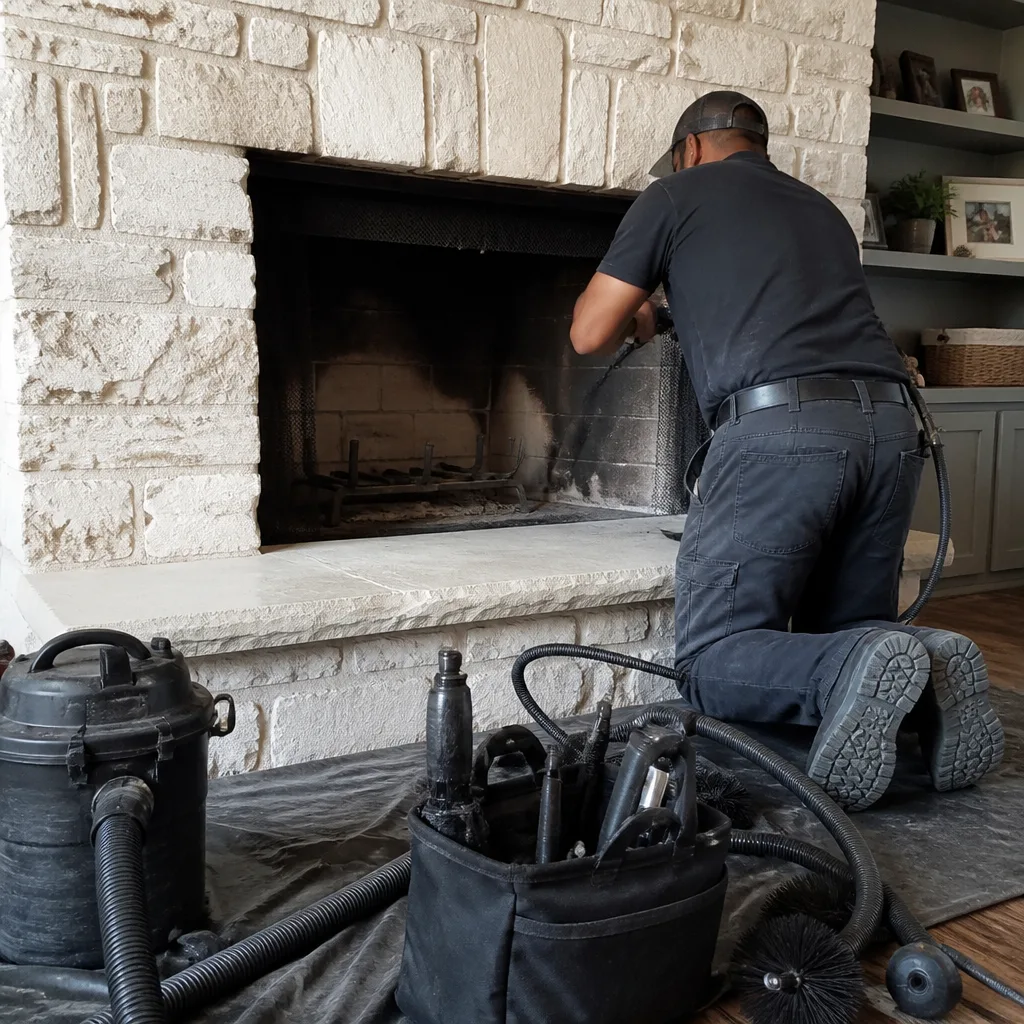 After
After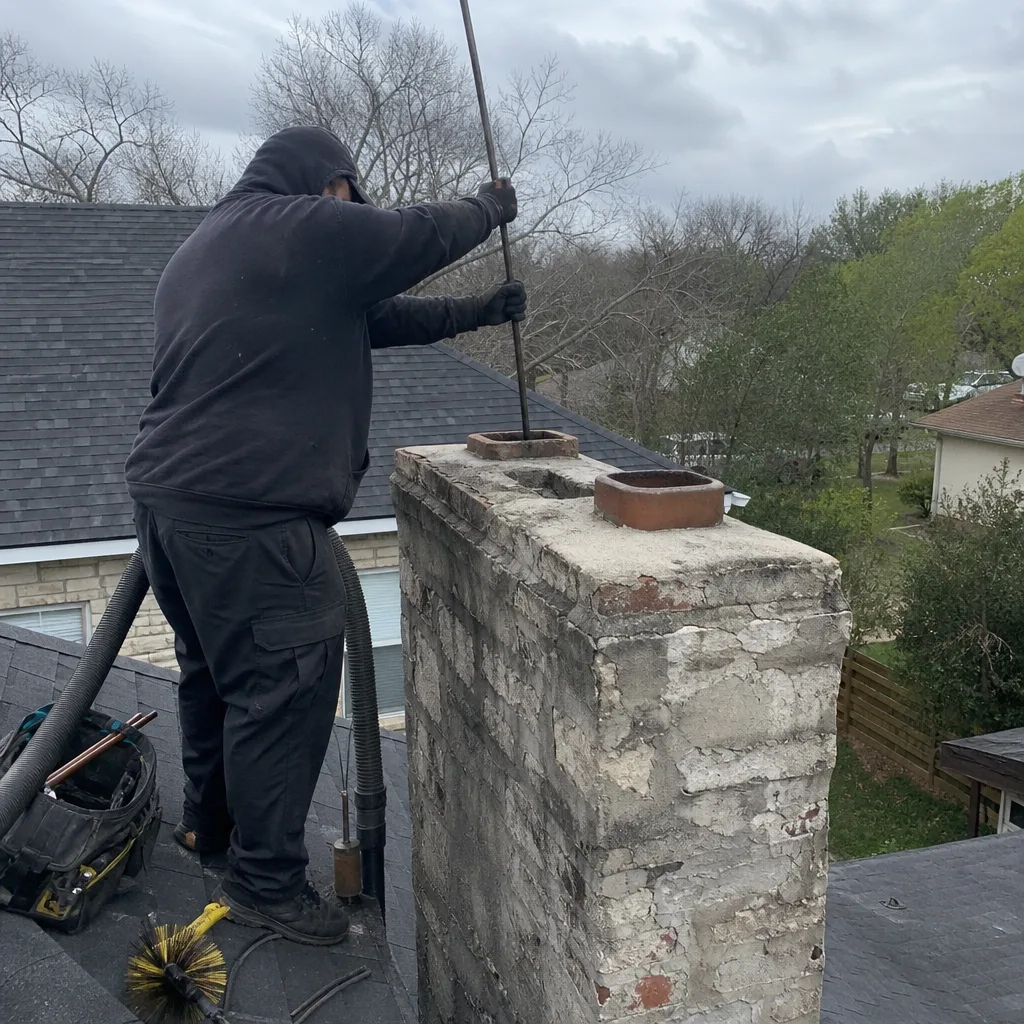 Before
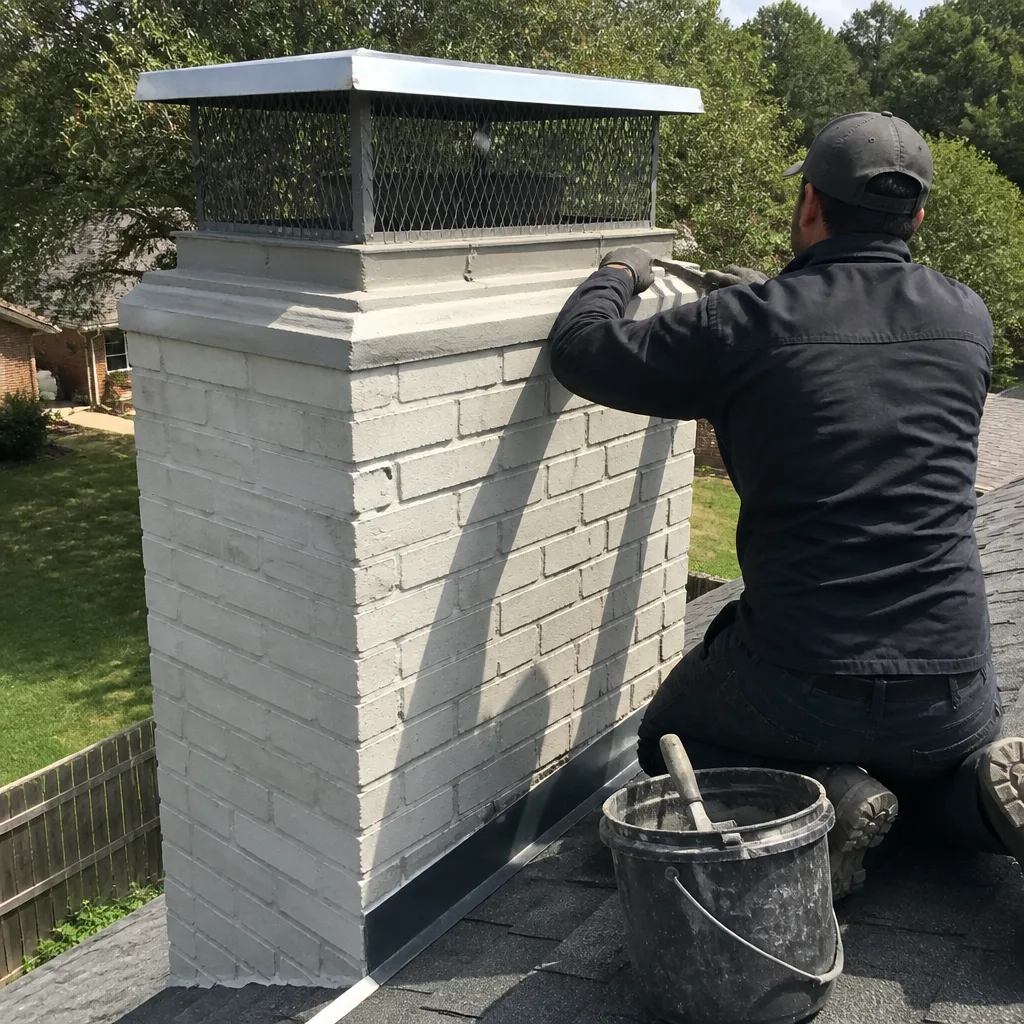 After
AfterSeasonal Chimney Cleaning Care for Denton: Year-Round Homeowner’s Guide
Denton averages fewer than 65 days cold enough to run a wood fire, but your chimney spends the other 300 days exposed to 60-80% humidity, UV, and animal activity. The off-season does more damage than the burn season in most cases we see. In this guide, we’ll map a year-round maintenance schedule built on Denton’s actual climate data, not a generic four-season template. You’ll learn why March beats October for scheduling, how humidity attacks terra cotta liners, and what pests are legally protected in your flue.
Quick Answer
Chimney cleaning in Denton should happen once yearly for gas systems and after every cord of wood burned for solid fuel, as detailed in our Chimney Cleaning & Sweep Maintenance Checklist for Denton Homeowners. The optimal schedule: a post-season sweep and camera inspection in March, followed by a mid-summer structural check before the October booking rush. This timing catches humidity damage early, avoids the fall availability crunch, and typically costs 15-25% less than pre-season appointments.
Table of Contents
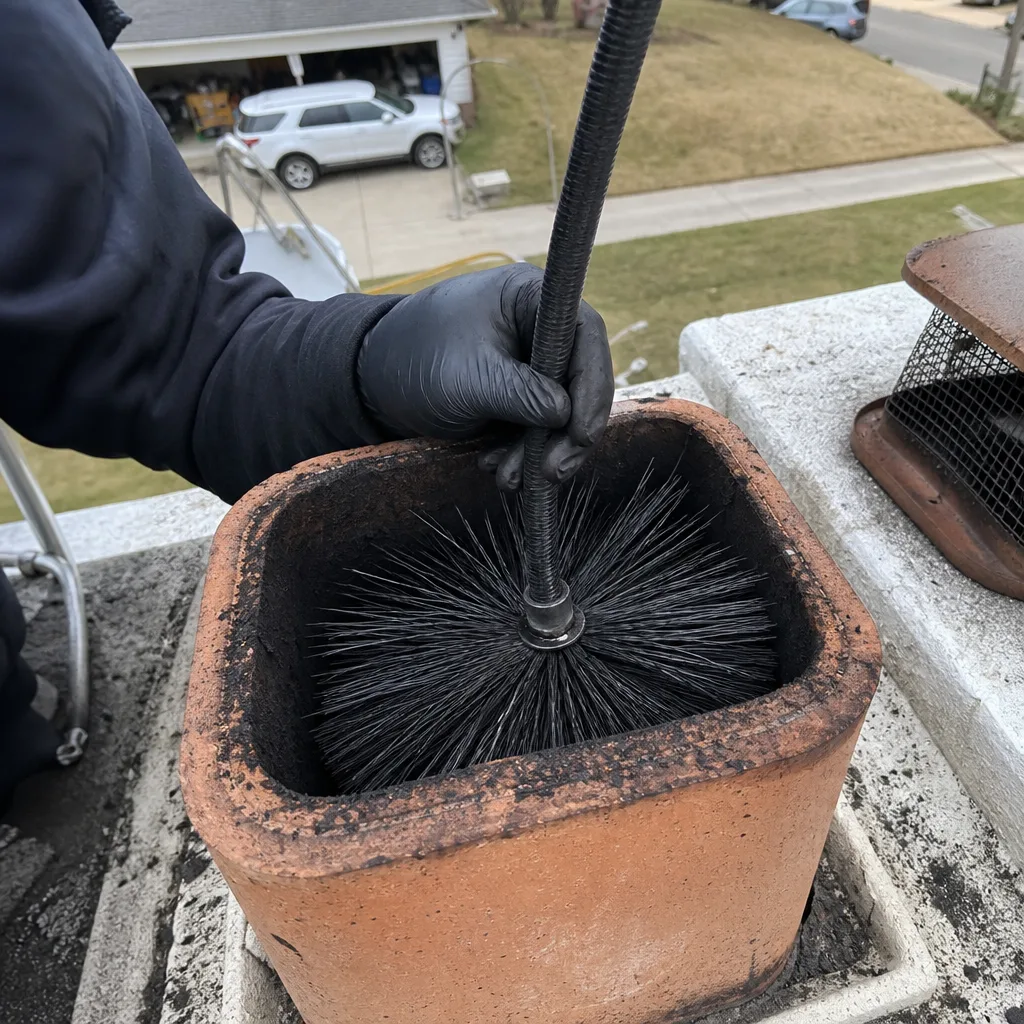
- How Denton’s Climate Actually Damages Chimneys
- Month-by-Month Maintenance Calendar
- Why March Beats October for Scheduling
- What Humidity Does to Terra Cotta Liners
- Pests in Denton Flues: Legal and Timing Constraints
- The Compounding Cost of Missed Cycles
- Common Mistakes to Avoid
- When to Call a Professional
- Frequently Asked Questions
BeforeAfterHow Denton’s Climate Actually Damages Chimneys
Denton’s weather patterns create a specific risk profile that generic chimney guides miss entirely. Our summers run long and humid, with average relative humidity hovering between 65-80% from May through September. Winters are mild but punctuated by hard freezes that catch masonry systems off-guard.
The real enemy is thermal cycling combined with moisture. A terra cotta flue liner in a Denton chimney might reach 400°F during a January fire, then sit at ambient temperature the next evening when temperatures drop below freezing. That expansion and contraction opens hairline cracks. When March humidity arrives, water migrates into those cracks, freezes during late cold snaps, and spalls the liner surface. We’ve pulled camera footage from Denton homes in Oakmont and Southridge showing liner sections that looked intact in October but had developed visible cracking by the following May.
UV exposure matters too. The sun beats down on chimney crowns for 280+ days annually in Denton. A crown with minor alligator cracking in spring can be actively funneling water into the flue by fall if left unsealed. The chimney repair in Denton calls we field every August and September typically trace back to crown failure that started the previous summer.
Wind is the overlooked factor. Denton sits in a corridor where sustained south winds carry dust, pollen, and agricultural debris. That material accumulates on chimney caps and in flue terminations. A partially blocked cap reduces draft, causes smoke backup, and creates the cool, oxygen-starved conditions that produce glazed creosote.
Here’s what this means practically: your chimney in Denton faces three distinct hazard windows, not one. Burn season risks (creosote, thermal stress). Off-season risks (moisture intrusion, UV degradation, pest occupation). And transition risks (freeze-thaw cycling in March and November). A maintenance plan that only addresses burn-season concerns misses two-thirds of the actual threat calendar.
Month-by-Month Maintenance Calendar
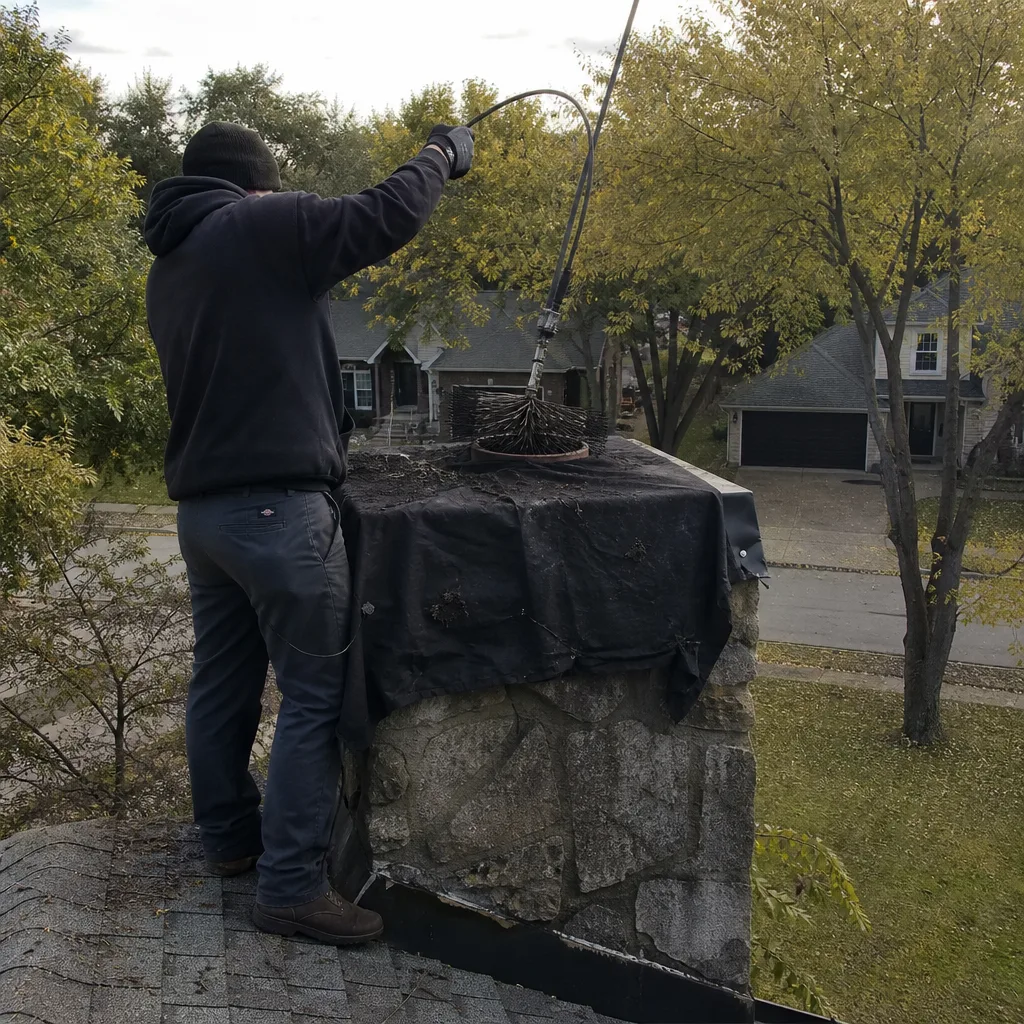
This calendar is built on Denton’s actual temperature, precipitation, and pest activity patterns. It assumes a wood-burning fireplace used 20-40 days per winter, which covers most Denton households we service.
January-February: Active Burning with Monitoring
You’re in burn season. The priority is safe operation and early warning detection.
- Check visible exterior masonry monthly for new cracks or spalling, especially after freeze events.
- Listen for unusual sounds: fluttering indicates chimney swifts or other birds; scratching suggests raccoons or squirrels.
- Watch for smoke spillage at startup, which can indicate blocked flue or degraded draft.
- Schedule your post-season sweep before March 15, while availability is open.
We see the highest volume of emergency calls in late February, when homeowners who skipped fall maintenance finally notice performance problems. Don’t let a minor draft issue become a mid-winter outage.
March-April: Post-Season Sweep and Camera Inspection
This is the optimal window for your primary annual service. The flue contains fresh creosote that’s easier to remove before it hardens. More importantly, a Level 2 camera inspection performed now establishes a baseline condition record before the humid summer begins.
What we document in March: liner integrity, creosote classification (Class I flaky through Class III glazed), smoke chamber condition, damper operation, and crown/cap status. Clause 4 of the Haven Standard requires a photo record on every job, so you’ll have dated documentation if insurance or a home sale requires it.
May-June: Exterior Assessment and Cap Repair
Humidity ramps up. Inspect the crown for new cracking, check cap mesh for corrosion or blockage, and verify flashing integrity at the roofline. This is also when wasp colonies establish in unused flues. A quick visual inspection from the roof or ground can catch occupation early, before the colony becomes established and defensive.
July-August: Deep Off-Season Check
The peak humidity window. If you have a terra cotta liner, this is when hidden moisture damage accelerates. We recommend a mid-summer camera inspection for chimneys over 15 years old, or any system that showed Class II or III creosote the previous season. The inspection is quick and identifies problems while contractors still have open schedules.
Materials matter here. When we install replacement liners in Denton homes, we specify DuraFlex stainless steel for its corrosion resistance in humid conditions, or HeatShield cerfractory flue sealant for resurfacing sound but pitted terra cotta. Both outperform standard aluminum or uncoated products in North Texas humidity.
September: Pre-Season Verification
Book early if you need fall service. By September 15, most reputable Denton sweeps have limited October availability. This is your window to address any issues identified in summer: liner repair, crown sealing, cap replacement, or damper adjustment.
October-November: Final Burn-Prep
If you followed the March schedule, October is simply a final check: verify cap is clear, damper opens fully, and you have seasoned hardwood on hand. If you’re only now thinking about your chimney, you’re competing with every other Denton homeowner for appointment slots, and you’ll pay peak-season rates for the privilege-see our Chimney Cleaning Cost Breakdown: The Denton Homeowner’s Reference for 2026 for typical pricing.
December: Maintenance Holiday
Enjoy your fireplace. The work you did in March and September earns this rest.
Why March Beats October for Scheduling
The October booking crunch in Denton is real and predictable. Every sweep company sees demand spike 300-400% the first three weeks of October, when temperatures first drop below 50°F consistently and homeowners remember they have fireplaces. The result: two-week waits, premium pricing, and rushed work.
March offers the inverse conditions. Demand drops 40-60% after February. Technicians have time for thorough work. Pricing reflects that availability. And the technical benefits are genuine.
Fresh creosote removes easier. Creosote hardens through a process called polymerization; the longer it sits, the more it resembles tar. A March sweep removes material that’s been cooling for 4-8 weeks, not 8-10 months. We complete most March sweeps in 45-60 minutes. October sweeps on systems that sat dirty all summer often run 90+ minutes, with additional mechanical cleaning charges.
Early detection of off-season damage is the bigger win. A liner crack that opens in March can be documented, monitored, and repaired before fall. The same crack discovered in October forces a choice: delay burning season for repairs, or burn on a compromised system. We’ve had Denton customers in Robson Ranch and Providence who chose to burn with known liner damage because they couldn’t bear missing Thanksgiving by the fire. That’s a risk no one should face.
The pricing advantage is straightforward. Our chimney cleaning & sweep in Denton schedule runs standard rates January through August, with modest increases September through December reflecting demand. A March appointment locks in the lower rate and includes the same Clause 4 photo documentation, written scope, and written warranty.
One practical note: Denton’s pollen season peaks late March through April. If allergies are a concern, schedule the first two weeks of March, before oak and juniper pollen counts spike. The work is outdoors and brief, but we can coordinate timing if you mention it when booking.
What Humidity Does to Terra Cotta Liners
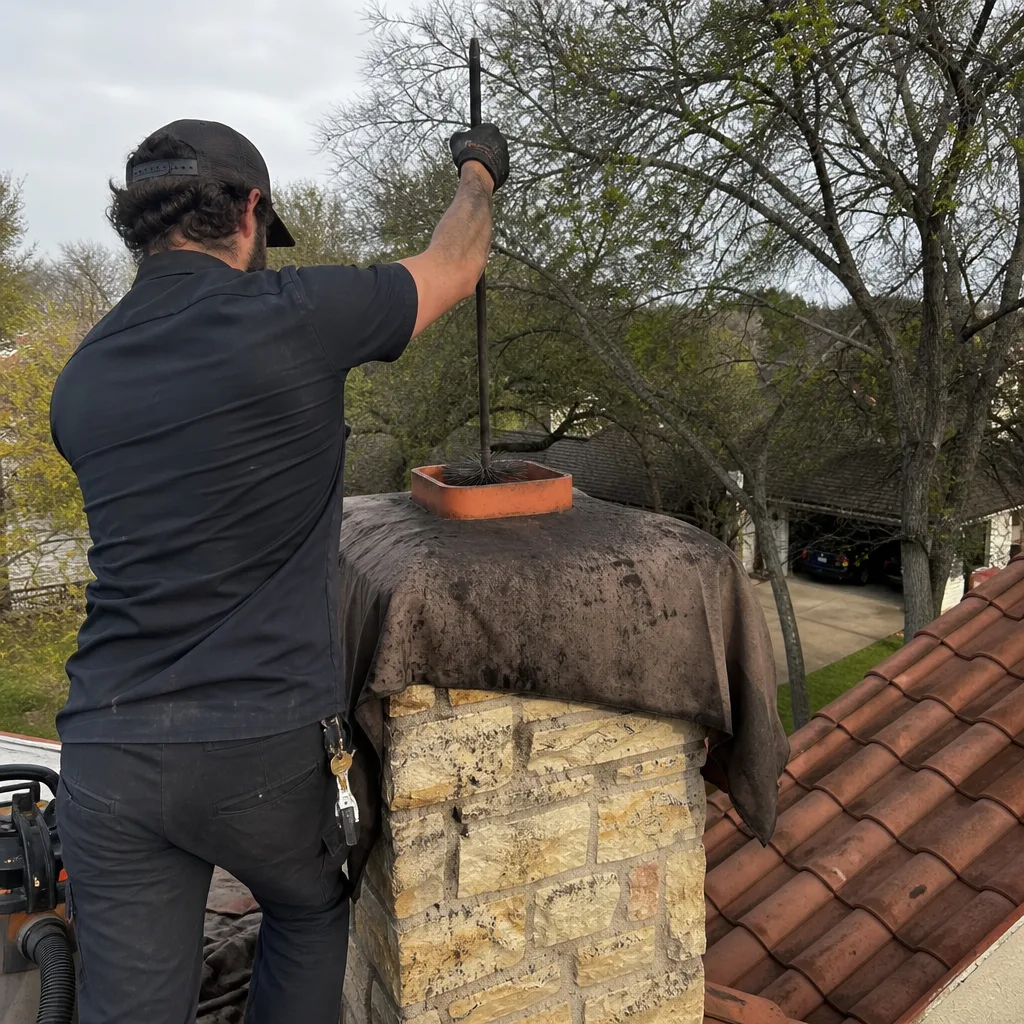
Terra cotta flue liners are clay-fired ceramic. They’re strong in compression, brittle in tension, and porous. That porosity is the problem in Denton.
When relative humidity exceeds 60% for extended periods, terra cotta absorbs atmospheric moisture even without direct water intrusion. The material swells microscopically. When a fire is lit, the rapid temperature increase drives that moisture outward as steam. The pressure can exceed the material’s tensile strength, producing micro-fractures that grow with each cycle.
We’ve documented this progression repeatedly in Denton inspections. A liner that reads “sound, minor surface pitting” in a March camera scan shows “spalling, exposed aggregate, reduced wall thickness” by the following September. The camera evidence is unambiguous: before-and-after footage from the same flue position, same lighting, same technician.
The failure mode progresses predictably:
- Surface pitting and glaze loss on the liner interior
- Hairline cracking, often radial from the flue corners
- Spalling: flakes of liner material detach and fall
- Structural cracking through the liner wall
- Partial or complete liner collapse, typically during a chimney fire or hard freeze
At stage 3, repair options narrow. HeatShield cerfractory resurfacing can restore a sound but pitted liner. DuraFlex stainless steel relining replaces a cracked or spalled system. Full liner reconstruction is rare but necessary when multiple sections have collapsed.
The critical insight: humidity damage is progressive and largely invisible without a camera inspection. A homeowner can burn successfully for years on a compromised liner, until the day they can’t. The NFPA 211 Level 2 inspection exists specifically to find this condition before it becomes an emergency. We’ve performed over 38,000 chimney inspections and cleanings since 2009, and the majority of serious liner damage we find was asymptomatic: no smoke problems, no odor, no visible exterior distress. The camera found it, or it would have been discovered by a chimney fire.
Pests in Denton Flues: Legal and Timing Constraints
Denton chimneys host a specific pest profile, and two species carry legal protections that affect removal timing, as covered in our guide to Chimney Cleaning Permits, Codes & Inspections in TX: What You Need to Know.
Chimney Swifts
These small, cigar-shaped birds are federally protected under the Migratory Bird Treaty Act. They cannot be disturbed during nesting season, which in Denton runs approximately April through August. A swift nest in your flue means no sweep work, no cap installation, no repairs until the young have fledged.
Swifts prefer uncapped flues with rough interior surfaces, which describes most older terra cotta liners. Prevention is simple: a properly sized cap with mesh sides, installed before March. If swifts occupy your flue, we document the nest with photos (Clause 4), mark your file for follow-up in September, and return to cap the chimney after the protected period ends.
Raccoons
North Texas raccoons are active year-round but most frequently den in chimneys during late winter (February-March) and early summer (June-July). They’re strong climbers, persistent, and can damage liner sections with their weight and scratching.
Removal requires a wildlife control professional, not a sweep. We coordinate with licensed trappers in Denton County, then perform the camera inspection and any liner repair after eviction. A raccoon-damaged liner typically shows claw marks and displaced mortar at the smoke chamber junction.
Wasps and Bees
Paper wasps and, less commonly, honeybees establish colonies in unused flues. Wasps are manageable with standard pest control before the colony grows large. Honeybees require a beekeeper for relocation if the colony is established. We inspect after removal to ensure no comb residue remains; the waxy material is highly flammable.
Squirrels
Less common in chimneys than raccoons, but active in Denton’s mature neighborhoods with heavy tree canopy, particularly around Quakertown Park and the historic districts. Squirrels can dislodge damper components and bring nesting material that creates fire hazards.
The timing lesson: a March sweep and cap installation prevents most pest occupation before the active season begins. An October sweep on an uncapped chimney may discover a protected swift nest, forcing a full season of non-use or illegal removal. Plan ahead.
The Compounding Cost of Missed Cycles
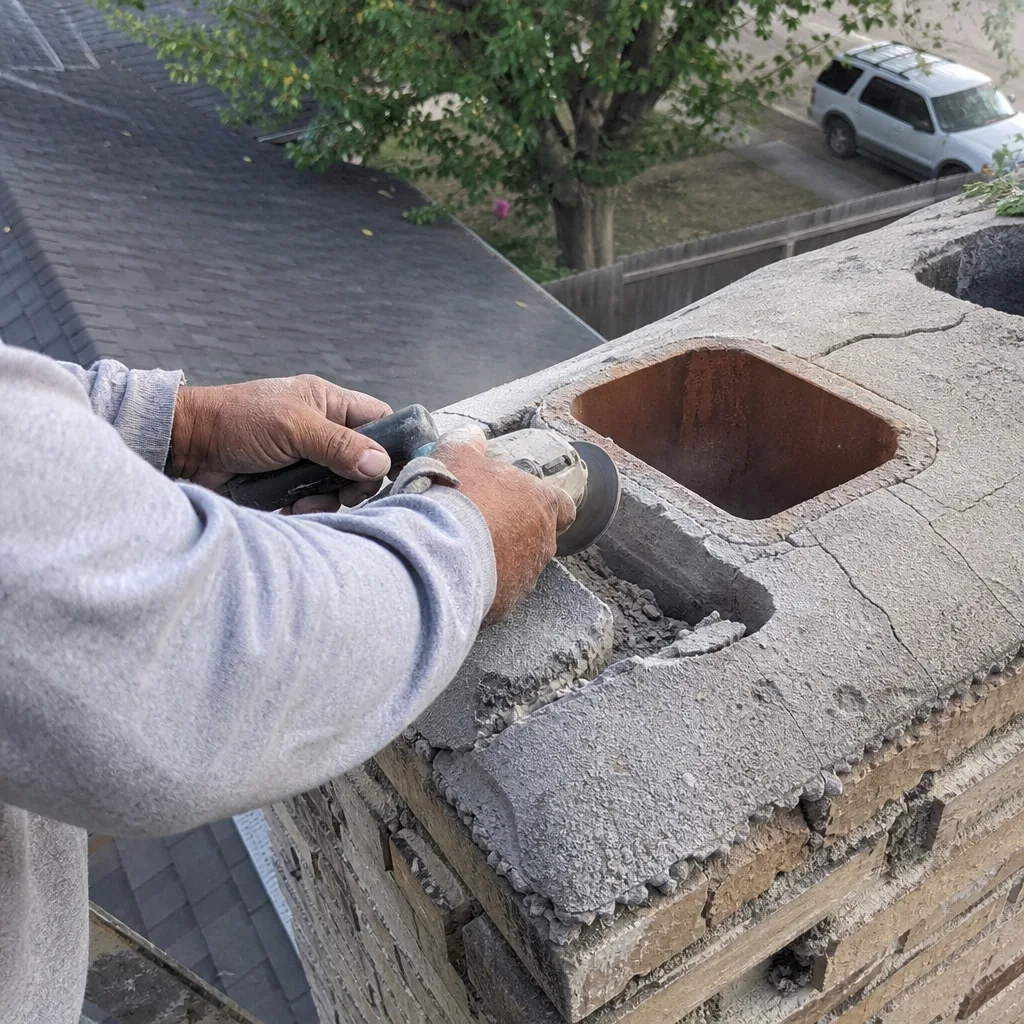
We can be specific about this because we’ve documented it across thousands of Denton service records. One missed cleaning cycle typically produces repair costs exceeding three years of scheduled maintenance.
The math is straightforward. A standard sweep and Level 2 inspection in Denton runs $180-$280 depending on system configuration and accessibility. The documented photo record, written scope, and written warranty are included. The 365-Day Done Right Promise covers any workmanship issue.
Skip that cycle, and here’s what accumulates:
- Class I creosote (light, flaky) degrades to Class III (glazed, tar-like) in 12-18 months of intermittent burning. Removal requires rotary mechanical cleaning, adding $150-$250.
- Moisture intrusion through an uncapped or cracked crown degrades liner sections. A single cracked flue tile, if caught early, can be repaired with HeatShield for $800-$1,400. Left unaddressed, progressive spalling requires stainless steel relining at $2,500-$4,500.
- Crown failure advances from surface cracking (sealable at $400-$700) to structural disintegration requiring full rebuild at $1,800-$3,200.
- Chimney fire damage from ignited creosote ranges from $3,000 for localized flue repair to $15,000+ for structural rebuild and smoke damage remediation.
The pattern we see in Denton: homeowners who skip 2-3 cycles, then call with an emergency. The system that would have cost $540-$840 to maintain over three years now requires $4,000-$8,000 in repairs. The camera footage shows exactly when the damage became critical, and it’s almost always 8-14 months before the emergency call.
Our Free Second Opinion on Any Written Estimate exists because we’ve reviewed competitor quotes where $6,000 “necessary” liner replacements were actually addressable with $1,200 HeatShield resurfacing. The camera evidence decides. Bring us any written estimate; we’ll inspect, document, and give you a second documented opinion.
Insurance considerations matter too. Many homeowner policies require documented annual maintenance for chimney-related claims. The photo record from your Level 2 inspection, stored with your Haven Standard documentation, satisfies that requirement. We’ve assisted Denton customers with claims where our dated, geotagged inspection records were the difference between coverage and denial. For more guides & resources on protecting your chimney investment year-round, explore our blog.
Common Mistakes to Avoid
- Waiting for “burn season” to think about the chimney. By October 15, every competent sweep in Denton is booked two weeks out. The March window gets better service, better pricing, and earlier damage detection.
- Assuming gas fireplaces need no maintenance. Gas systems produce corrosive condensation, debris accumulates in vent terminations, and ceramic logs degrade. Annual inspection is still required; the failure mode is different but equally serious, with carbon monoxide risk.
- Installing a cheap cap from a hardware store. Off-the-shelf caps often fit poorly, corrode in Denton humidity within 3-4 years, and lack proper mesh sizing for our local wildlife. A properly fabricated cap from Copperfield or Gelco, measured to your flue and installed with correct clearances, lasts 15+ years.
- Ignoring “minor” exterior cracks. A hairline crack in the crown or brick face is a moisture intrusion point. In Denton’s humidity, that crack becomes a spall, then a leak, then liner damage. The repair cost multiplies by 5-10x.
- DIY creosote removal with chemical logs or brushes. Chemical logs modify creosote but don’t remove it; the residue still requires mechanical cleaning. Consumer brushes don’t reach smoke chambers or address Class III glazing. More critically, working on a roof or with chimney tools carries genuine injury risk. The NFPA 211 Level 2 inspection requires equipment and training beyond homeowner capability.
- Accepting a “flashlight inspection” as sufficient. A visual check from the firebox or rooftop misses 80% of liner damage. Camera documentation is the standard for a reason; anything less is guessing.
- Neglecting the second flue. Many Denton homes have dual-flue chimneys serving a fireplace and a furnace or water heater. The utility flue is often ignored until a failed furnace inspection forces attention. Both flues share a structure; damage to one affects the other.
When to Call a Professional
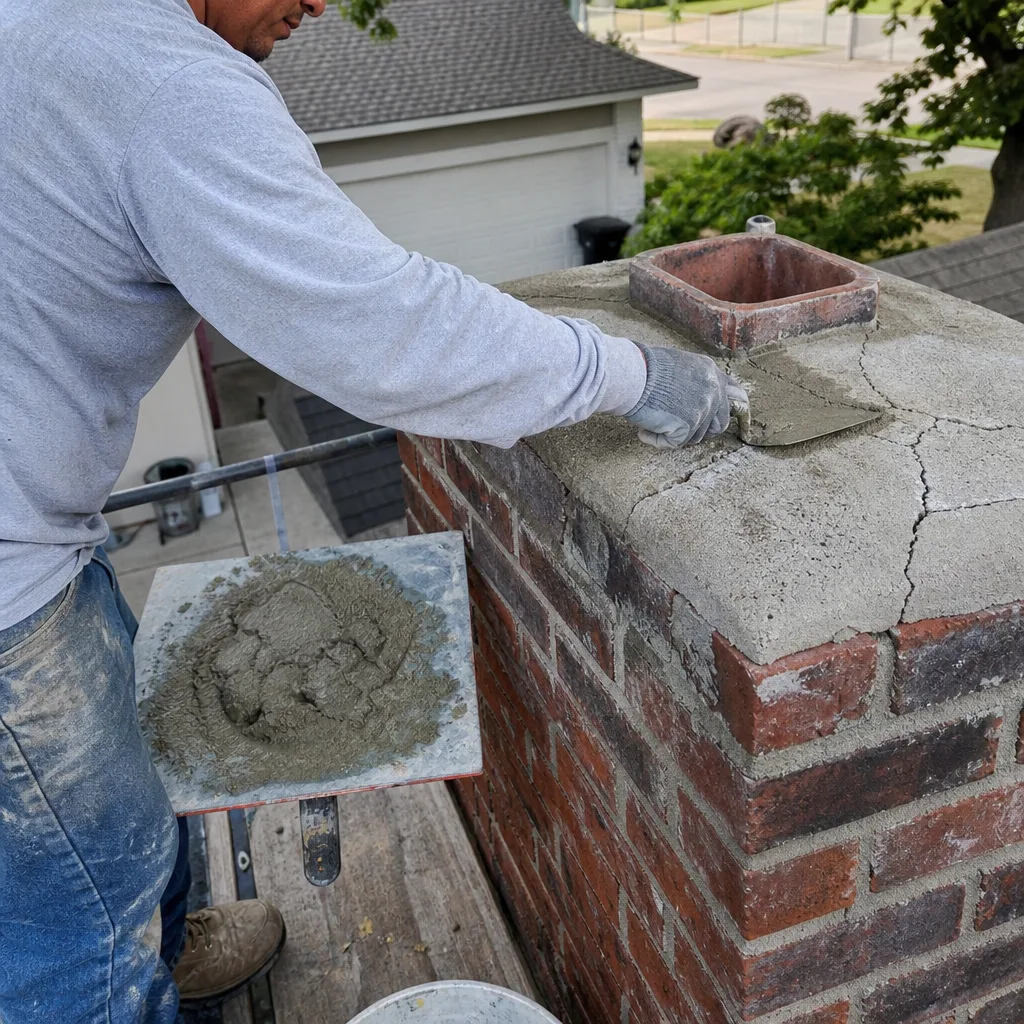
Call for immediate inspection if you notice smoke spillage into the room, a strong tar odor during burning, visible exterior masonry damage, animal sounds or nesting material, or white efflorescence staining on the chimney exterior. These indicate active problems that worsen with continued use.
Call before the burn season if your last documented inspection is over 12 months old, you’ve purchased the home within two years and have no maintenance records, or you’re converting fuel types (wood to gas, or adding a wood insert to a gas fireplace).
Call for documentation if you’re selling your Denton home. A recent Level 2 inspection with photo record satisfies buyer inspection contingencies and prevents last-minute repair negotiations.
Emberly Chimney Cleaners Denton offers free estimates in Denton - call (940) 373-6912. Every estimate includes a written price, written scope, and written warranty before any work begins. Background-checked, uniformed technicians. Live phone support, 24 hours a day, 7 days a week. The Emberly Chimney Cleaners Denton home page has full service details and online booking.
Frequently Asked Questions
A standard chimney sweep and NFPA 211 Level 2 camera inspection in Denton typically costs $180-$280 for a single-flue system, with multi-flue or mechanically cleaned systems running higher. Every job includes a written price before work starts, a documented photo record under Haven Standard Clause 4, and a written warranty. Call (940) 373-6912 for an exact quote - estimates are free.
It depends on the damage type and extent, which only a camera inspection can determine. Surface pitting and minor cracking often qualify for HeatShield cerfractory resurfacing at roughly half the cost of stainless steel relining. Through-cracks, spalling with exposed aggregate, or shifted liner sections require DuraFlex replacement. We never recommend work without camera evidence you can see yourself, and we’ll show you exactly what we found and why repair or replacement is indicated. Call (940) 373-6912 for a free second opinion on any written estimate.
Gas systems: annually, before burn season. Wood-burning systems: after every cord of wood burned, or annually if usage is lighter. Oil and pellet systems: per manufacturer specification, typically annually. Denton’s humidity makes the annual inspection particularly valuable for catching off-season degradation that usage-based scheduling might miss.
Creosote accumulates and hardens, increasing chimney fire risk and eventually requiring expensive mechanical removal. Moisture intrusion degrades liners and masonry unchecked. Pests may establish protected occupation. Insurance claims may be denied for lack of documented maintenance. The typical repair bill after 2-3 skipped cycles exceeds $4,000, versus $540-$840 for three years of scheduled service. Call (940) 373-6912 to get back on schedule - estimates are free.
No. If the nest is active, it’s a fire hazard and may be legally protected. Chimney swift nests cannot be disturbed April through August under federal law. Even inactive nests restrict draft and can reignite. Schedule an inspection; we’ll document the condition, advise on legal removal timing, and install proper capping to prevent recurrence.
Summer chimney odor in Denton usually indicates creosote deposits reacting with humidity, or animal intrusion and decomposition. A properly cleaned flue with intact liner and sealed crown shouldn’t produce odor. The smell is a symptom; a camera inspection identifies the cause, which is typically addressable with cleaning, repair, or improved ventilation. Call (940) 373-6912 for diagnosis - estimates are free.
The Bottom Line
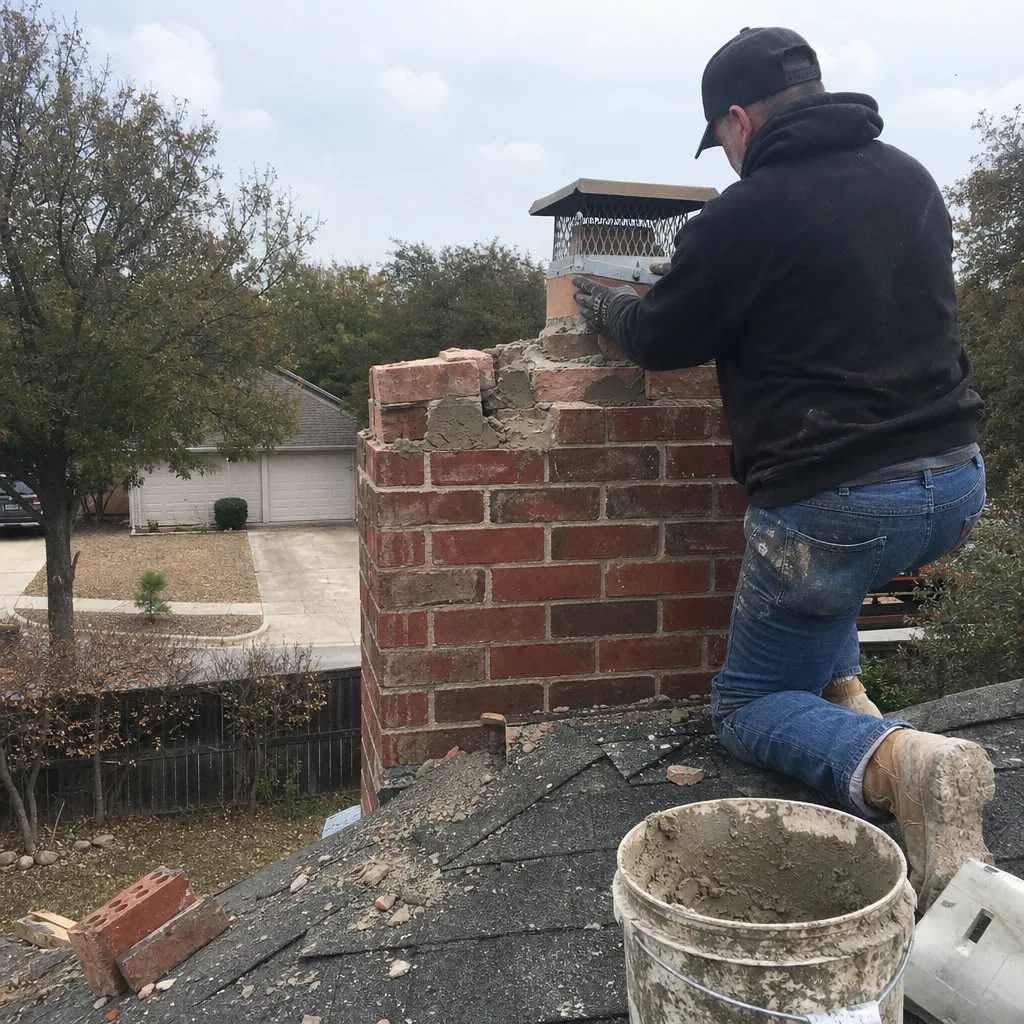
Denton’s chimney maintenance calendar runs opposite to intuition: the critical work happens in March and July, not October. The 300 non-burning days expose your system to humidity, UV, and pests that cause more structural damage than winter fires. A post-season sweep and camera inspection in March, plus a mid-summer exterior check, prevents the emergency repairs and fall booking crunches that catch unprepared homeowners. The cost of scheduled maintenance is predictable and modest. The cost of deferred maintenance is not. Document everything, inspect with a camera, and get every promise in writing.
For fireplace services in Denton or any chimney concern, Emberly Chimney Cleaners Denton provides NFPA 211 Level 2 inspections with documented photo records, written upfront pricing, and the 365-Day Done Right Promise. Live phone support available 24 hours a day, 7 days a week at (940) 373-6912.
Written by Corrine Halstead, Owner at Emberly Chimney Cleaners Denton, serving Denton since 2009.