
Last updated September 22, 2026
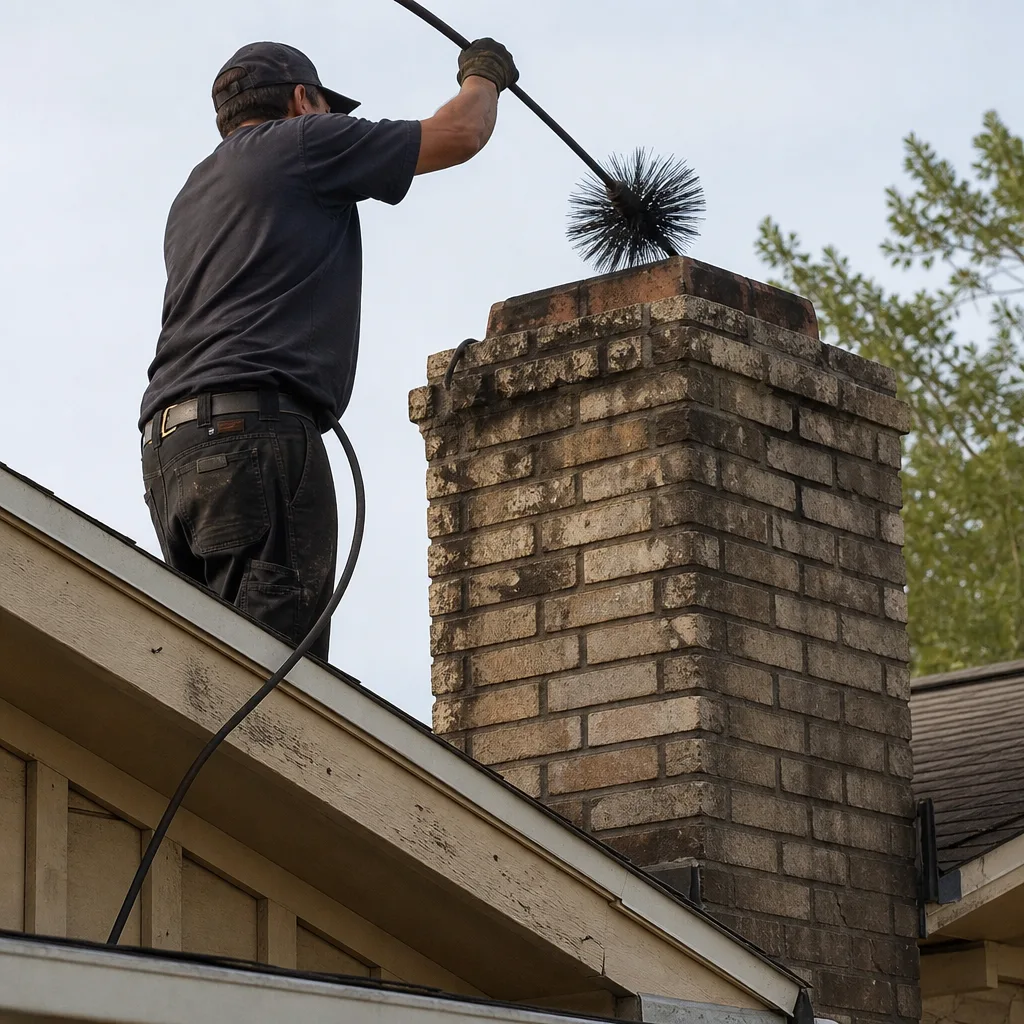
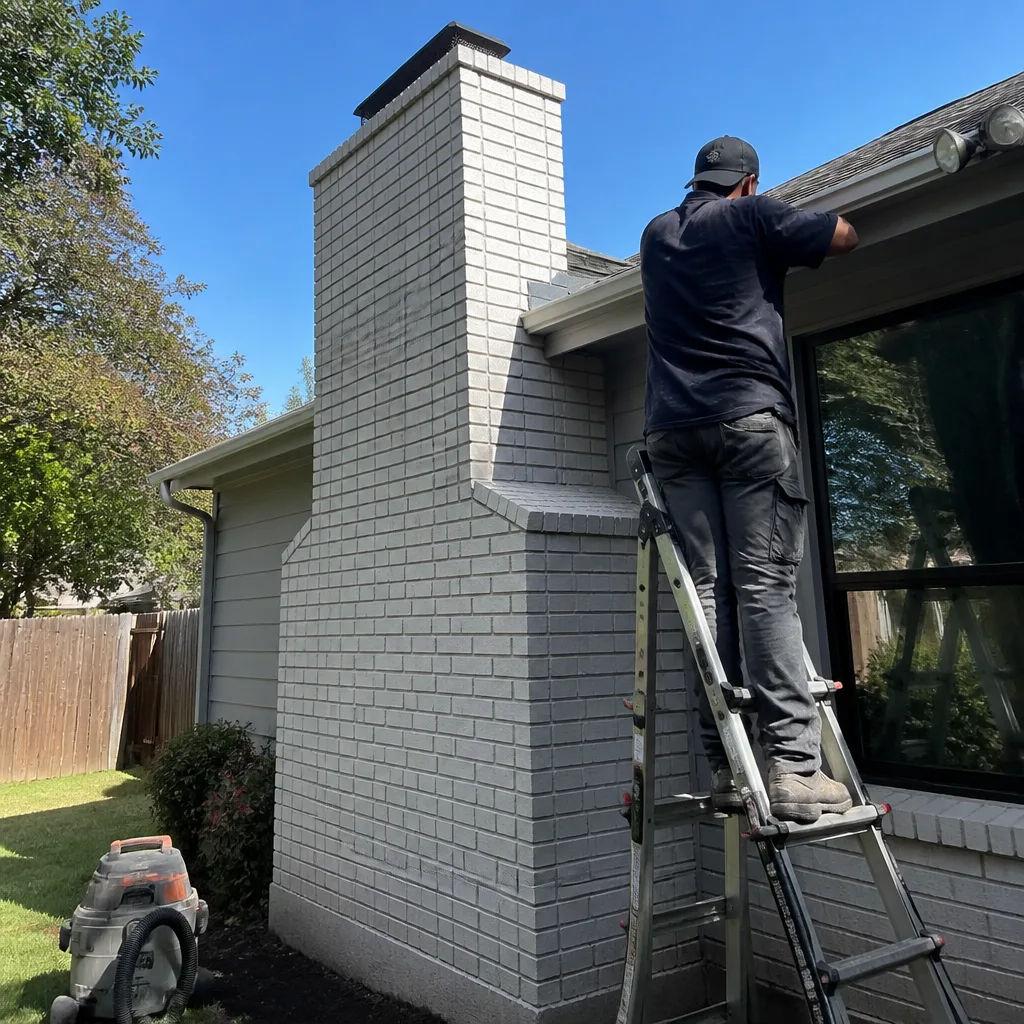
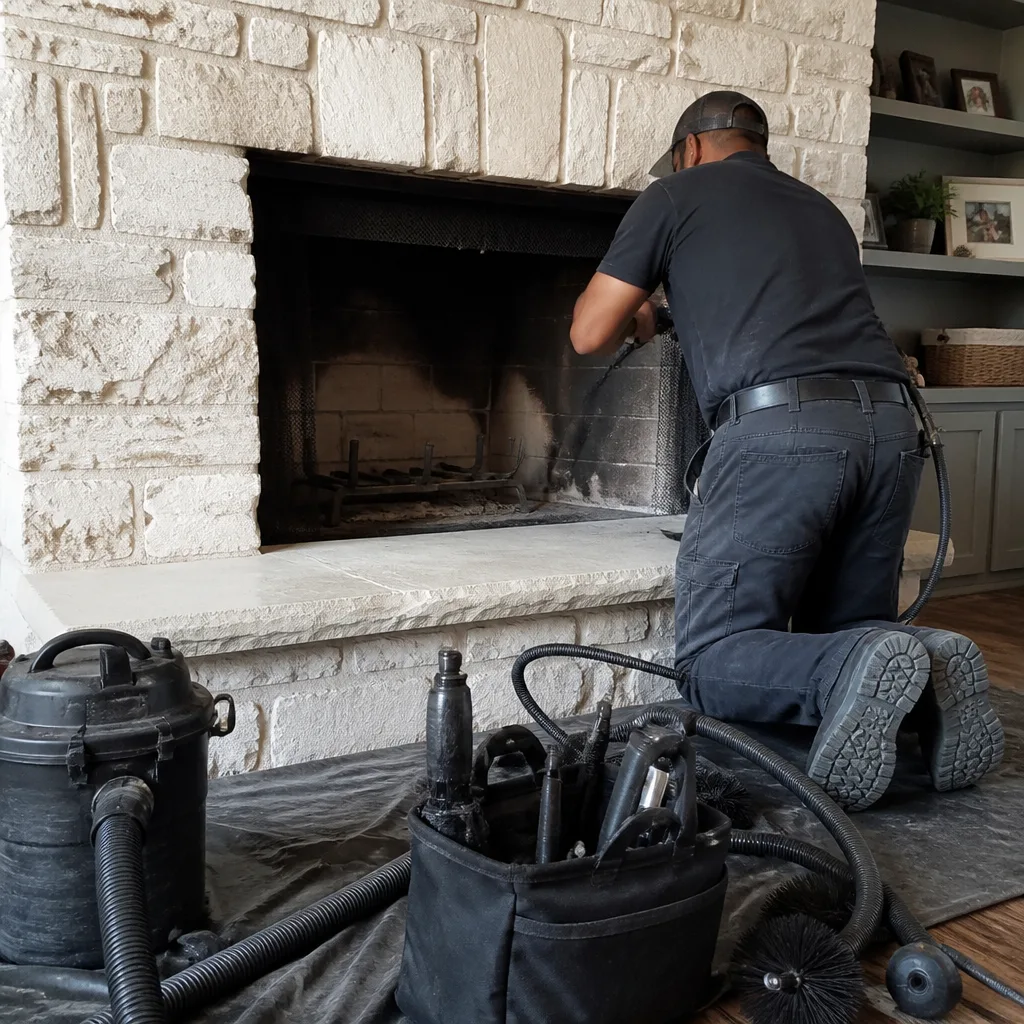
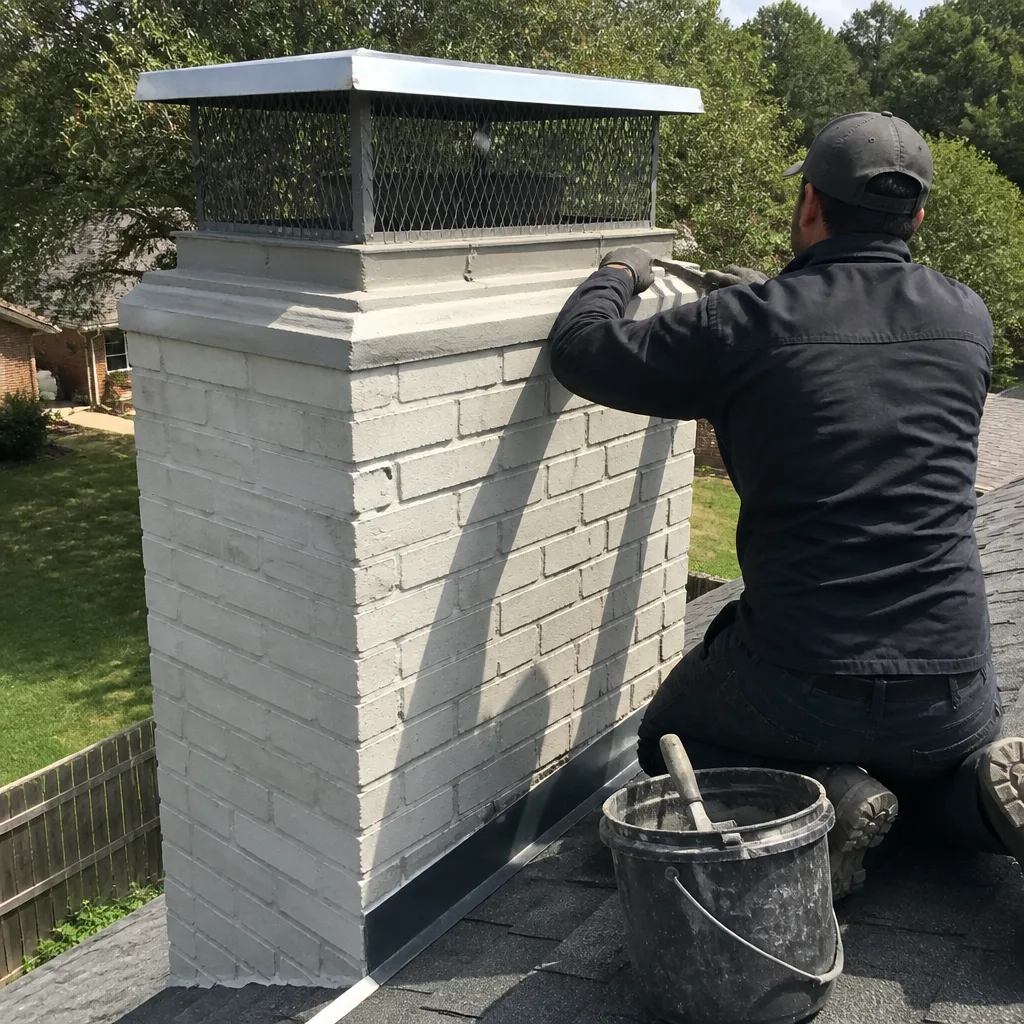
Level 1 sweep and inspection to the NFPA 211 annual standard - flue, crown, cap, and flashing checked and photographed
Chimney sweep logs do not sweep chimneys. They loosen some creosote - which then falls where a brush and vacuum still have to collect it.
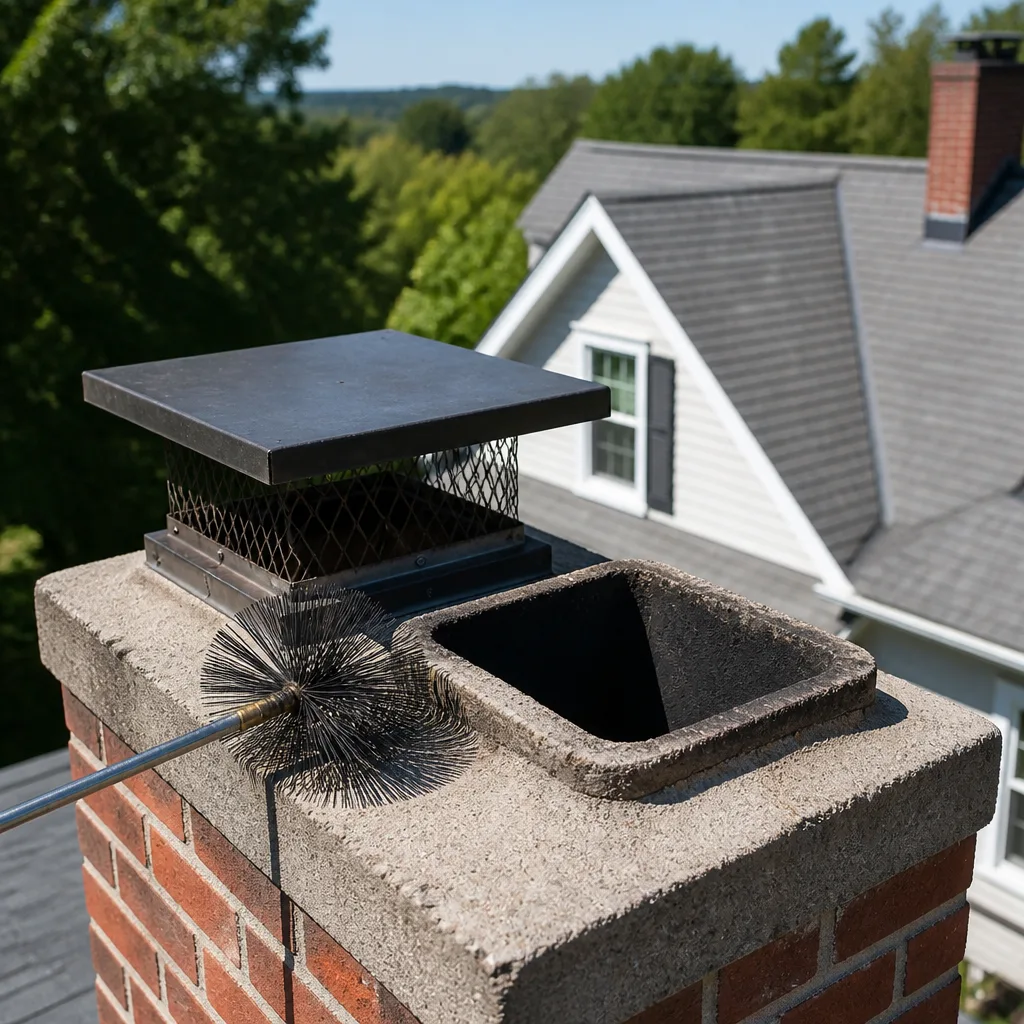
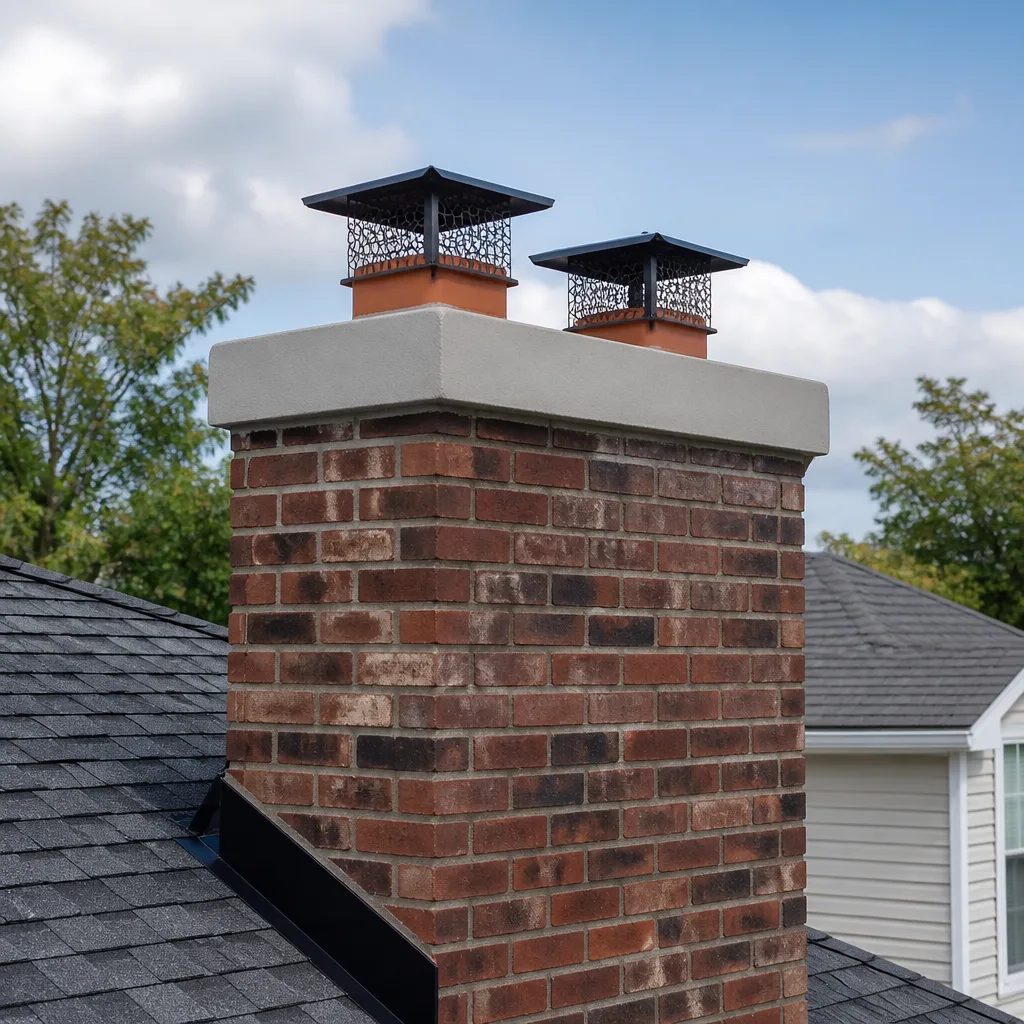
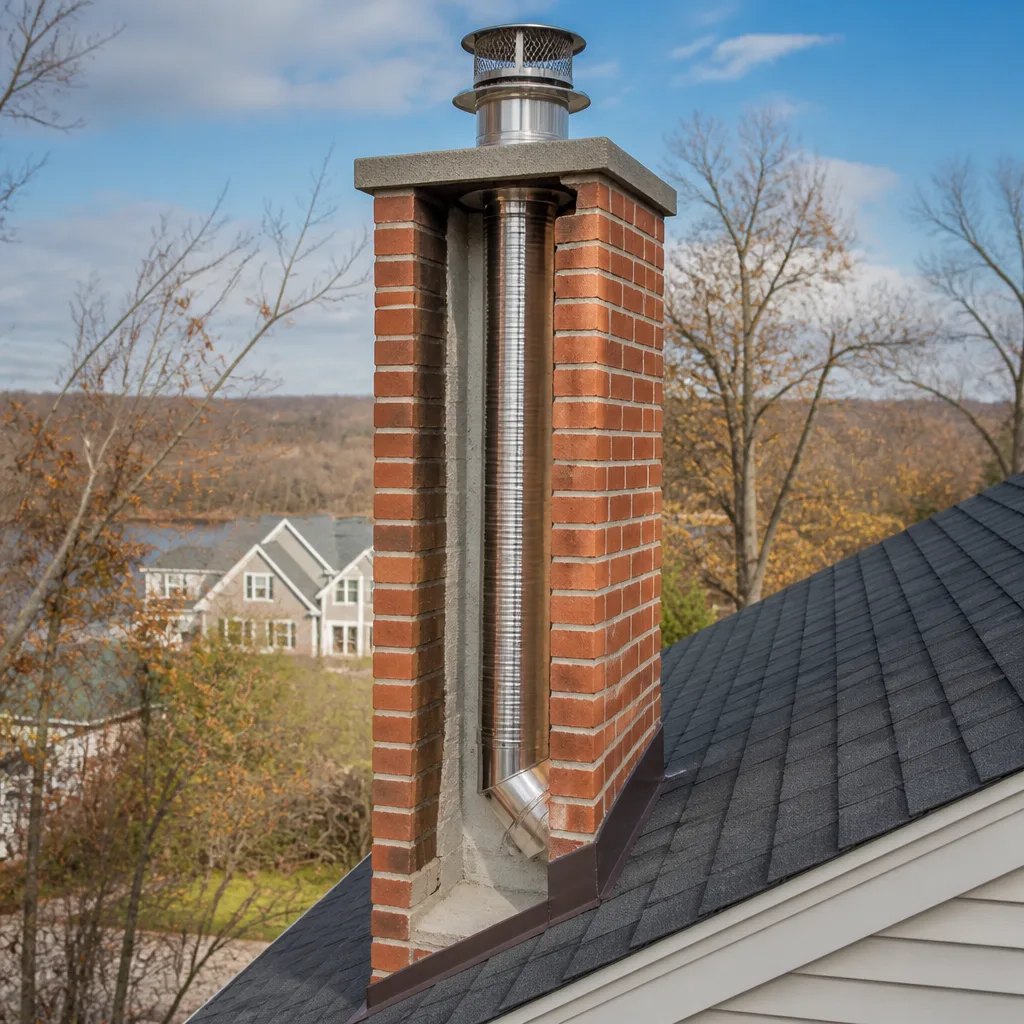
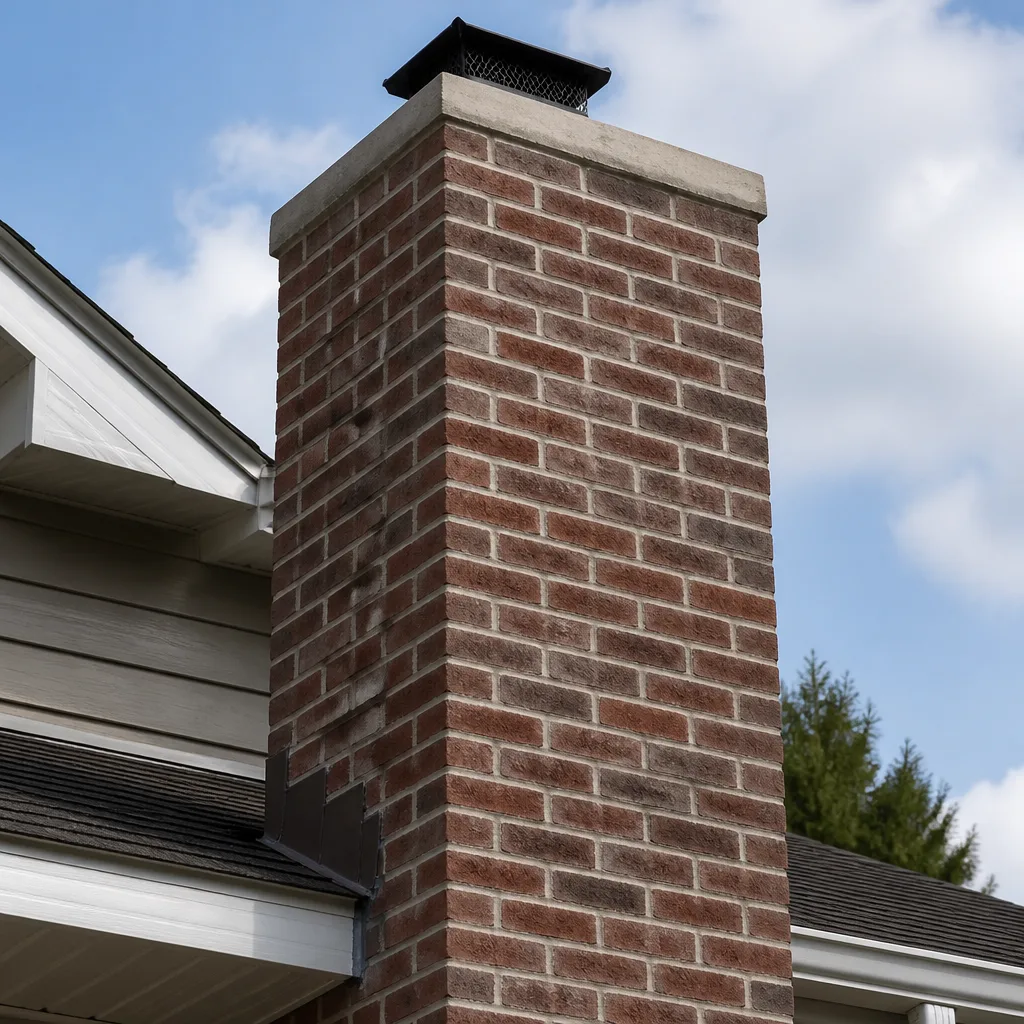
 Before
 After
After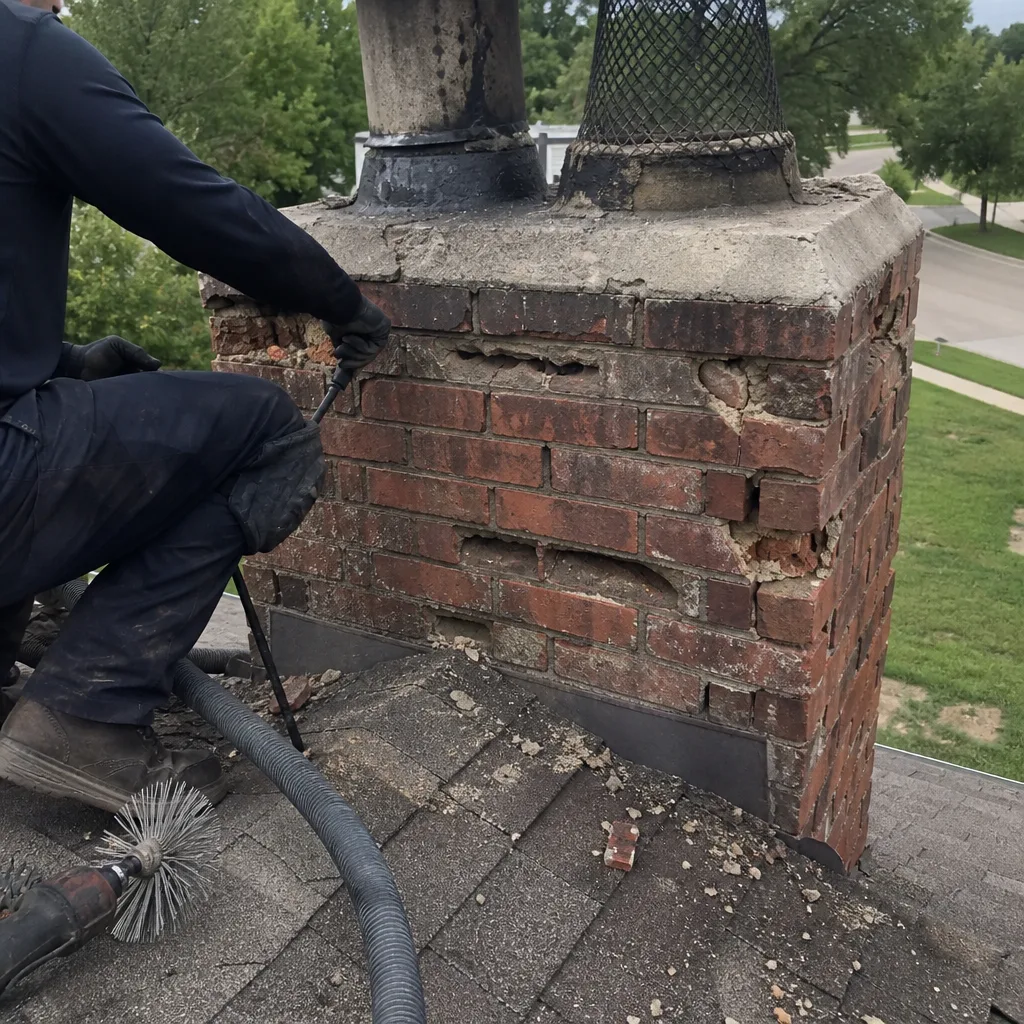 Before
 After
After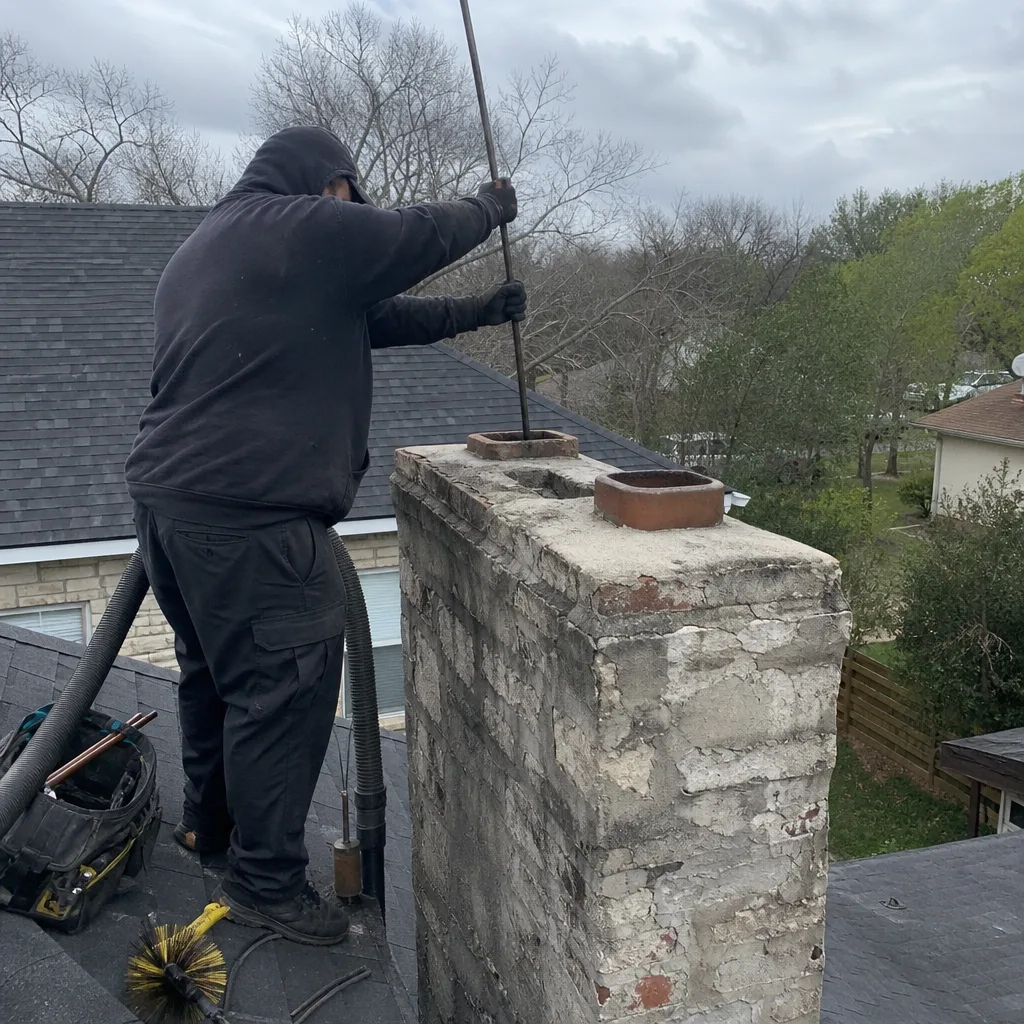 Before
 After
AfterDIY vs Professional Chimney Cleaning: The Denton Homeowner’s Decision Guide
A chimney brush kit runs about $40 at the hardware store on University Drive. It’ll knock loose soot off a straight flue if you’re comfortable on a ladder and don’t mind the mess. What it won’t do is tell you whether the mortar between your flue tiles has turned to powder, or whether that “clean” chimney is actually lined with Stage 2 glazed creosote that a brush can’t touch. In Denton, where clay soil shifts foundations and winter temperature swings stress masonry, the gap between “looks clean” and “is safe” is wider than most homeowners realize. This guide shows you exactly when DIY cleaning is genuinely sufficient, what it actually costs to do it right, and when professional equipment and documentation become non-negotiable.
Quick Answer
DIY chimney cleaning is adequate for one specific scenario: a seasoned-wood, low-use fireplace with a straight flue, a clean liner history, and no prior repairs, used fewer than 20 times per season. For every other Denton homeowner, professional cleaning with a camera-scan inspection is the safer choice because it finds hidden liner damage, creosote buildup that brushes can’t remove, and produces the documented record insurers and home buyers require. The honest cost gap shrinks significantly once you factor in proper equipment, PPE, and disposal.
Table of Contents
- When DIY Chimney Cleaning Is Genuinely Sufficient
- What DIY Actually Costs: The Honest Equipment List
- What a Camera Scan Finds That Brushes Cannot
- Legal and Insurance Exposure: DIY vs. Documented Professional Work
- How Denton’s Climate and Soil Affect Your Chimney
- The Four-Question Self-Assessment for Denton Homeowners
- Common Mistakes to Avoid
- When to Call a Professional
- Frequently Asked Questions
- The Bottom Line
BeforeAfterWhen DIY Chimney Cleaning Is Genuinely Sufficient
Let’s be direct about where DIY fits. After inspecting 38,000 chimneys since 2009, we’ve identified a narrow set of conditions where a homeowner with basic mechanical skills can maintain their own flue without creating new risks.
The DIY-adequate fireplace meets all five of these conditions:
- Fuel: Only seasoned hardwood (oak, hickory, mesquite) with moisture content below 20 percent. No pine, no construction scraps, no “just this once” pressure-treated lumber.
- Use pattern: Fewer than 20 fires per burning season, each under 3 hours. Occasional ambiance, not primary heat.
- Flue geometry: Straight vertical flue with no offsets, bends, or transitions between square and round tile. One continuous run from firebox to crown.
- History: No prior chimney fire, no liner repairs, no water intrusion events, no spalling brick or deteriorating mortar visible from the roofline.
- Age and type: Masonry fireplace built after 1980 with clay flue tiles in good condition, or a factory-built metal chimney less than 15 years old with no warranty claims.
If your setup matches all five, a quality brush kit and proper PPE can maintain light soot deposits between professional inspections every 3-5 years. The key word is “maintain.” DIY cleaning does not replace inspection. It delays it.
Where we see Denton homeowners get into trouble is assuming their setup fits this profile when it doesn’t. A 1970s ranch in Southridge with original construction and clay soil settlement? Probably not. A 2018 build in Lantana Ranch with a factory-built metal chimney and 12 fires per winter? Possibly yes, if the manufacturer’s cleaning schedule is followed.
The moment any condition changes, the calculation shifts. Switch to unseasoned wood after a wet spring. Add a gas log set that changes draft patterns. Notice a new water stain on the ceiling near the chimney breast. Each of these voids the DIY-adequate scenario and triggers the need for professional evaluation.
What DIY Actually Costs: The Honest Equipment List
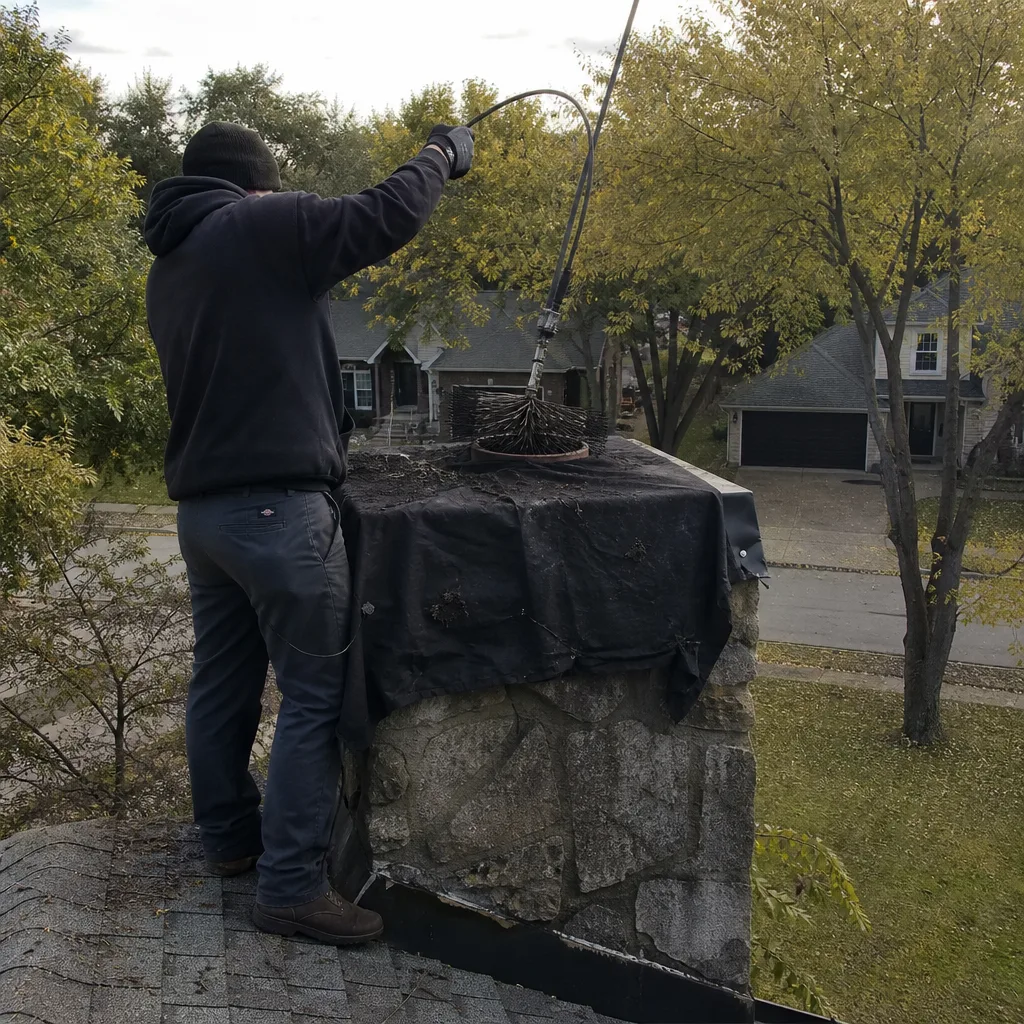
The $40 brush kit at the hardware store is a starting point, not the total. Here’s what it actually takes to match the safety baseline of a professional sweep in Denton.
| Item | Purpose | Cost Range |
|---|---|---|
| Poly or wire chimney brush (proper diameter) | Mechanical soot removal | $25-$65 |
| Extension rods (fiberglass, 12+ feet total) | Flue reach without disassembly | $40-$80 |
| HEPA respirator (N95 minimum, P100 preferred) | Creosote particulate protection | $25-$45 |
| Work gloves (leather, not latex) | Abrasion and chemical protection | $15-$25 |
| Safety glasses with side shields | Eye protection from falling debris | $12-$20 |
| Drop cloths (heavy canvas, 2+) | Interior protection | $30-$50 |
| Shop vacuum (HEPA-rated, dedicated) | Debris collection without redistribution | $150-$300 |
| Flashlight or borescope | Visual inspection of flue walls | $15-$80 |
| Roof ladder hook or stabilizer | Safe roof access | $50-$120 |
| Creosote disposal (Denton municipal guidelines) | Legal debris handling | $0-$25 per cleaning |
Honest total: $362-$810 for initial setup, $25-$90 per subsequent cleaning in consumables and disposal.
Compare this to professional Chimney Sweep in Denton, which typically runs $180-$340 for a standard sweep with inspection included. The break-even point for DIY equipment alone is 2-4 cleanings, assuming nothing breaks and you already own the shop vacuum.
What this comparison omits: the camera. A professional-grade chimney inspection camera runs $2,000-$8,000. The borescope in the table above gives you a dim, narrow view of whatever its tiny lens happens to point at. It does not scan the full circumference of every flue tile. It does not document. It does not measure.
There’s also the roof. Denton’s clay soil creates subtle foundation movement that stresses chimney crowns and flashing. Getting on a roof to clean from the top down, or even to inspect the crown, involves fall risk on a surface that may not be as stable as it looks. We’re not saying don’t do it. We’re saying count it in the cost.
What a Camera Scan Finds That Brushes Cannot
A brush removes what it touches. A camera sees what the brush misses, what the brush can’t reach, and what the brush might damage if used blindly.
Here is what NFPA 211 Level 2 camera inspection, the standard we’ve operated under since 2009, actually reveals inside a Denton chimney:
- Cracked or shifted flue tiles: Hairline cracks in clay liner tiles open under thermal cycling. They allow combustion gases to penetrate the masonry surround, accelerating deterioration and creating paths for carbon monoxide. A brush passes right over them. A camera catches the gap.
- Deteriorated mortar joints between tiles: Called “joint voids,” these gaps collect creosote and create weak points where liner sections can shift. In Denton, foundation movement from clay soil expansion and contraction makes this more common than in stable-soil regions.
- Stage 2 and Stage 3 creosote: Light, flaky soot (Stage 1) brushes off easily. Stage 2 is baked-on, tar-like, and requires chemical treatment or mechanical removal with specialized chains and whips. Stage 3 is glazed, rock-hard, and often requires replacement of the affected liner section. No homeowner brush kit addresses Stage 2 or 3.
- Spalling and parging loss in the smoke chamber: The smoke chamber, the area above the firebox that funnels smoke into the flue, should have smooth, sealed surfaces. Rough or deteriorated parging (the mortar coating) creates turbulence that deposits creosote and reduces draft. It’s invisible from below and above without a camera.
- Obstructions and animal nesting: Squirrels, raccoons, and chimney swifts are active in Denton’s mature neighborhoods like Oakmont and historical districts near the square. A brush might break through a partial obstruction. It won’t show you the nest, the carcass, or the damaged damper mechanism.
- Water intrusion tracking: Stains, efflorescence (white mineral deposits), and freeze-thaw damage patterns on flue tiles indicate crown or flashing failure. These are repair indicators, not cleaning issues.
Clause 4 of the Haven Standard requires a documented photo record on every job because these findings are not theoretical. They are what we find in roughly 60 percent of first-time inspections in Denton homes built before 1995. The camera doesn’t just find problems. It creates the dated, geotagged documentation that proves the condition of the flue at a specific moment.
That documentation matters for reasons beyond immediate safety. More on that next.
Legal and Insurance Exposure: DIY vs. Documented Professional Work
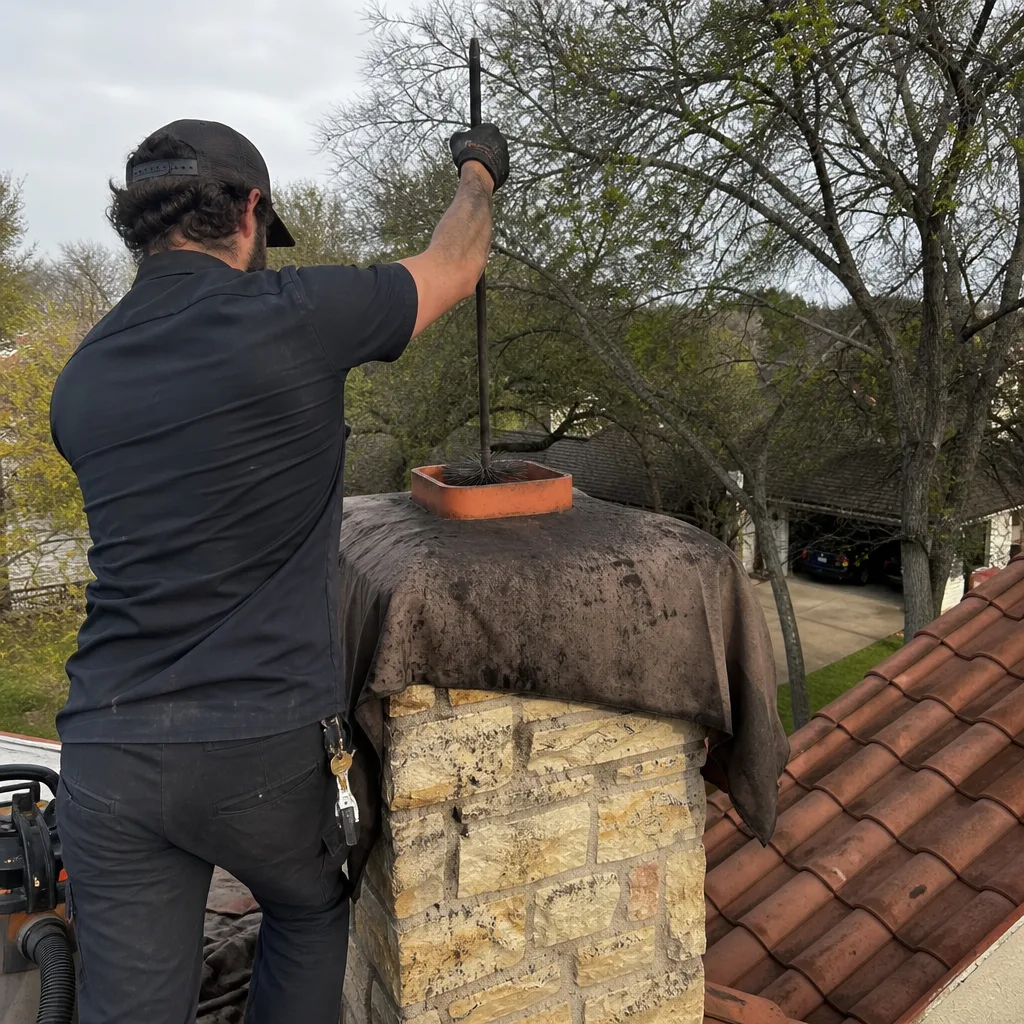
This is the section most chimney guides skip because it sounds like fear-mongering. We’ll stick to facts.
What a DIY cleaning record looks like:
- Purchase receipt for brush kit
- Possibly photos from a phone flashlight
- Your own statement that you “cleaned the chimney”
- No standard referenced, no third-party verification
What a documented professional inspection provides:
- NFPA 211 Level 2 inspection report with scope of work
- Date-stamped, geotagged photo record of flue interior
- Written condition assessment with specific terminology (flue liner integrity, creosote classification, clearance measurements)
- Written price before work, written warranty after completion (Haven Standard Clause 1)
- Technician identification and license information
If a chimney fire or carbon monoxide event occurs and an insurer or attorney asks whether the chimney was properly maintained, these two records produce very different outcomes. The DIY record relies on your credibility and your ability to explain what you did. The professional record relies on documented adherence to a nationally recognized standard.
Texas property law does not require professional chimney maintenance. Homeowner’s insurance policies increasingly do. We’ve reviewed policy riders from major carriers writing in Denton County that exclude chimney-related fire damage if “annual inspection by a qualified technician” cannot be demonstrated. “Qualified” is typically defined as CSIA-certified or equivalent, with documentation.
The same documentation gap appears in real estate transactions. A buyer’s inspector in a Denton sale will flag an undocumented chimney. The seller then faces either a rushed professional inspection or a price concession. A documented inspection from Emberly Chimney Cleaners Denton, with photos and report, transfers cleanly.
We’re not saying DIY cleaning voids your insurance. We’re saying the record you keep determines what you can prove. And in our experience, what you can prove matters more than what you know when something goes wrong.
How Denton’s Climate and Soil Affect Your Chimney
Denton’s location on the edge of the Blackland Prairie puts specific stresses on chimney systems that don’t apply uniformly across Texas. Understanding these local factors helps explain why a chimney that was “fine” in one region may not be fine here.
Clay soil expansion and contraction: Denton’s heavy clay soils expand when wet and shrink during dry periods, particularly in summer. This seasonal movement transfers stress to chimney foundations, especially on older homes without proper footings. The result: crown cracks, loose flashing, and in severe cases, visible chimney lean. A brush cleaning doesn’t detect these. A camera inspection often reveals the interior consequences before they’re visible outside.
Wind patterns and draft behavior: Prevailing south winds in Denton can create downdraft conditions in chimneys with inadequate height or nearby obstructions. This pushes smoke and combustion gases back into the home, increasing creosote deposition and CO risk. Professional inspection includes draft testing and exterior evaluation of chimney height relative to roof ridge and neighboring structures.
Freeze-thaw cycling: While Denton winters are mild compared to northern states, the combination of occasional hard freezes and rapid warming creates more freeze-thaw cycles than consistently cold climates. Water enters micro-cracks in masonry, freezes, expands, and widens the crack. Crown sealant and proper chimney cap installation, which we evaluate during every inspection, are the primary defenses.
Seasonal burning patterns: Denton’s burning season is concentrated, November through February, with occasional cold snaps in March. This compressed schedule means creosote accumulates in a shorter window, and homeowners often light the first fire of the season without pre-season inspection. In neighborhoods like Robson Ranch and Providence, where many residents are transplants from colder climates, we see assumptions about maintenance frequency that don’t match local conditions. Our Seasonal Chimney Cleaning Care for Denton: Year-Round Homeowner’s Guide covers what local weather patterns actually require.
These factors don’t make DIY cleaning impossible. They make the “clean flue” assumption harder to verify without equipment that can see the consequences of soil, wind, and weather stress.
The Four-Question Self-Assessment for Denton Homeowners
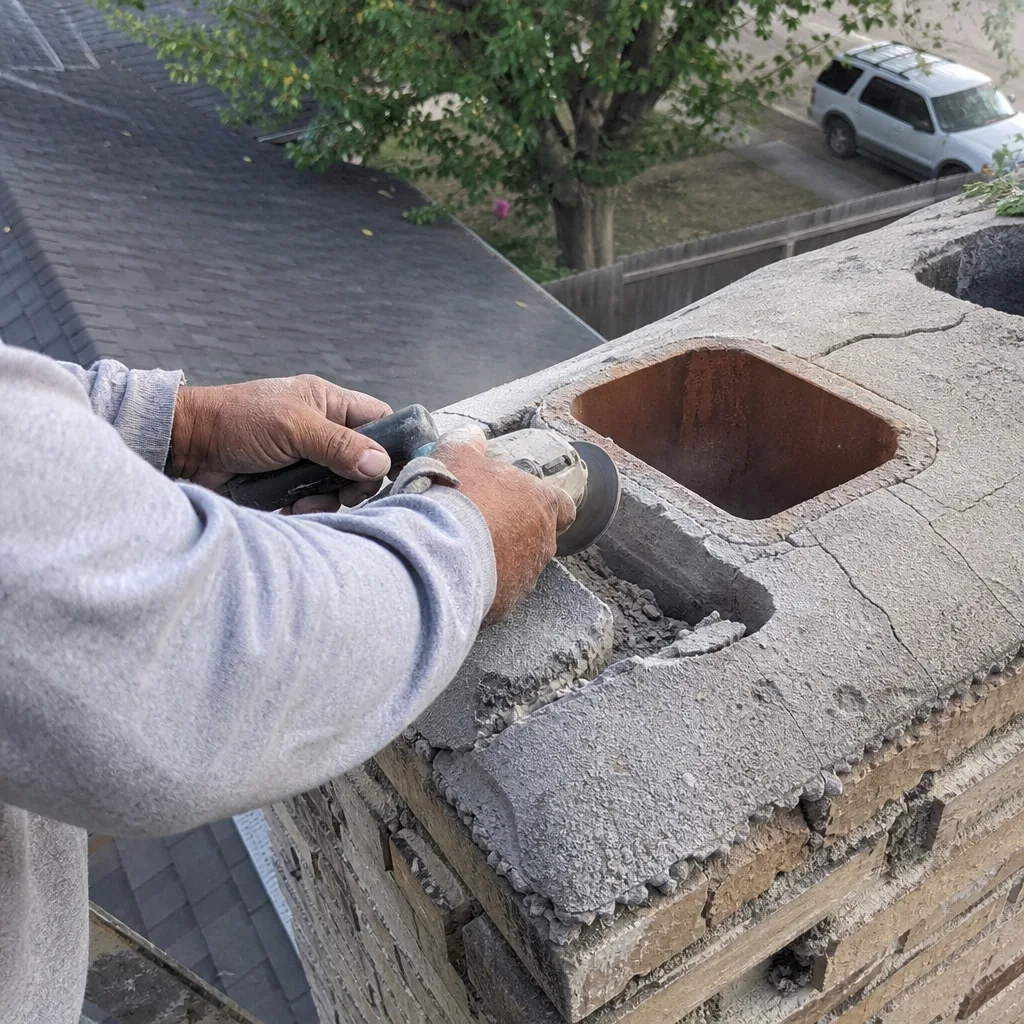
Answer these honestly. The goal is not to sell you a service. It’s to match your actual situation with the right maintenance approach.
Question 1: What do I burn, and how often?
Seasoned hardwood, under 20 fires per year: DIY maintenance may suffice between professional inspections. Anything else, including “mostly gas but sometimes wood” or “we burn whatever’s in the yard”: professional evaluation needed. Mixed fuel types create unpredictable creosote chemistry.
Question 2: What’s my chimney’s history?
Built after 1990, no prior repairs, no water events, no known chimney fire: you might fit the DIY-adequate profile. Pre-1980 construction, any repair history, or unknown history (common in Denton’s rental market near UNT): professional inspection to establish baseline.
Question 3: Can I verify flue condition without visual access?
If you cannot produce clear, well-lit images of every flue tile surface from firebox to crown, you are cleaning blind. The $40 brush kit does not include this capability. A borescope helps but requires interpretation you may not have.
Question 4: What record do I need?
Insurance policy requires documented inspection? Selling within 3 years? Renting the property? Any of these makes professional documentation essential. Pure owner-occupier with no near-term sale and no insurance requirement: DIY may be acceptable if other conditions match.
Scoring: Four “DIY-appropriate” answers mean you’re in the narrow zone where self-maintenance is genuinely reasonable. Any “professional needed” answer shifts the balance. Two or more “professional needed” answers means the cost gap between DIY equipment and professional service has effectively closed.
Common Mistakes to Avoid
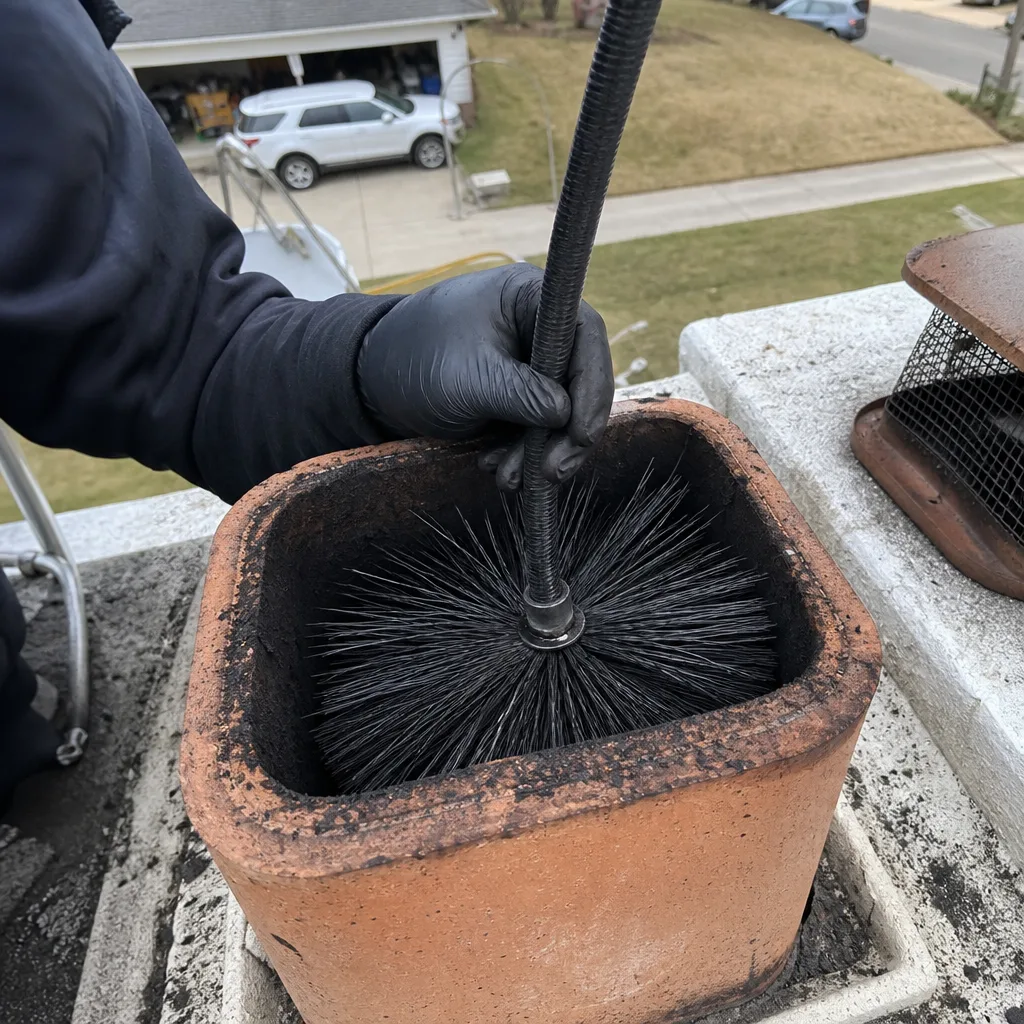
- Using a brush that’s the wrong diameter for the flue. An undersized brush doesn’t contact the walls; an oversized one can jam or damage clay tiles. Measure the flue opening before buying, or better, have it measured professionally.
- Cleaning from the bottom only. Debris falls onto the smoke shelf and can block the flue or create a fire hazard. Proper DIY technique requires both top-down and bottom-up access, or thorough smoke shelf cleaning with proper tools.
- Assuming “no smoke in the house” means “clean chimney.” A chimney can be partially obstructed or have significant creosote buildup and still draft adequately under favorable conditions. Draft performance and flue condition are not the same thing.
- Ignoring the crown and flashing. In Denton, water intrusion from crown cracks is the single most common cause of accelerated chimney deterioration we see. A clean flue with a failed crown is a chimney headed for rebuild.
- Using household vacuum for creosote. Standard vacuums redistribute fine particulate through the exhaust. Creosote particles are carcinogenic and require HEPA containment. We’ve seen homeowners contaminate entire living spaces this way.
- Cleaning a gas flue with wood-burning assumptions. Gas appliances produce different deposits, primarily acidic condensation and debris from incomplete combustion. The wrong cleaning approach can damage specialized liners.
- Waiting for visible signs of trouble. By the time you see staining, smell smoke, or notice draft problems, damage is usually established. Prevention requires looking before symptoms appear.
When to Call a Professional
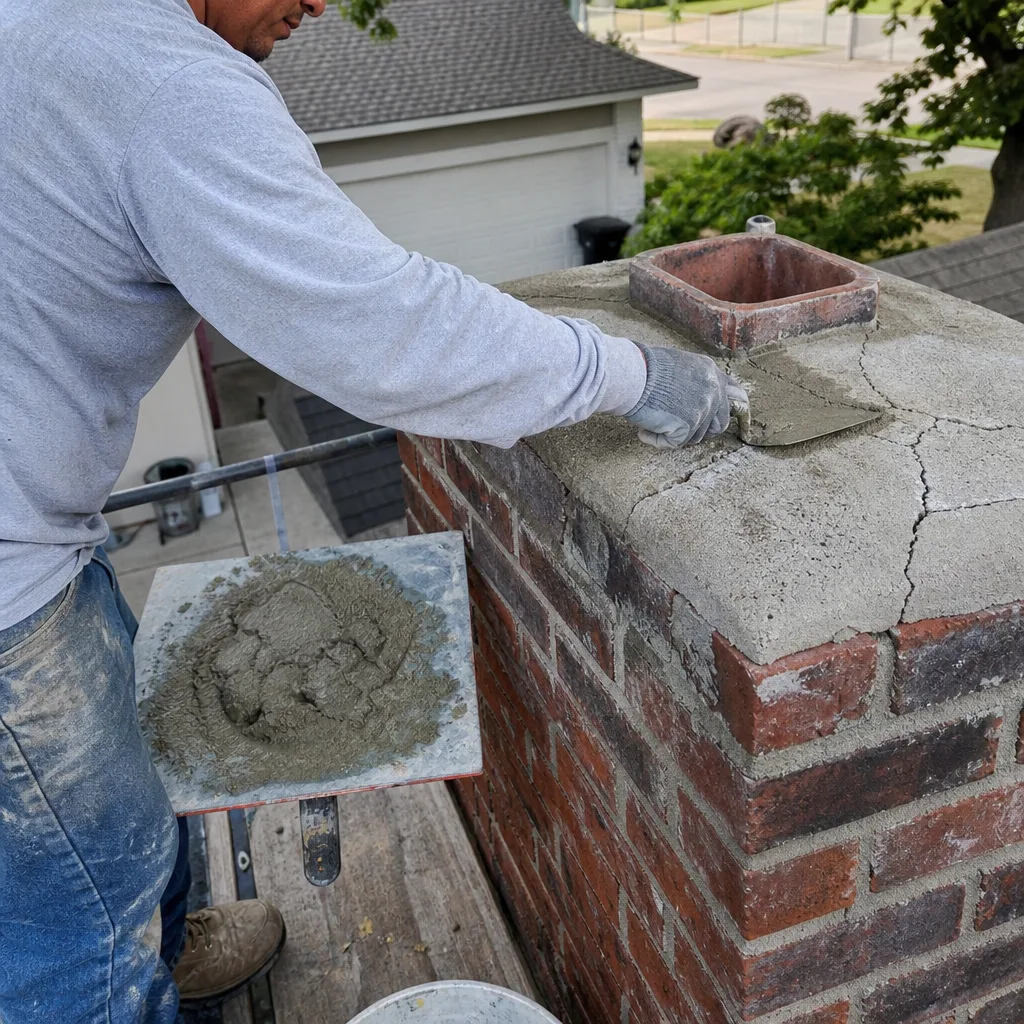
Call when any of these apply: your chimney is pre-1980, you’ve never had a camera inspection, you burn more than 20 fires per season, you’ve switched fuel types, you notice any exterior masonry damage, your insurance policy requires documented inspection, or you’re preparing to sell. Also call if you simply don’t want to be on your roof, which is a completely valid reason.
Emberly Chimney Cleaners Denton offers free estimates in Denton and surrounding areas. Our Chimney Sweep in Denton includes the NFPA 211 Level 2 camera inspection, written price before work starts, and documented photo record under Haven Standard Clause 4. Emberly Chimney Cleaners Denton home page has full service details. For chimney repairs, see Chimney Repair in Denton. For fireplace installation and maintenance, visit Fireplace Services in Denton.
Call (940) 373-6912 for a free estimate. Estimates include the camera inspection and written scope, no obligation.
Frequently Asked Questions
A standard chimney cleaning with NFPA 211 Level 2 camera inspection in Denton typically costs $180-$340, depending on flue configuration, creosote severity, and accessibility. Emberly Chimney Cleaners Denton provides a written price before any work starts, with no hidden fees. Call (940) 373-6912 for an exact quote - estimates are free.
A legitimate liner recommendation should be accompanied by camera footage you can see, specific measurements of damage or clearance violation, and reference to NFPA 211 standards. At Emberly Chimney Cleaners Denton, nothing is recommended without photo evidence under Haven Standard Clause 4, and we offer free second opinions on any competitor’s written estimate. If a company won’t show you the problem, get another opinion.
NFPA 211 recommends annual inspection for all chimneys, with cleaning frequency determined by use and fuel type. In Denton’s compressed burning season, most wood-burning fireplaces need annual cleaning if used regularly. Gas appliances typically need less frequent cleaning but still require annual inspection for venting integrity and condensation damage. Occasional-use fireplaces may extend to every 2-3 years with professional confirmation of flue condition.
Skipped maintenance leads to creosote accumulation, which increases chimney fire risk. It also allows minor masonry and liner damage to progress to major repairs. In Denton’s climate, water intrusion from uncaught crown or flashing failure accelerates deterioration significantly. The most expensive chimney repair we perform is the one that could have been prevented with timely inspection. Call (940) 373-6912 to schedule before problems compound.
A HEPA-rated shop vacuum dedicated to chimney debris can collect loose soot after mechanical brushing. A standard household vacuum will redistribute carcinogenic creosote particles through your home. Even with proper equipment, vacuuming does not remove adhered creosote or inspect flue condition. It’s a cleanup step, not a cleaning method.
Denton follows the International Residential Code with local amendments, which references NFPA 211 for chimney standards. The city does not mandate annual inspection by ordinance, but building permits for chimney modifications or repairs require compliance with current codes. For rental properties, Denton’s housing maintenance code requires “safe and operational” heating appliances, which case law has interpreted to include proper venting. Documentation of professional inspection is the strongest defense if a tenant dispute arises.
The Bottom Line
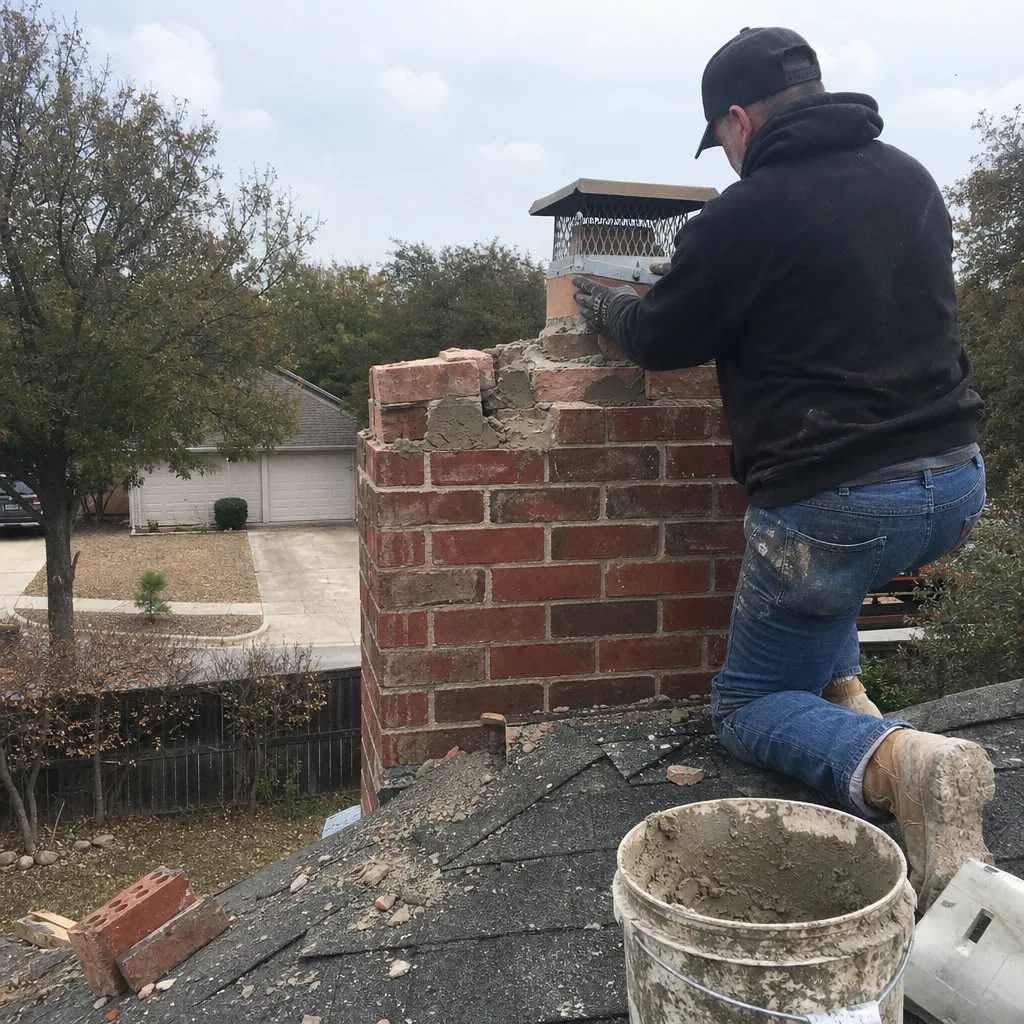
DIY chimney cleaning has a place, but that place is narrow and specific. If you burn seasoned hardwood sparingly in a modern, straight flue with clean history, a quality brush kit and proper safety gear can maintain light deposits between professional inspections. For every other Denton homeowner, the true cost of DIY approaches professional service once equipment, PPE, disposal, and risk are honestly counted, while delivering none of the documentation that insurers, buyers, and safety standards require.
The camera is the difference between guessing and knowing. Since 2009, we’ve made camera-scan documentation standard on every job, not because regulators demanded it, but because seeing the full flue condition is the only way to name the problem and price the fix honestly. That’s Clause 4 of the Haven Standard. It’s also the reason 38,000 Denton-area homeowners have a dated, detailed record of what was in their chimney and what was done about it.
Written by Corrine Halstead, Owner at Emberly Chimney Cleaners Denton, serving Denton since 2009.