
Last updated September 22, 2026
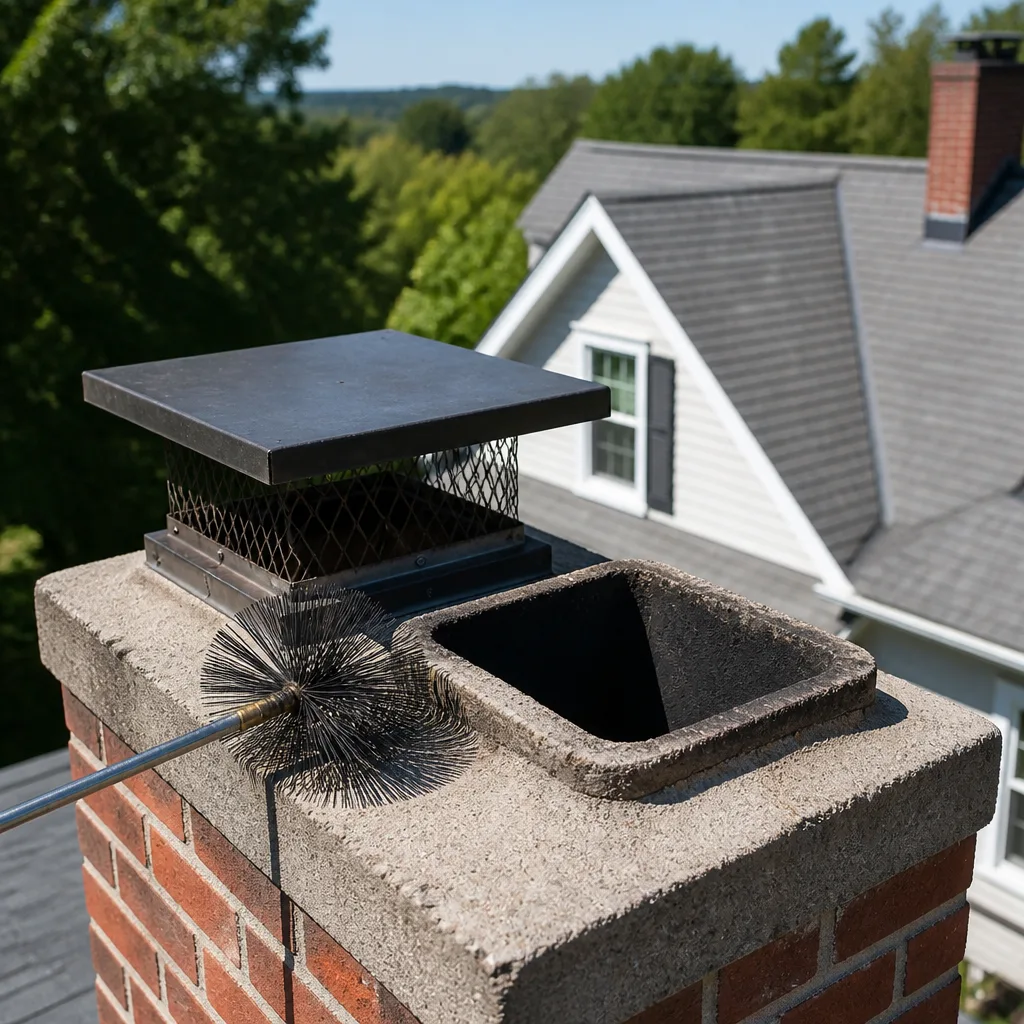
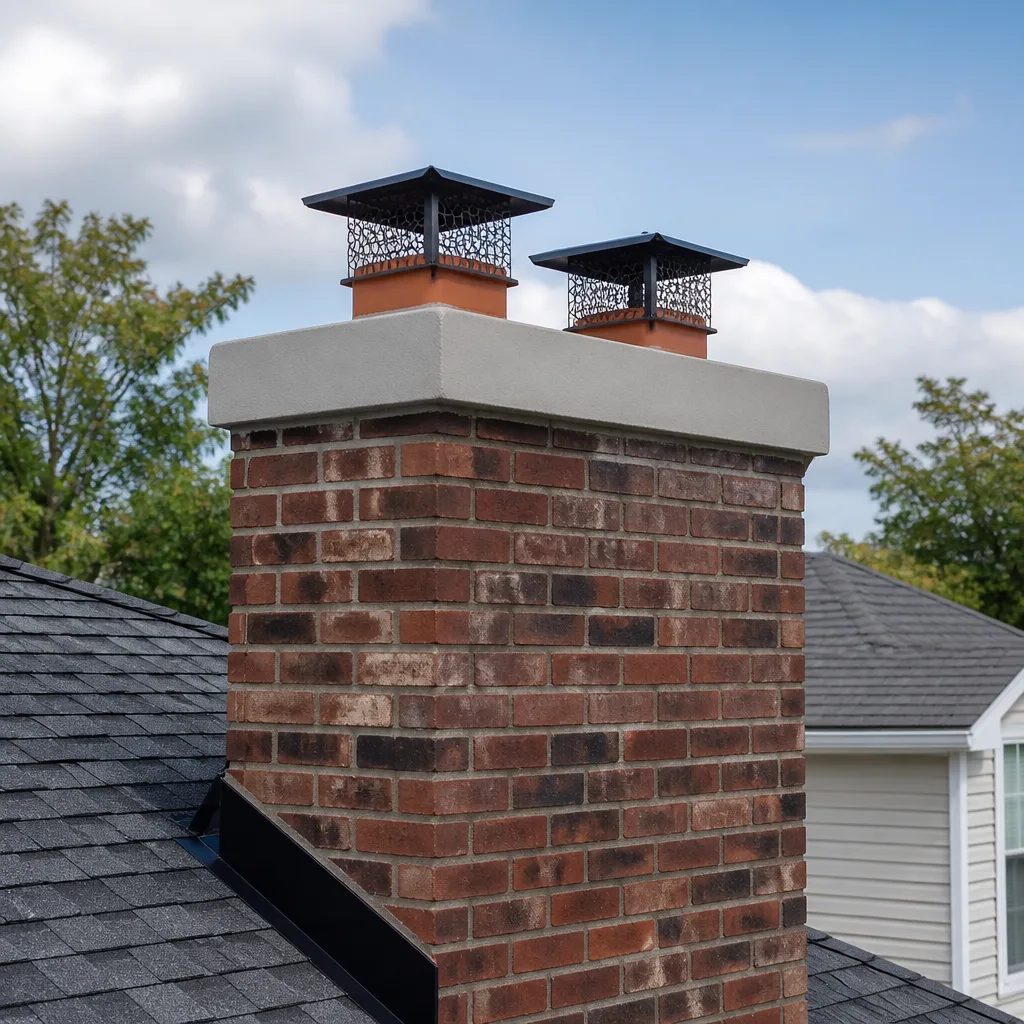
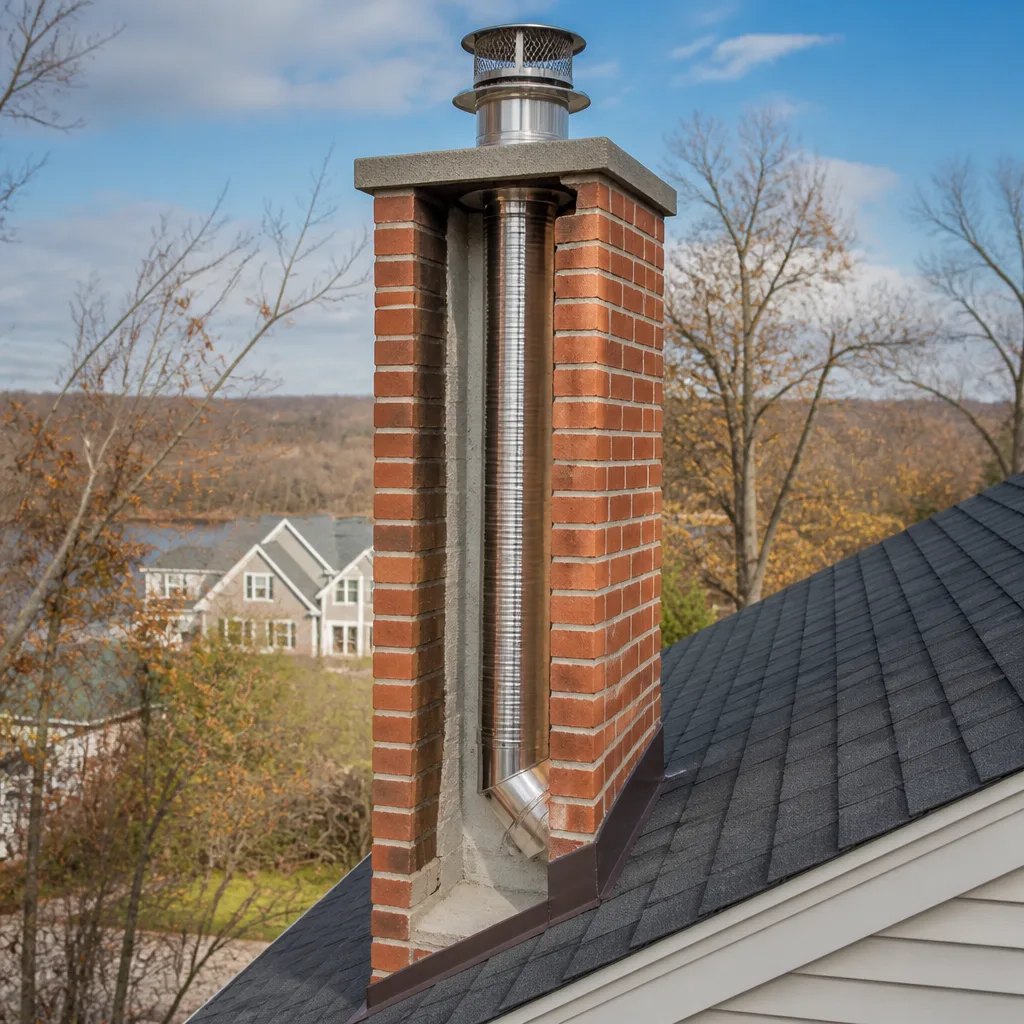
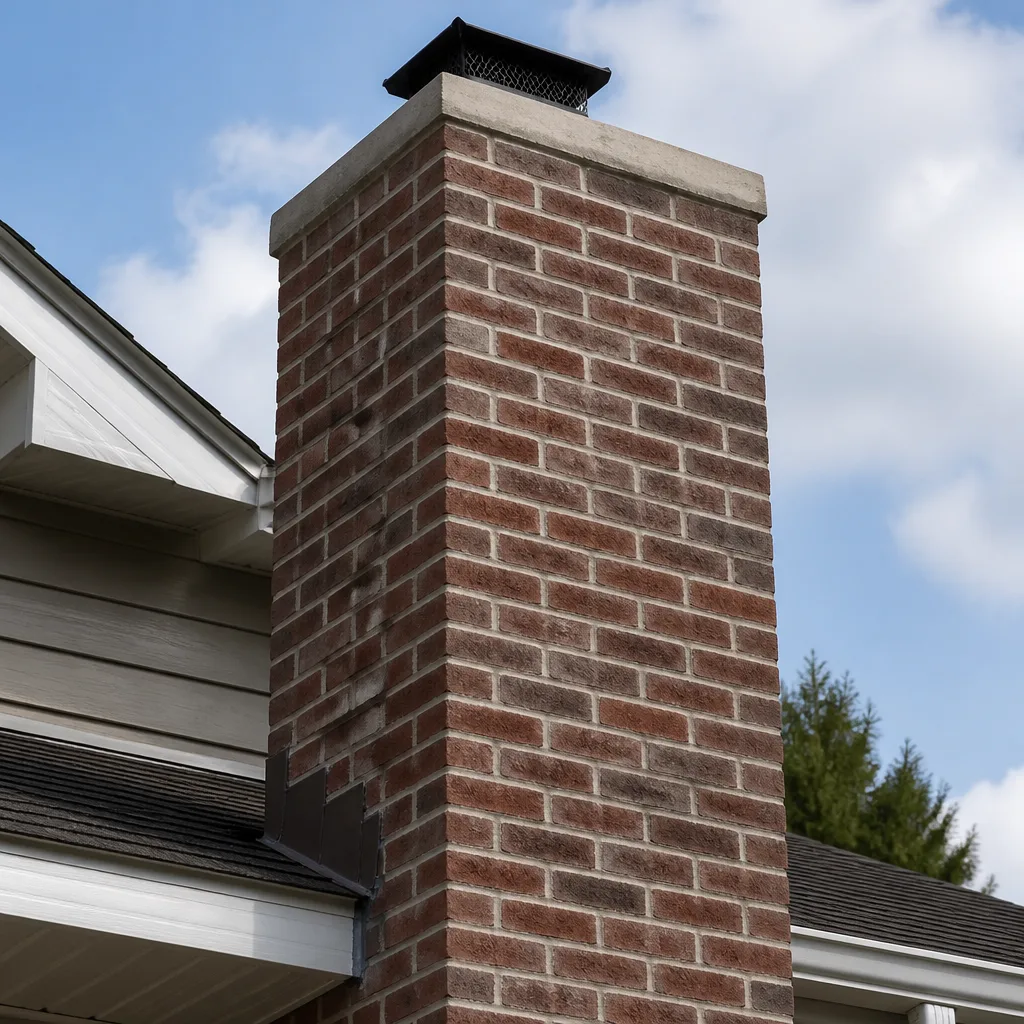
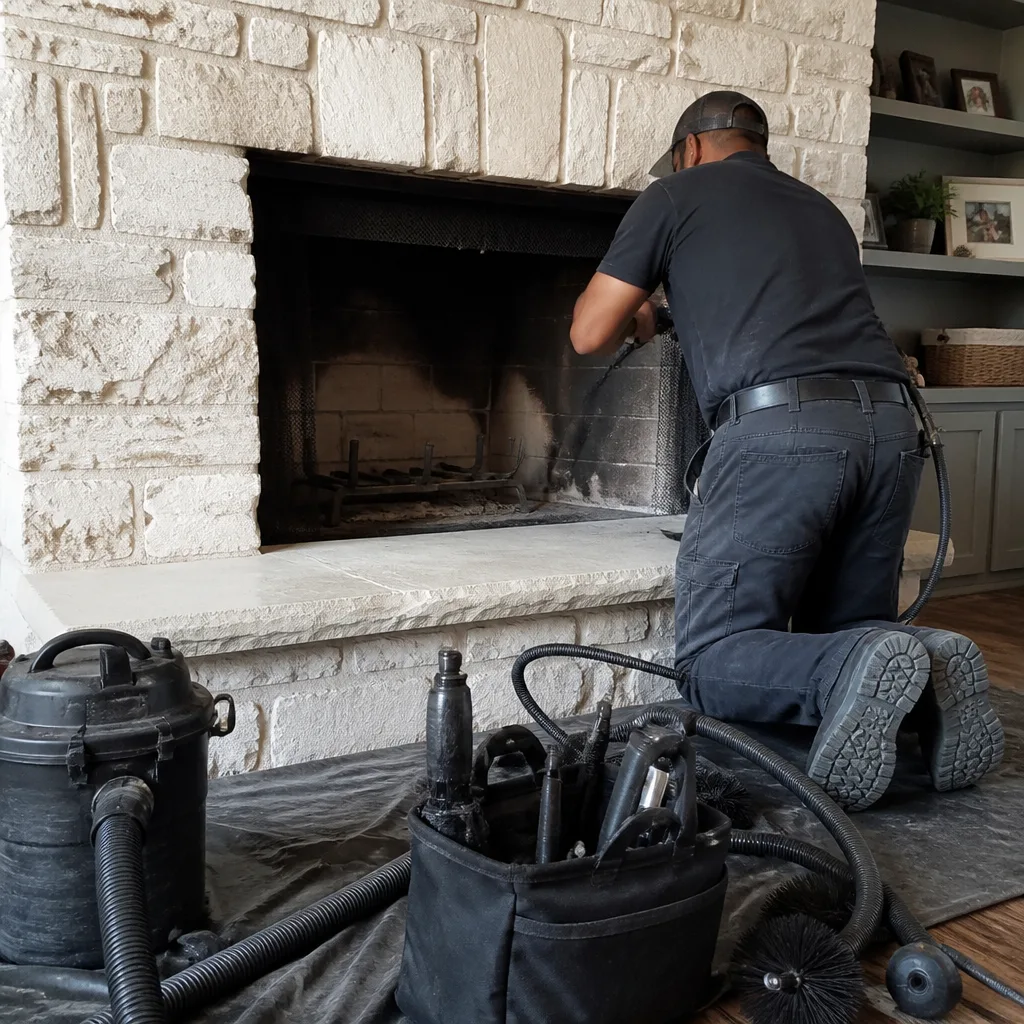
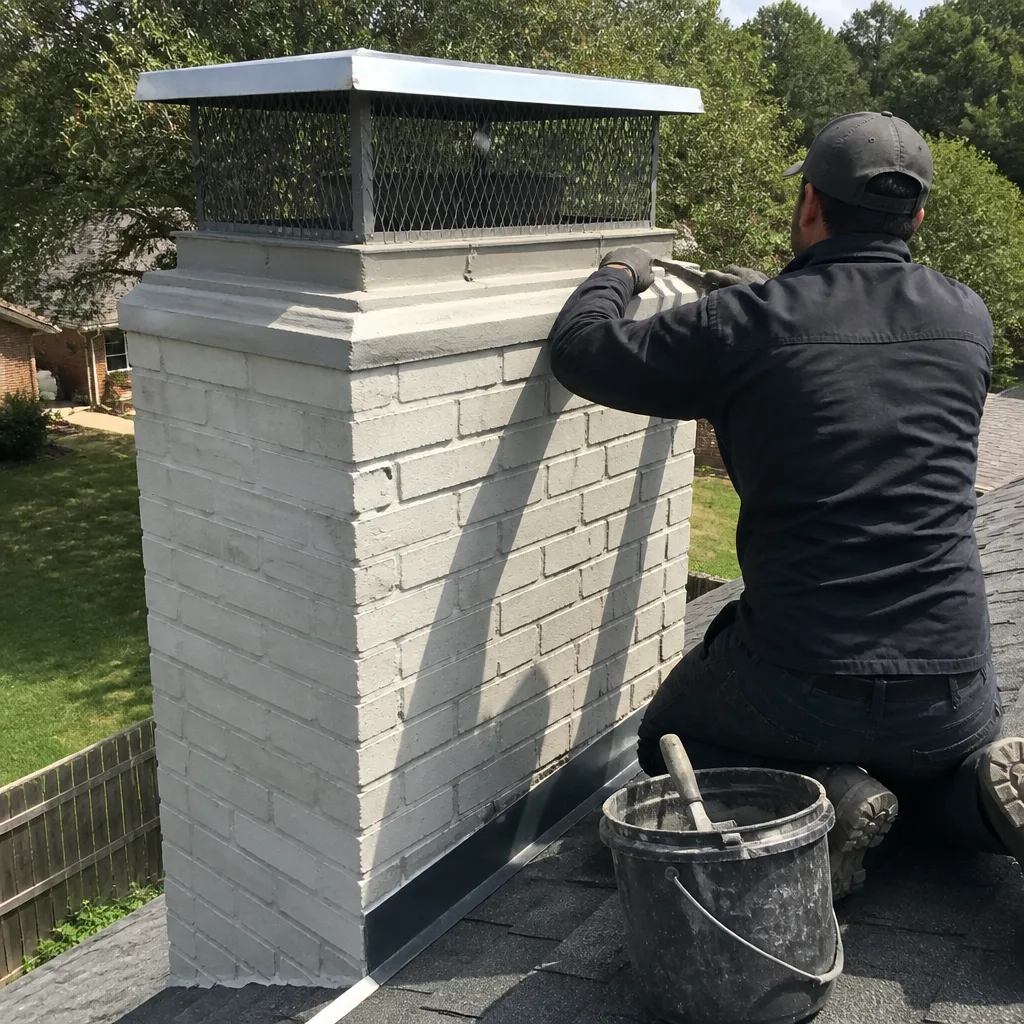
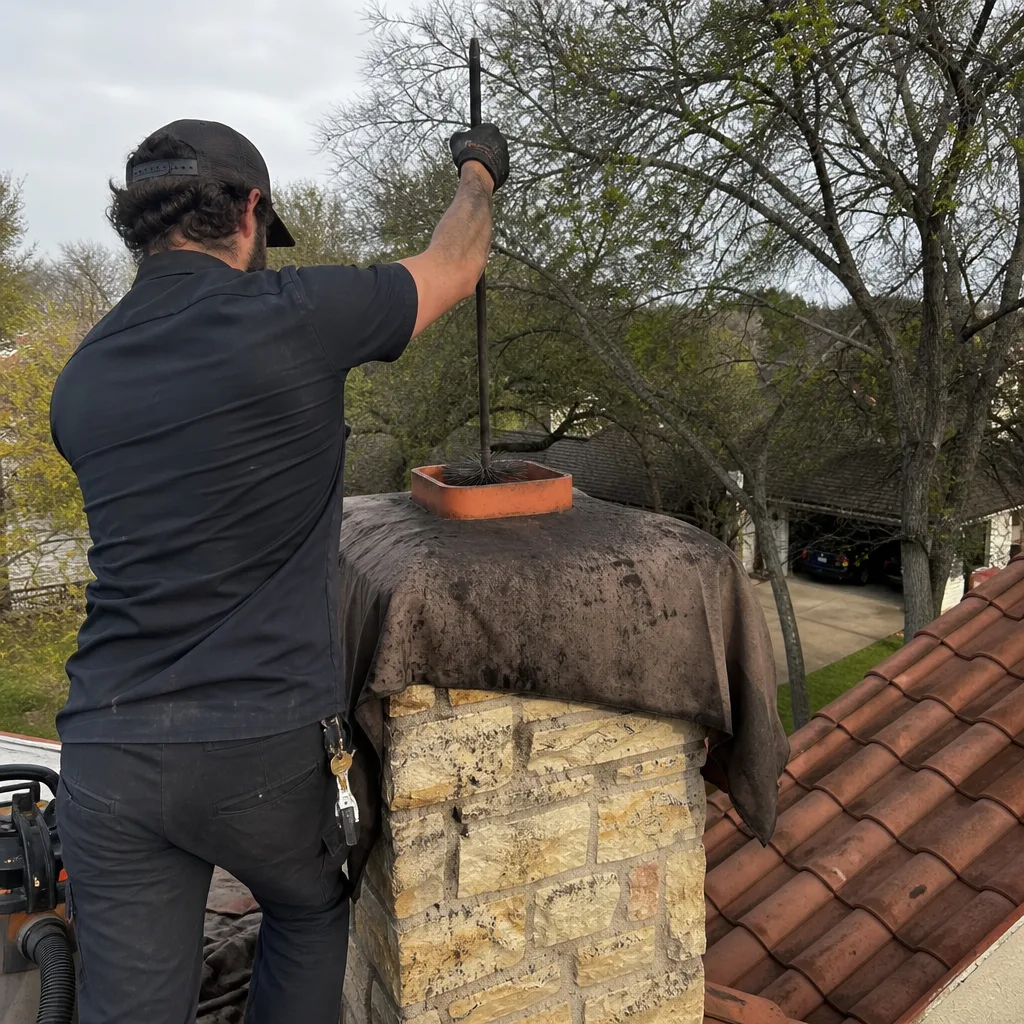
Level 1 sweep and inspection to the NFPA 211 annual standard - flue, crown, cap, and flashing checked and photographed
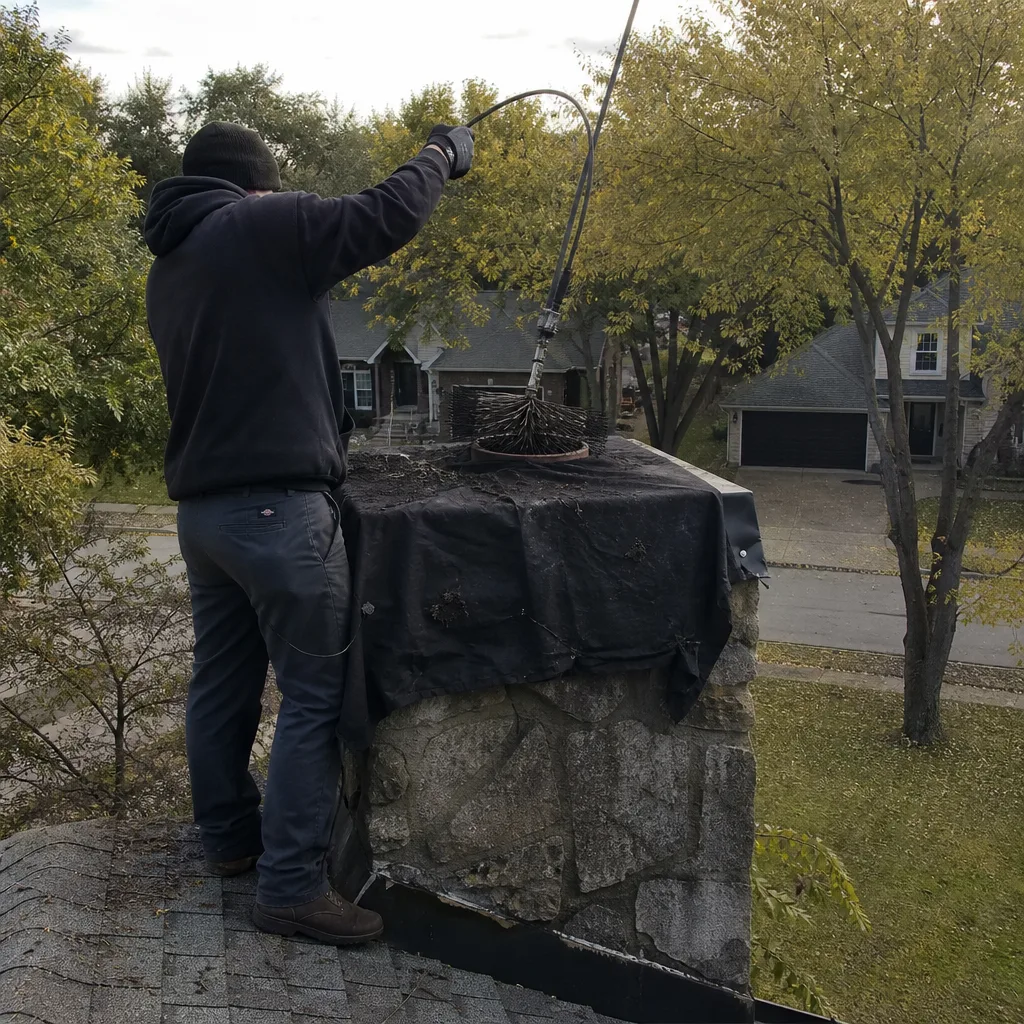
Chimney sweep logs do not sweep chimneys. They loosen some creosote - which then falls where a brush and vacuum still have to collect it.
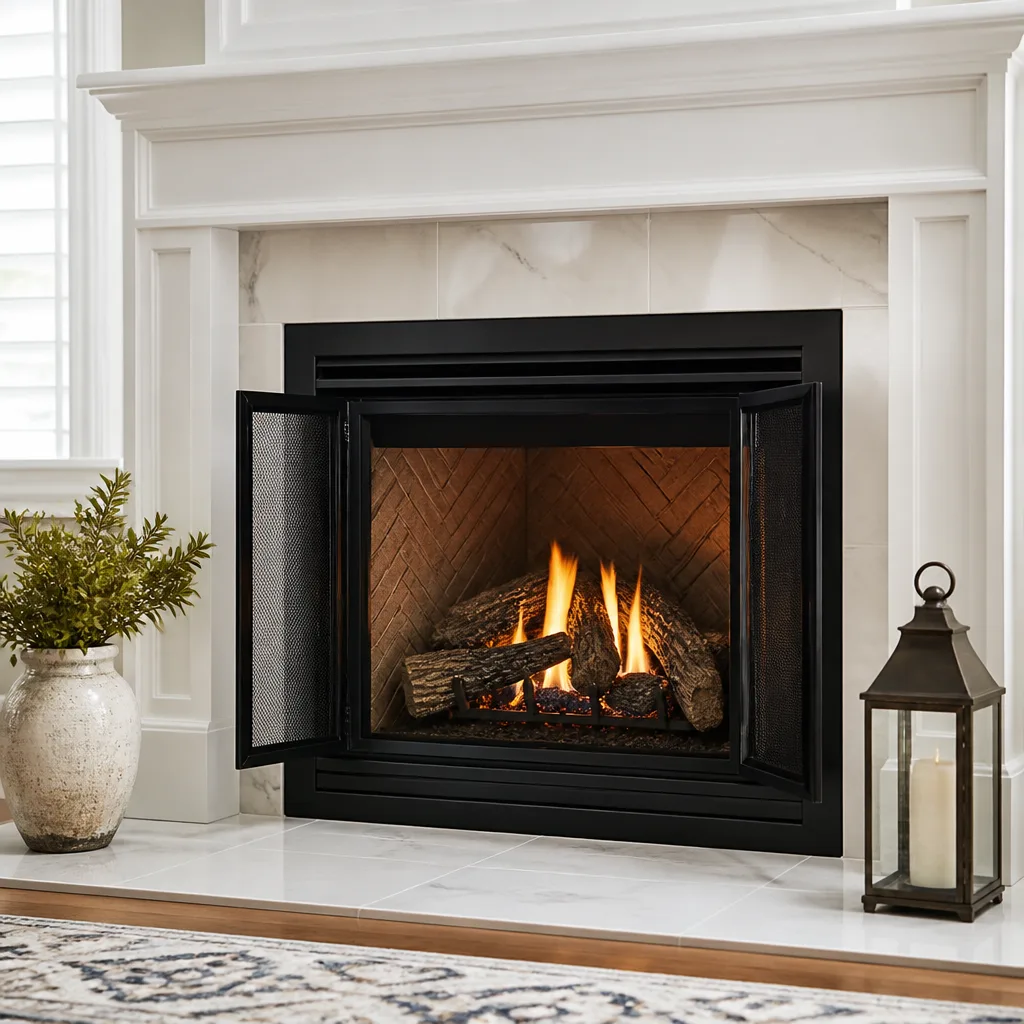
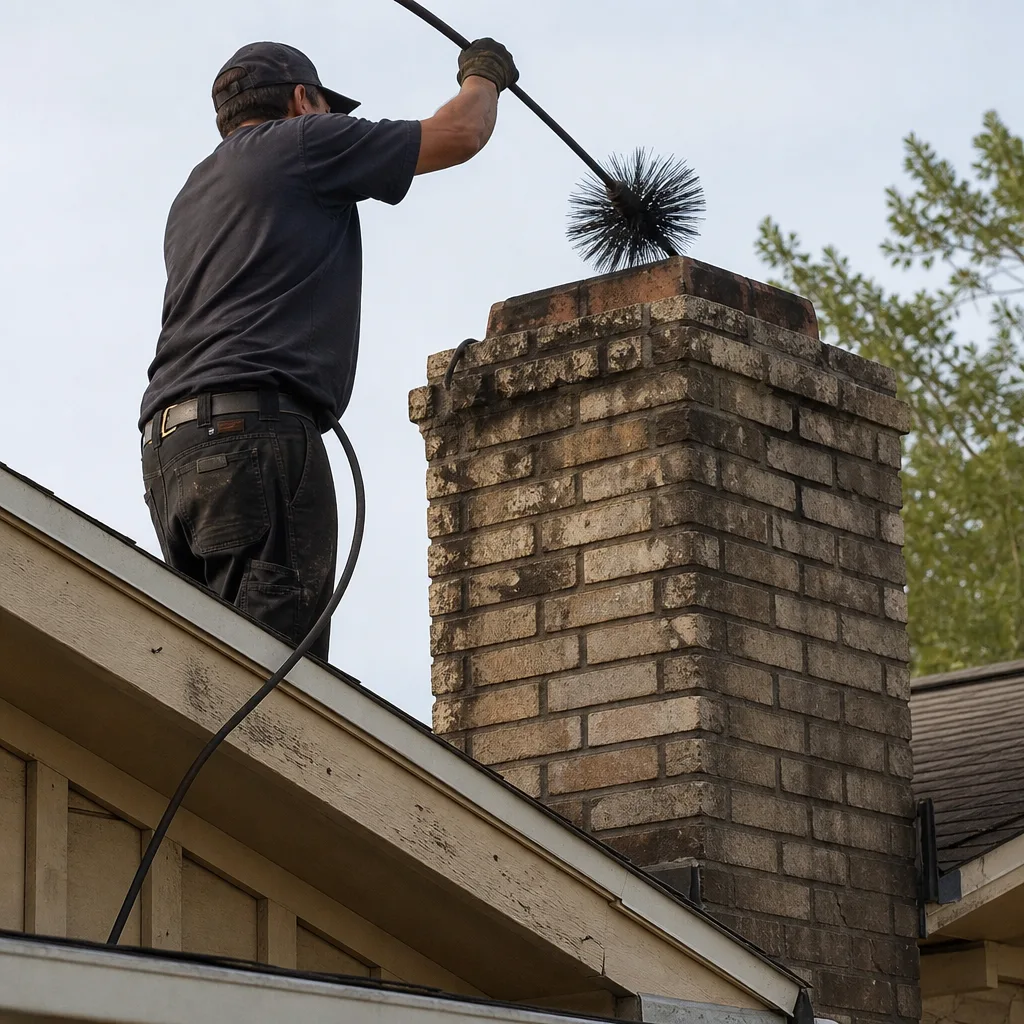 Before
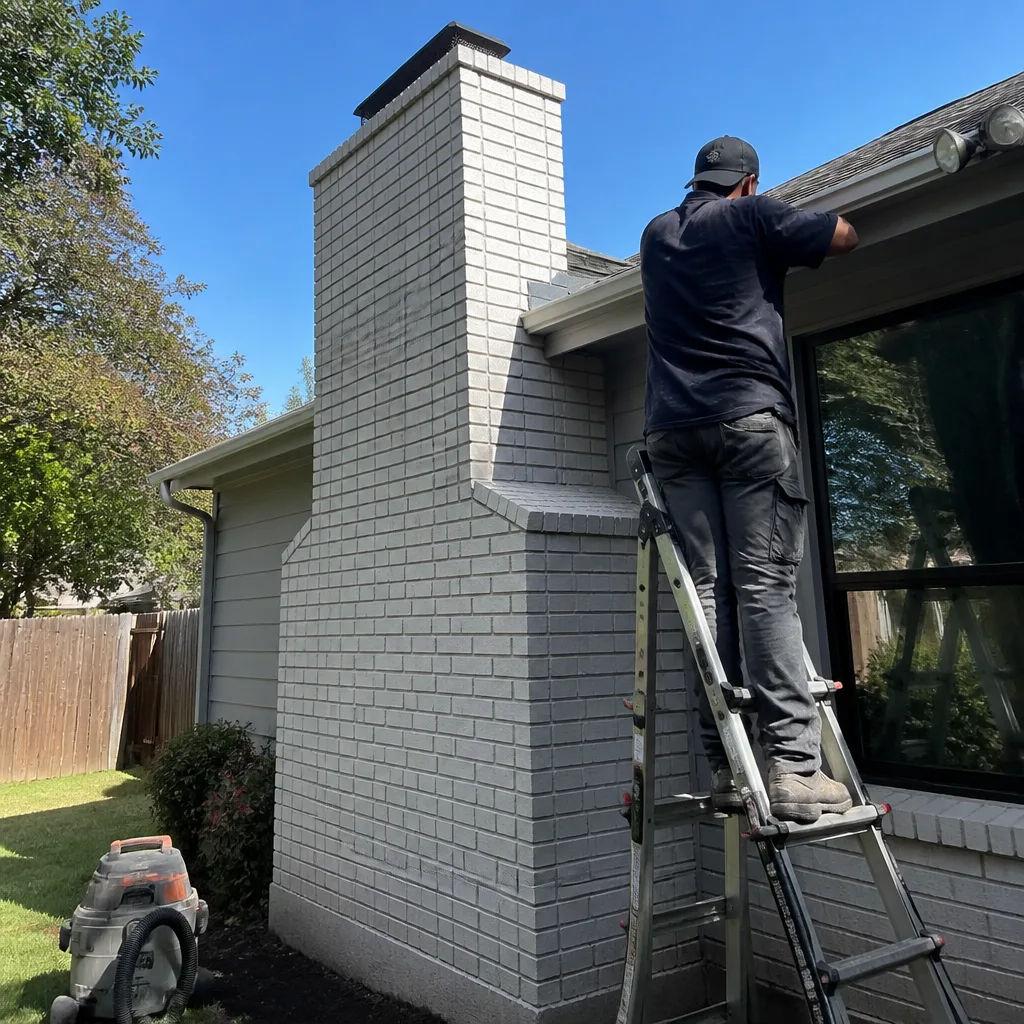 After
After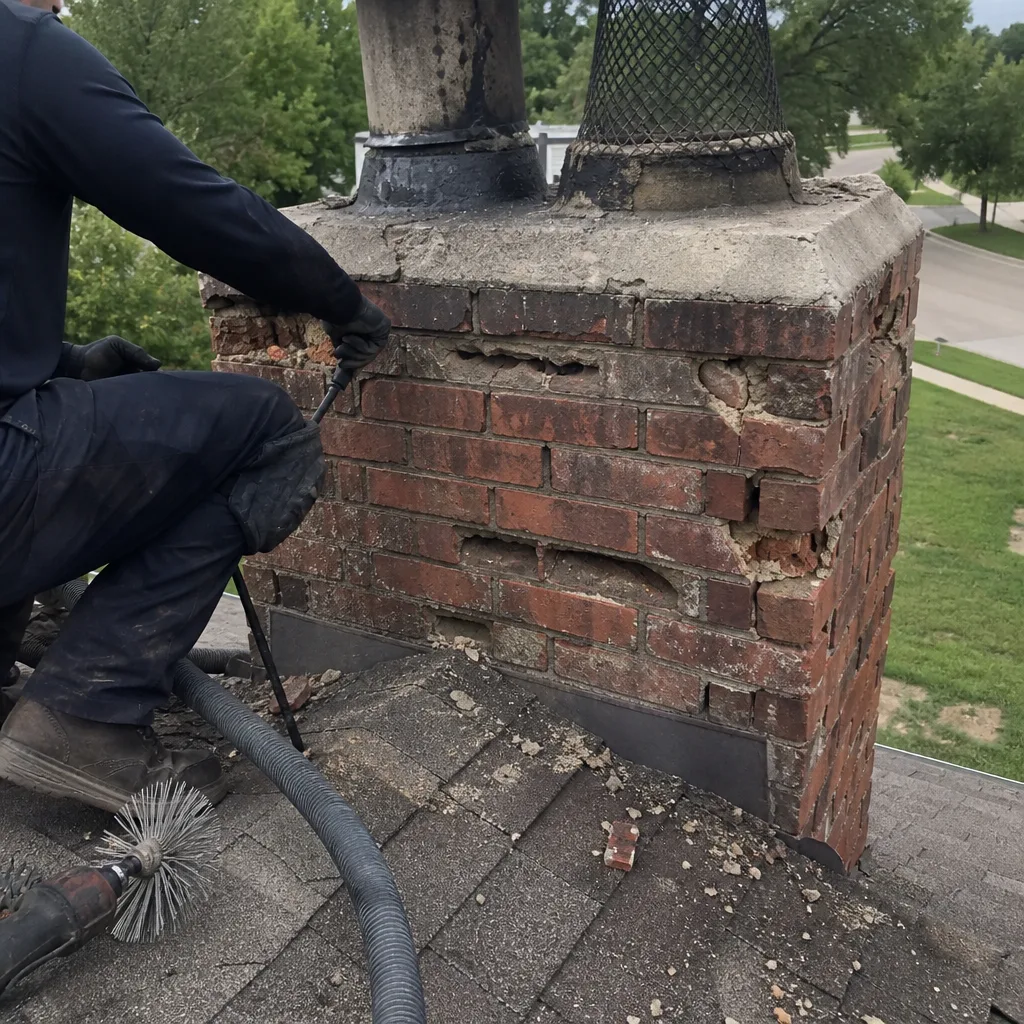 Before
 After
After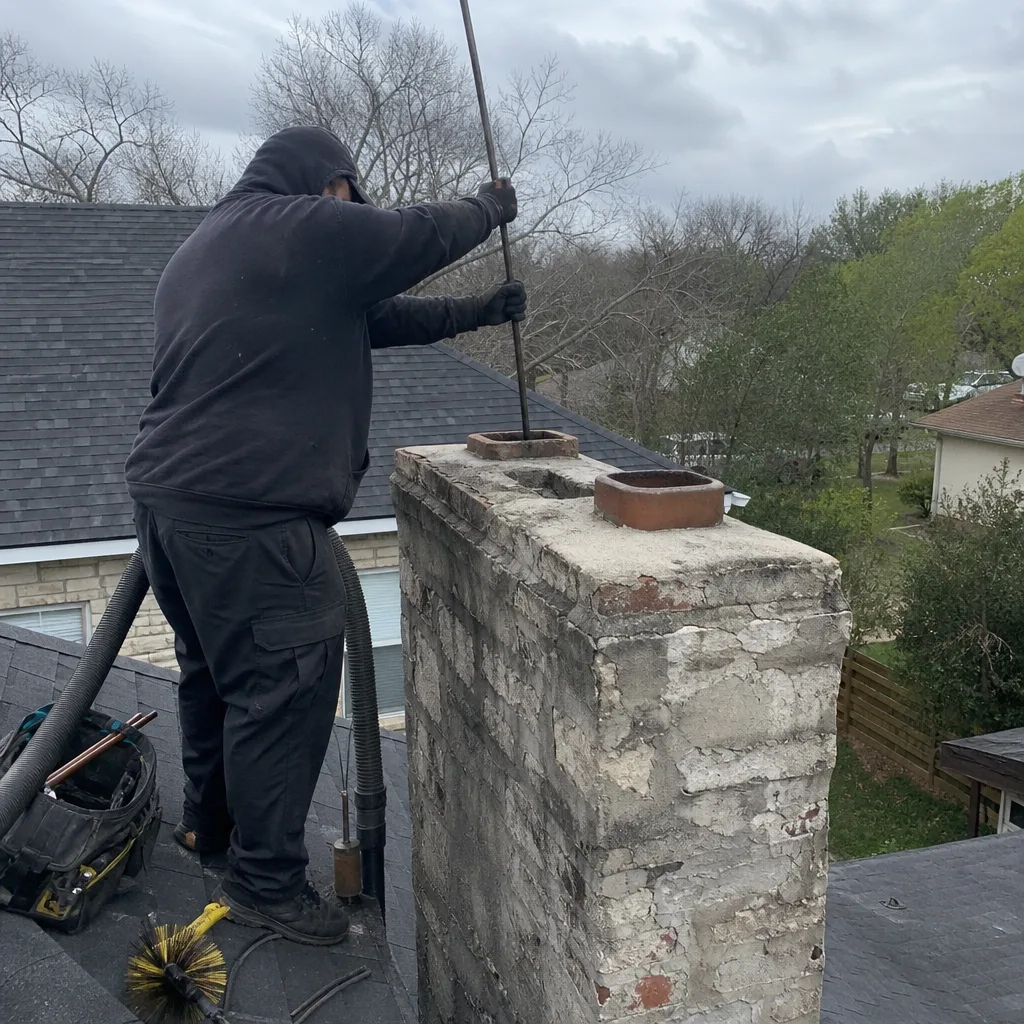 Before
 After
AfterChimney Cleaning Permits, Codes & Inspections in TX: What You Need to Know
A Denton homeowner paid $1,800 for what was billed as a “code-compliant liner repair.” Three years later, at resale, the buyer’s inspector asked for the permit number. There wasn’t one. The contractor had dissolved. The closing stalled until the liner was removed, reinstalled under permit, and re-inspected by the City of Denton - at a cost that exceeded the original job. This happens more than it should because Texas draws a sharp line between chimney maintenance (no permit) and chimney repair (permit required), and most homeowners never see that line until they’re standing on it. In this guide, we’ll walk through exactly where Texas and Denton municipal codes draw that line, what documentation actually protects you, and how to verify a permit was filed rather than merely invoiced. For related reading, see our Complete Guide to Chimney Cleaning in Denton.
Quick Answer
Routine chimney sweeping in Texas does not require a municipal permit. However, liner replacement, firebox rebuild, crown reconstruction, and certain chimney cap installations do require permits under Denton municipal code and the International Residential Code (IRC) adopted statewide. NFPA 211 Level 2 inspection documentation satisfies most insurer requirements but does not replace a municipal permit for structural work.
Table of Contents
- Maintenance vs. Repair: Where Texas Draws the Permit Line
- Denton Municipal Codes and Inspection Thresholds
- How NFPA 211 Level 2 Documentation Works with Insurers
- What “Code Compliant” Means on Your Invoice
- Resale and Insurance Claim Risks of Unpermitted Work
- How to Verify a Permit Was Actually Filed in Denton
- Common Mistakes to Avoid
- When to Call a Professional
- Frequently Asked Questions
- The Bottom Line
BeforeAfterMaintenance vs. Repair: Where Texas Draws the Permit Line
Texas does not regulate chimney sweeping at the state level. No state license exists for chimney technicians, and no state permit is required for routine maintenance. But the moment work crosses from maintenance into repair or alteration, the International Residential Code (IRC) - adopted by reference in Denton and most Texas municipalities - triggers permit requirements.
Here’s the distinction that matters:
Maintenance (no permit required):
- Chimney sweeping and creosote removal
- Visual inspection and basic cleaning of the firebox, smoke chamber, and flue
- Application of CSIA-accepted creosote modifiers or preventative treatments
- Replacement of standard chimney caps with like-for-like units that do not alter structural attachment
- Sealing minor crown cracks with brush-applied sealants under 1/4 inch
Repair or Alteration (permit required in Denton):
- Flue liner replacement or relining with stainless steel, aluminum, or cast-in-place systems
- Firebox refractory panel replacement or rebuild
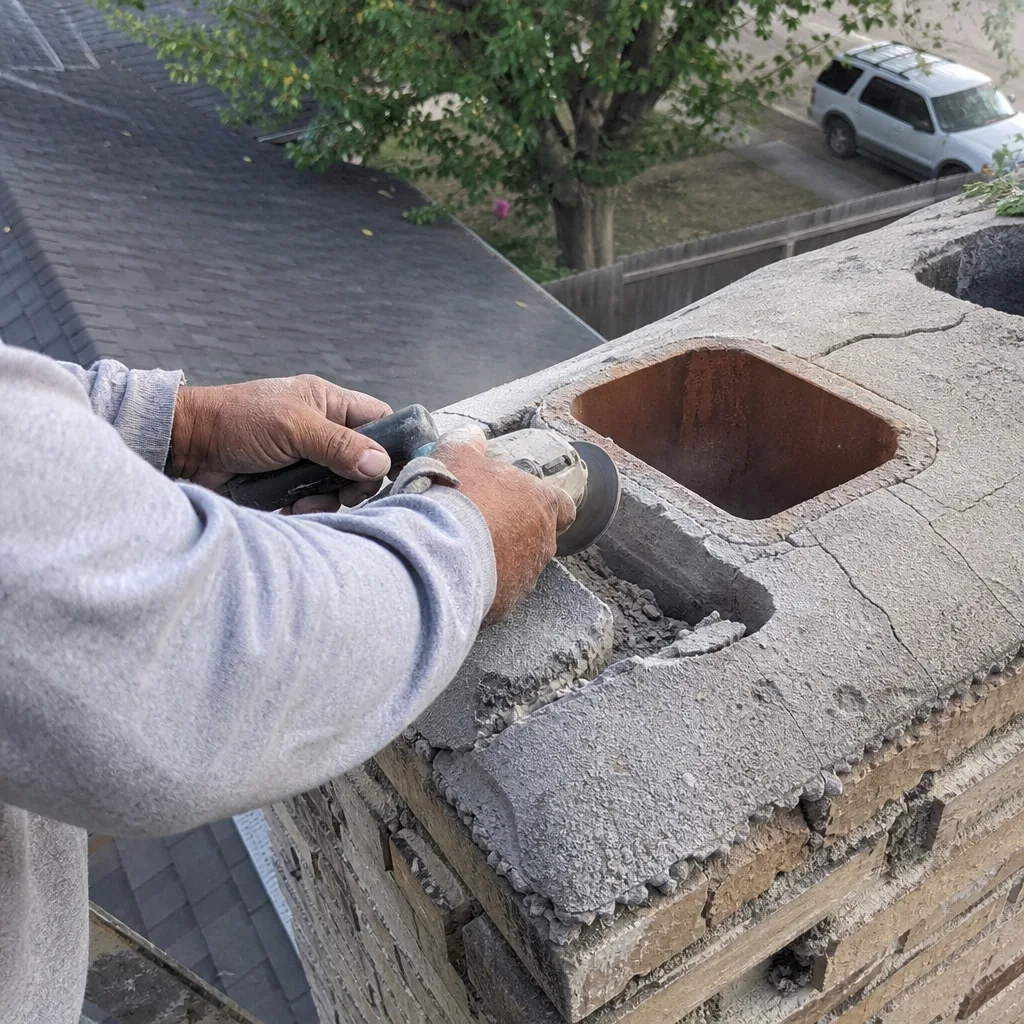
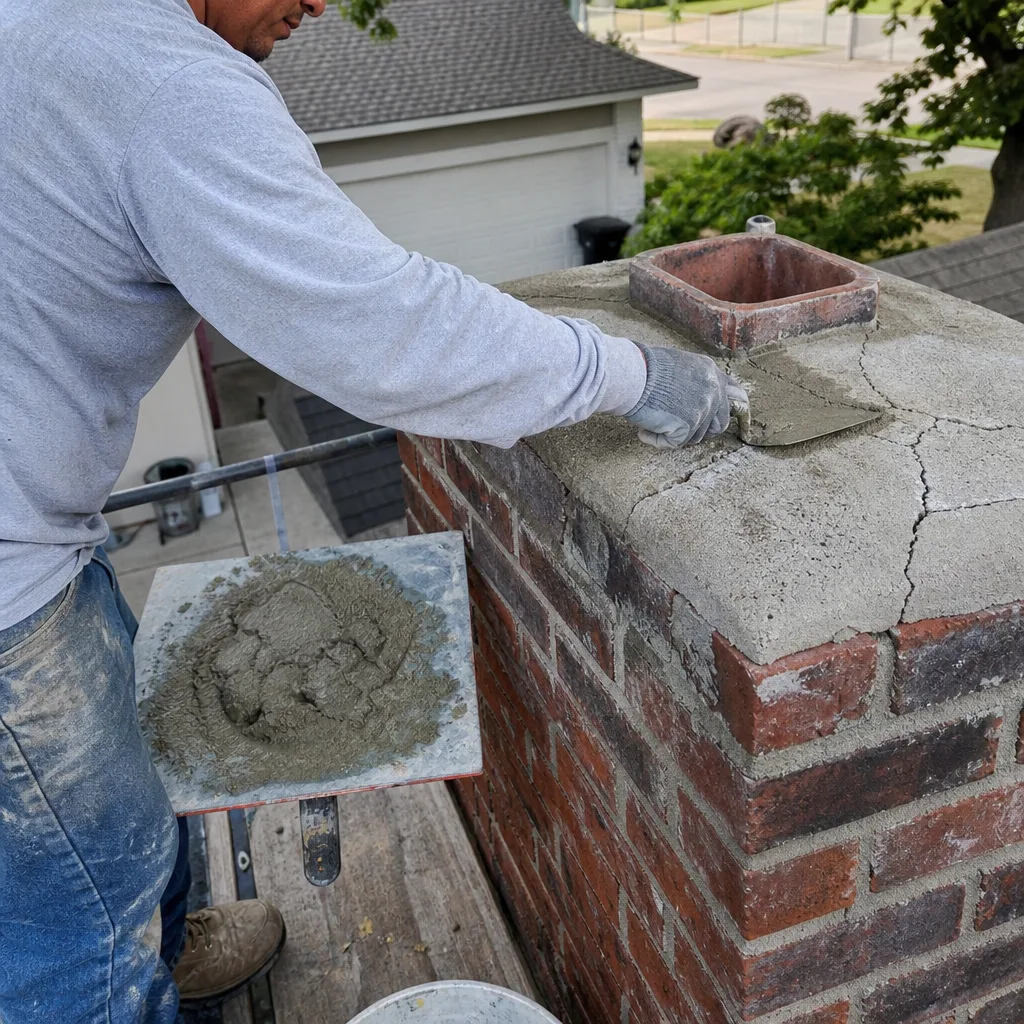
- Crown reconstruction or pour-over exceeding minor crack sealing
- Chimney cap installation requiring new anchoring, welding, or structural modification
- Smoke chamber parging or modification
- Damper replacement when throat or top-sealing units require framing alteration
- Any work involving structural support, footing, or masonry above the roofline
The IRC Section R105.1 requires permits for “construction, alteration, movement, enlargement, replacement, repair, equipment, use and occupancy, removal, and demolition” of building elements. Denton Municipal Code Chapter 22, Article II adopts the 2021 IRC with local amendments, and the Building Inspections Division interprets chimney liner replacement as “replacement” under this section.
We’ve seen confusion arise because some contractors treat liner installation as maintenance. Watch for these chimney cleaning warning signs every Denton homeowner should know. In 2019, a Denton homeowner in the Southridge neighborhood had a stainless steel liner installed after a Level 2 inspection revealed cracked terra cotta. The contractor called it a “cleaning and upgrade package” on the invoice. No permit was pulled. When the homeowner filed an insurance claim after a 2021 hail event, the adjuster flagged the unpermitted liner and denied coverage for associated flue damage. The homeowner paid out of pocket for permitted reinstallation.
The lesson: the nature of the work determines permit status, not the invoice description.
Denton Municipal Codes and Inspection Thresholds
Denton’s Building Inspections Division operates under the Community Development Department at City Hall East, 601 E. Hickory Street. They enforce the 2021 IRC with Texas amendments, and their permit threshold for chimney work aligns with the structural distinction above.
Specific permit requirements in Denton:
- Mechanical Permit: Required for liner replacement, damper installation, and any work affecting combustion air or venting. Fee structure starts at $85 for residential mechanical permits as of 2024, with additional valuation-based fees for work exceeding $1,000.
- Building Permit: Required for firebox rebuild, crown reconstruction, chimney extension, or any masonry work above the roofline. Residential building permits start at $115.
- Combination Permit: Required when mechanical and building work occur together, common in full chimney rebuilds or historic home restorations in the Denton Historic District.
Denton’s climate adds a local factor. The blackland prairie clay soil expands and contracts dramatically with moisture changes. Chimneys in neighborhoods like Oakmont and Robinson Oaks - built on this clay - experience more foundation movement than hill country stone. That movement cracks crowns and shifts liners. When we document this with our camera scan, we note whether the damage pattern suggests ongoing structural stress. If so, we flag that permit-triggering repair may need engineering consultation, not just a sweep.
Denton also maintains specific requirements for historic properties. Homes in the locally designated historic districts - including areas around the Denton County Courthouse-on-the-Square - require Historic Landmark Commission review for exterior-visible chimney modifications, even when a standard building permit would otherwise suffice. This adds 2-4 weeks to the timeline and requires photographic documentation of existing conditions.
One detail competitors rarely mention: Denton’s Building Inspections Division requires that the permit holder - the licensed contractor who pulled the permit - be present for the final inspection. A homeowner cannot pull their own permit for liner replacement and hire an unlicensed technician to perform the work. The permit holder must demonstrate compliance with manufacturer installation instructions, which for stainless steel liners means showing the DuraFlex or Olympia Chimney specification sheet used.
How NFPA 211 Level 2 Documentation Works with Insurers
NFPA 211 is the National Fire Protection Association standard for chimneys, fireplaces, vents, and solid fuel-burning appliances. It defines three inspection levels. Level 1 is a visual inspection of accessible areas. Level 2 adds a camera scan of the flue interior, accessible portions of the attic and basement, and documentation of clearance to combustibles. Level 3 involves demolition of building components.
Emberly Chimney Cleaners Denton has performed NFPA 211 Level 2 inspections as our default since 2009. Clause 4 of the Haven Standard requires a documented photo record on every job - every one of our 38,000-plus visits includes this. The camera footage, still images, and written condition report satisfy most homeowner insurance requirements for proof of maintenance and pre-loss condition.
But here’s the critical distinction: NFPA 211 Level 2 documentation is not a municipal code inspection, and it does not satisfy permit requirements. It is a fire safety standard, not a building code compliance verification.
What NFPA 211 Level 2 documentation provides:
- Written record of flue liner condition, creosote classification (Class I, II, or III), and any defects
- Photo and video evidence of internal conditions, dated and archived
- Assessment of clearance to combustibles in accessible areas
- Documentation that supports insurance claims by establishing pre-existing condition and maintenance history
What it does NOT provide:
- Verification that structural repairs were performed under permit
- Code compliance certification for liner installation methods
- Approval of firebox reconstruction or crown work
- Municipal sign-off for occupancy or resale
We’ve had Denton homeowners ask why their insurer accepted our Level 2 report for annual maintenance documentation but required separate permit verification for a claim involving liner damage. The answer is straightforward: maintenance documentation and construction permitting serve different legal purposes. One proves you maintained the system. The other proves the system was installed to code.
When we deliver a Level 2 report, we separate these clearly. The report states what we found, what we documented, and whether the observed conditions suggest permit-triggering work is needed. We do not conflate inspection documentation with code certification. Any contractor who does - who stamps “code compliant” on an inspection report without referencing the specific code edition - is creating confusion that can cost you at claim time.
What “Code Compliant” Means on Your Invoice
The phrase “code compliant” appears on chimney contractor invoices across Texas, often without specificity. In our experience reviewing competitor estimates during free second opinions, we’ve seen it used to mean everything from “we followed manufacturer instructions” to “we think this looks right.” That vagueness is a problem.
Here’s what “code compliant” should mean, and how to verify it:
Specific code references to look for:
- IRC 2021, Chapter 10: Covers chimneys and fireplaces, including construction requirements, clearances, and liner specifications. If liner work is performed, the invoice should reference IRC R1003.11 for flue lining or R1003.15 for factory-built chimney installation.
- NFPA 211 (current edition): Provides fire safety standards for inspection, maintenance, and clearance. Often cited as “NFPA 211-19” or the current year edition.
- Manufacturer installation instructions: Building codes require compliance with listed manufacturer specifications. For stainless steel liners, this means DuraFlex, Olympia Chimney, or equivalent installation manuals. For refractory repair, HeatShield or similar product data sheets.
If your invoice says “code compliant” without referencing IRC, NFPA 211, or a specific manufacturer installation manual, it is not a compliance certification. It is marketing language.
We write our scopes differently. Under Haven Standard Clause 1, every job gets a written price, written scope, and written warranty before work begins. Our scopes specify:
- The code edition applicable to the work (typically 2021 IRC, Texas amendments)
- The manufacturer and product line being installed (e.g., DuraFlex 316Ti stainless steel liner, Olympia Chimney UL-listed components)
- The inspection standard used to evaluate need (NFPA 211 Level 2)
- The permit number, if permit-triggering work is performed - or explicit note that no permit is required for maintenance-only scope
A Denton homeowner in the Idiot’s Hill area brought us a competitor estimate last year that stated “all work to code” but referenced no code edition, no manufacturer, and included no permit line item. We explained that without these specifics, “to code” was unverifiable. The homeowner requested clarification from the original contractor and received none. They hired us for a documented Level 2 inspection and permitted liner replacement instead.
Resale and Insurance Claim Risks of Unpermitted Work in Denton County
Unpermitted chimney work creates two distinct risk categories: resale transaction failure and insurance claim denial. Both are increasingly common in Denton County’s active real estate market, where buyer inspections have tightened since 2022.
Resale risks:
Texas is a disclosure state. Sellers must complete a Seller’s Disclosure Notice (TREC Form OP-H) that asks about “additions, structural changes, or other alterations” made without required permits. Chimney liner replacement, firebox rebuild, or crown reconstruction falls under this if structural.
When a buyer’s inspector - or the title company’s review - identifies unpermitted work, several outcomes occur:
- The buyer may require permitted correction as a condition of closing
- The lender may withhold funding until code compliance is verified
- Title insurance may exclude coverage for unpermitted structural elements
- The closing may delay 30-60 days for permit application, inspection scheduling, and correction of any failed inspection items
In Denton’s competitive market, a 45-day delay can kill a deal. We’ve been called to expedite permitted corrections for sellers whose closings were days away. The cost is always higher than original permitted installation would have been, because rush permits carry premium fees and inspection scheduling requires coordination with the city’s limited inspector availability.
Insurance claim risks:
Homeowner insurance policies contain standard provisions excluding coverage for damage arising from “faulty, inadequate, or illegal construction.” Unpermitted work is frequently interpreted as illegal construction in claim disputes.
Specific scenarios we’ve encountered in Denton County:
- Chimney fire following liner failure: Insurer denied claim because liner was installed without permit; argued proper inspection would have revealed installation defects
- Water damage from crown deterioration: Insurer reduced payout because prior “repair” was unpermitted and used non-compliant materials
- Carbon monoxide incident: Insurer subrogated against original contractor, but contractor was unlicensed and uninsured; homeowner bore remediation costs
The 2021 Texas winter storm (Uri) accelerated insurer scrutiny of chimney and venting systems. Claims involving ice dam-related chimney damage now routinely trigger permit history requests. Homeowners with clean permit records and documented Level 2 inspection histories - like those we maintain under Haven Standard Clause 4 - experience faster claim resolution.
How to Verify a Permit Was Actually Filed in Denton
A contractor saying “we’ll pull the permit” is not verification. Permits can be applied for but never closed, closed with failed inspections, or never applied for at all. Here’s how to confirm your chimney work is properly permitted and inspected in Denton.
Step 1: Request the permit application number before work begins
Any legitimate contractor can provide the permit application number once submitted. At Emberly Chimney Cleaners Denton, we include this in our written scope under Haven Standard Clause 1. If a contractor hesitates or says they’ll “handle it after,” that’s a flag.
Step 2: Verify in the City of Denton permit portal
The City of Denton provides online permit lookup at the Community Development Department website. Search by property address or permit number. Confirm:
- The permit status shows “Issued” or “Approved,” not just “Applied”
- The permit type matches the work (Mechanical for liners/dampers, Building for masonry)
- The contractor name matches the company performing the work
- The permit issue date precedes or matches the work start date
Step 3: Confirm inspection scheduling and completion
Permits require inspection to close. For chimney liner replacement, Denton typically requires:
- Rough inspection - liner in place, before closure (if accessible)
- Final inspection - completed installation, operational test, compliance with manufacturer instructions
Ask your contractor for inspection dates and results. A “passed” inspection generates a green tag or digital approval in the portal. Failed inspections require correction and re-inspection.
Step 4: Request the Certificate of Completion or Certificate of Occupancy update
For significant structural work, request documentation that the permit is “finaled” - closed with all inspections passed. This is the document title companies and insurers actually want to see.
Red flags that suggest permit fraud or neglect:
- Contractor says permits “aren’t needed for this kind of work” when liner or masonry replacement is involved
- Permit is in a homeowner’s name, not the contractor’s (suggests unlicensed work)
- Permit application date is after work completion date
- Inspection records show repeated failures without documented correction
- Contractor cannot produce manufacturer installation instructions they claimed to follow
We’ve assisted Denton homeowners with permit verification for work performed by others - part of our free second opinion service. In two cases, permits that were “pulled” according to invoice language were never actually submitted to the city. The contractor had simply added a permit fee line item and kept it.
Common Mistakes to Avoid
- Assuming all chimney work is maintenance. Texas and Denton codes distinguish sweeping from structural repair. Liner replacement is repair. If your invoice doesn’t show a permit for liner work, ask directly - and verify the answer.
- Accepting “code compliant” without code citation. Vague compliance claims are unverifiable. Insist on specific references: IRC edition, NFPA 211 edition, manufacturer installation manual.
- Letting the contractor pull a permit in your name. In Denton, the permit holder must be the licensed contractor performing the work. A permit in your name with unlicensed labor creates liability you don’t want.
- Skipping documentation because “it’s just a cleaning.” Even maintenance-only visits should produce inspection records. Our Level 2 documentation has resolved insurance disputes for Denton homeowners whose “routine” cleanings revealed pre-existing defects that later became relevant to claims.
- Not checking permit status at resale until under contract. Verify permit history before listing. The City of Denton portal is free and public. Unpermitted work discovered during buyer due diligence becomes a negotiation weapon against your price.
- Hiring based on lowest price without scope comparison. An estimate that omits permit fees, inspection costs, or documentation may not be cheaper - it may be incomplete. Our written scopes under Haven Standard Clause 1 itemize all costs before work starts.
- Confusing manufacturer warranty with code compliance. A DuraFlex or HeatShield product warranty covers material defects, not installation code compliance. Both matter, but they’re separate protections.
When to Call a Professional
Call a licensed, permitted contractor when any of these apply: you’re replacing a flue liner, rebuilding a firebox, reconstructing a crown, or modifying chimney structure above the roofline. Call for an NFPA 211 Level 2 inspection if you haven’t had documented camera-scan evaluation in the past 12 months, if you’re buying or selling a home, or if you’ve changed fuel types (wood to gas, or vice versa). Explore more guides & resources on our blog.
In Denton, the clay soil and freeze-thaw cycles of North Texas winters accelerate crown and liner deterioration. A visual check from the rooftop doesn’t reveal internal flue conditions. Only camera documentation shows what you’re actually burning in.
Emberly Chimney Cleaners Denton offers free estimates in Denton - call (940) 373-6912. Every estimate includes a written scope, written price, and written warranty before any work begins, under Haven Standard Clause 1. We pull permits when required, verify them in the city portal, and deliver documented photo records on every visit under Clause 4.
Frequently Asked Questions
No. Routine chimney cleaning, sweeping, and basic maintenance do not require permits under Texas state law or Denton municipal code. Permits are required for structural repairs including liner replacement, firebox rebuild, and crown reconstruction. If you’re scheduling a standard sweep in Denton, no permit is needed - but documentation of the inspection is still valuable for your records.
Permitted stainless steel liner replacement in Denton typically ranges from $2,800 to $4,500 for a standard masonry fireplace, including permit fees, materials from DuraFlex or Olympia Chimney, and installation. Complex installations with offset flues or multiple appliances can exceed this range. The permit itself adds $85-$150 depending on valuation. We provide exact written pricing before work starts - call (940) 373-6912 for a free estimate.
NFPA 211 recommends annual inspection for all chimneys, and cleaning when creosote buildup reaches 1/8 inch. In Denton, where oak and cedar are common burning fuels, we see heavier creosote accumulation than in areas with primarily pine or manufactured log use. Most wood-burning households benefit from annual sweeping; gas appliance chimneys may extend to biennial inspection if usage is light. Our Level 2 inspection determines actual need rather than applying a blanket schedule.
Skipped maintenance leads to progressive creosote accumulation, which increases chimney fire risk and reduces draft efficiency. In Denton’s climate, moisture intrusion through deteriorated crowns accelerates liner damage during freeze-thaw cycles. Carbon monoxide exposure risk rises when flues are obstructed or liners are cracked. Insurance claims for chimney fire damage may be reduced or denied if maintenance records show prolonged neglect. The cost of prevention is consistently lower than the cost of remediation.
Terra cotta liners with hairline cracks may remain serviceable with monitoring; liners with spalling, significant cracking, or missing sections require replacement. We make this determination with camera evidence you can see yourself - not with a sales pitch. Our Level 2 inspection shows the actual flue condition, and we explain when work can safely wait versus when it cannot. If a competitor recommends replacement without camera documentation, get a second opinion.
Yes, frequently. Texas disclosure requirements ask about unpermitted structural work, and Denton buyers increasingly verify permit history through the city portal. Unpermitted liner or firebox work typically must be brought into compliance before closing, with costs and delays borne by the seller. We’ve performed permitted corrections for Denton sellers whose closings were at risk. Permitting work correctly the first time avoids this entirely.
The Bottom Line
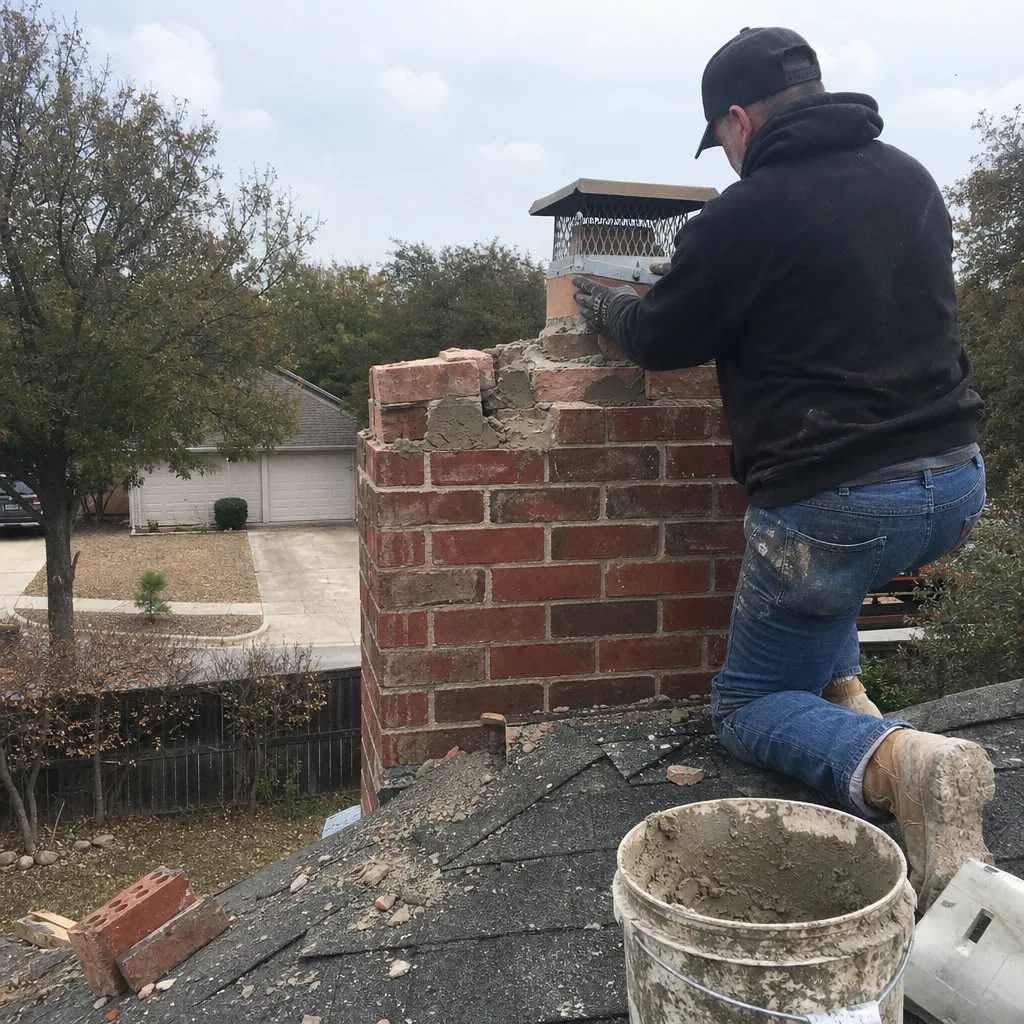
Texas chimney regulation is straightforward once you understand the maintenance-repair boundary. Cleaning and sweeping need no permit. Liner replacement, firebox rebuild, and structural masonry work do - in Denton and virtually every Texas municipality. The documentation that protects you has two parts: NFPA 211 Level 2 inspection records for maintenance history, and municipal permits with passed inspections for structural work. “Code compliant” on an invoice means nothing without specific code references and permit verification. Before hiring any contractor, request written scope, written price, and permit confirmation you can verify yourself in the city portal. The homeowner who paid $1,800 for unpermitted work, then paid again to have it redone correctly, learned this the expensive way.
Emberly Chimney Cleaners Denton has operated under the Haven Standard since 2009, completing more than 38,000 chimney inspections and cleanings with written prices before work starts and documented photo records on every visit. We source materials through our Haven buying network from DuraFlex, HeatShield, Gelco, Olympia Chimney, Famco, and Copperfield to keep pricing honest and quality consistent.
Written by Corrine Halstead, Owner at Emberly Chimney Cleaners Denton, serving Denton since 2009.