
Last updated September 22, 2026
Level 1 sweep and inspection to the NFPA 211 annual standard - flue, crown, cap, and flashing checked and photographed
Chimney sweep logs do not sweep chimneys. They loosen some creosote - which then falls where a brush and vacuum still have to collect it.
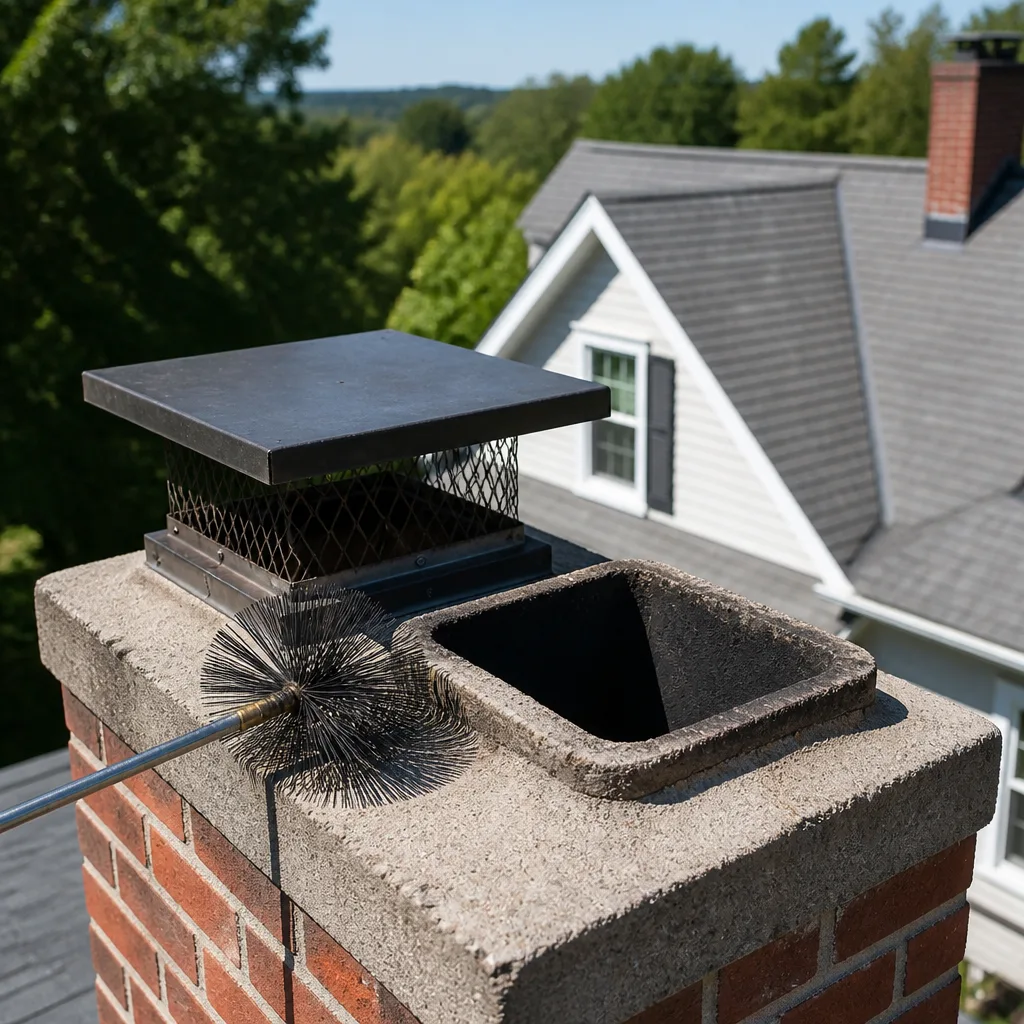
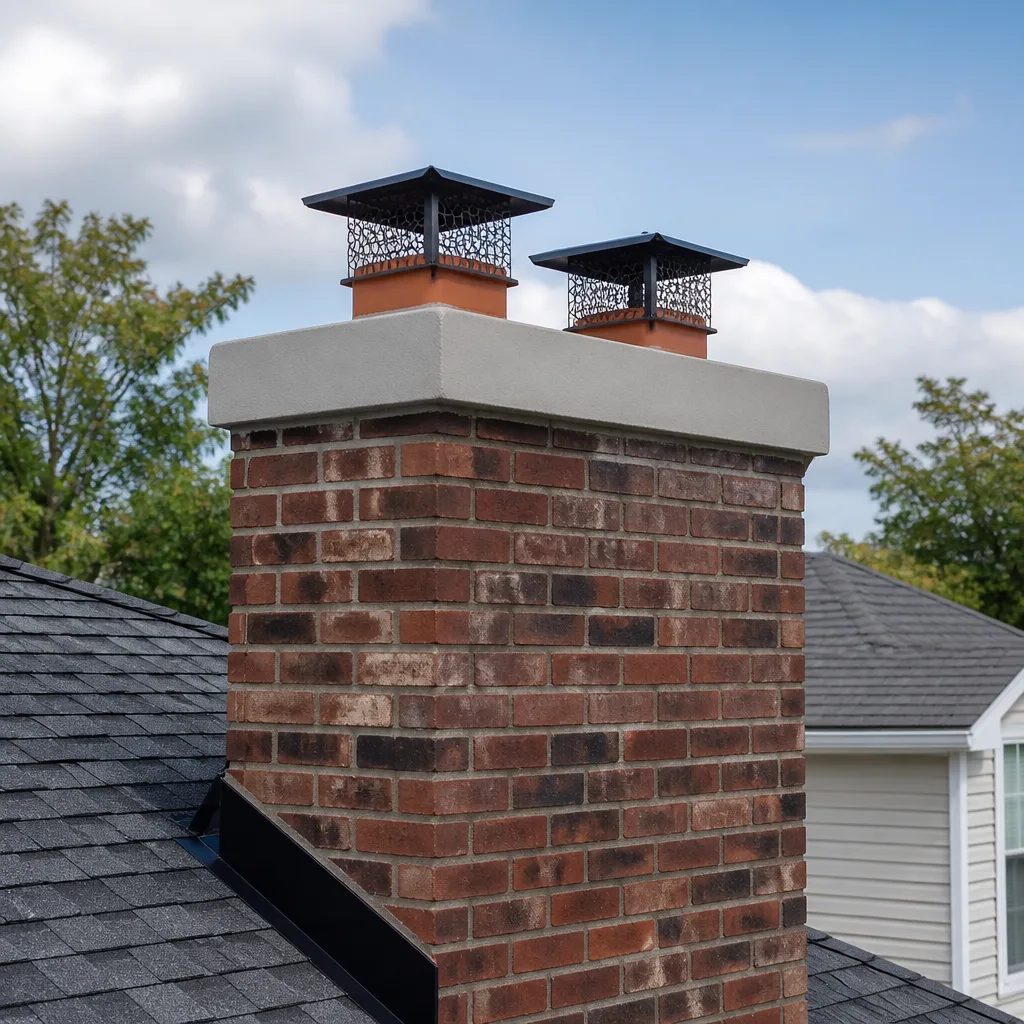
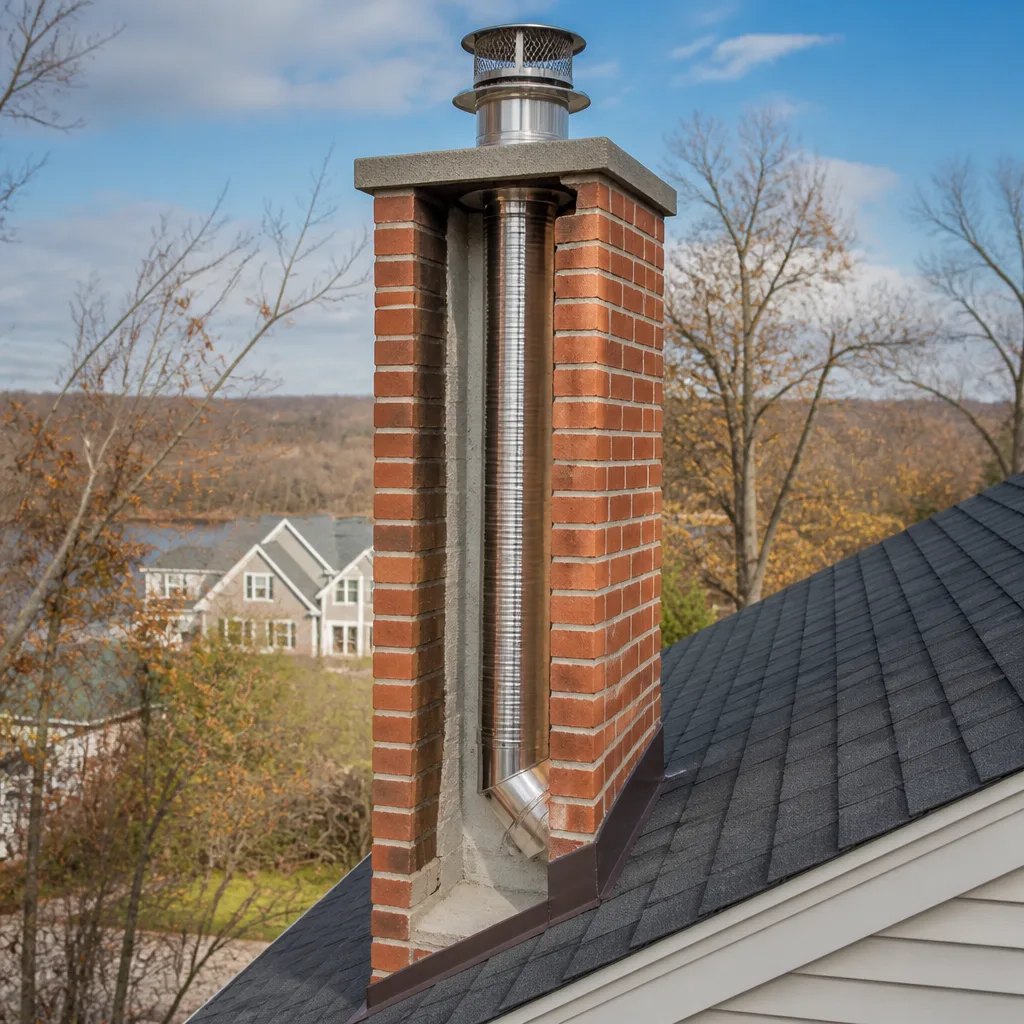
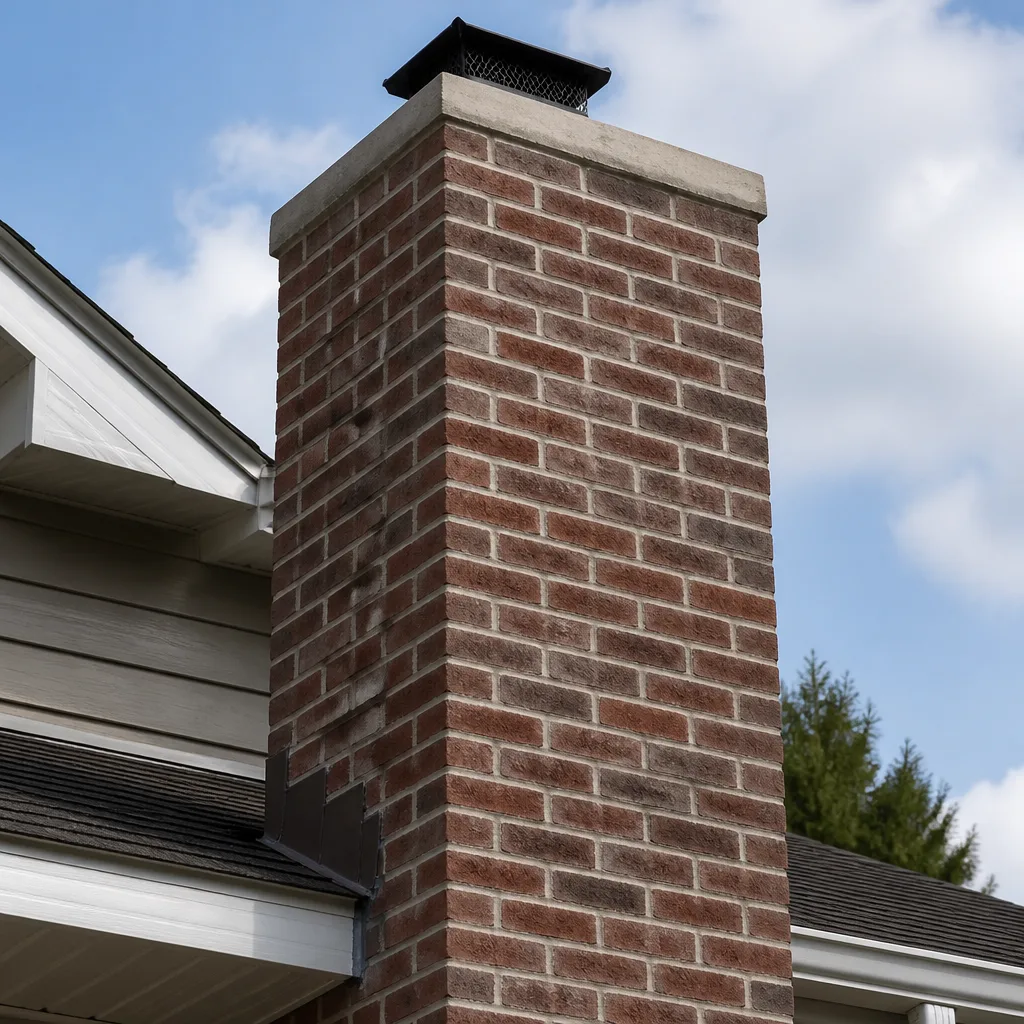
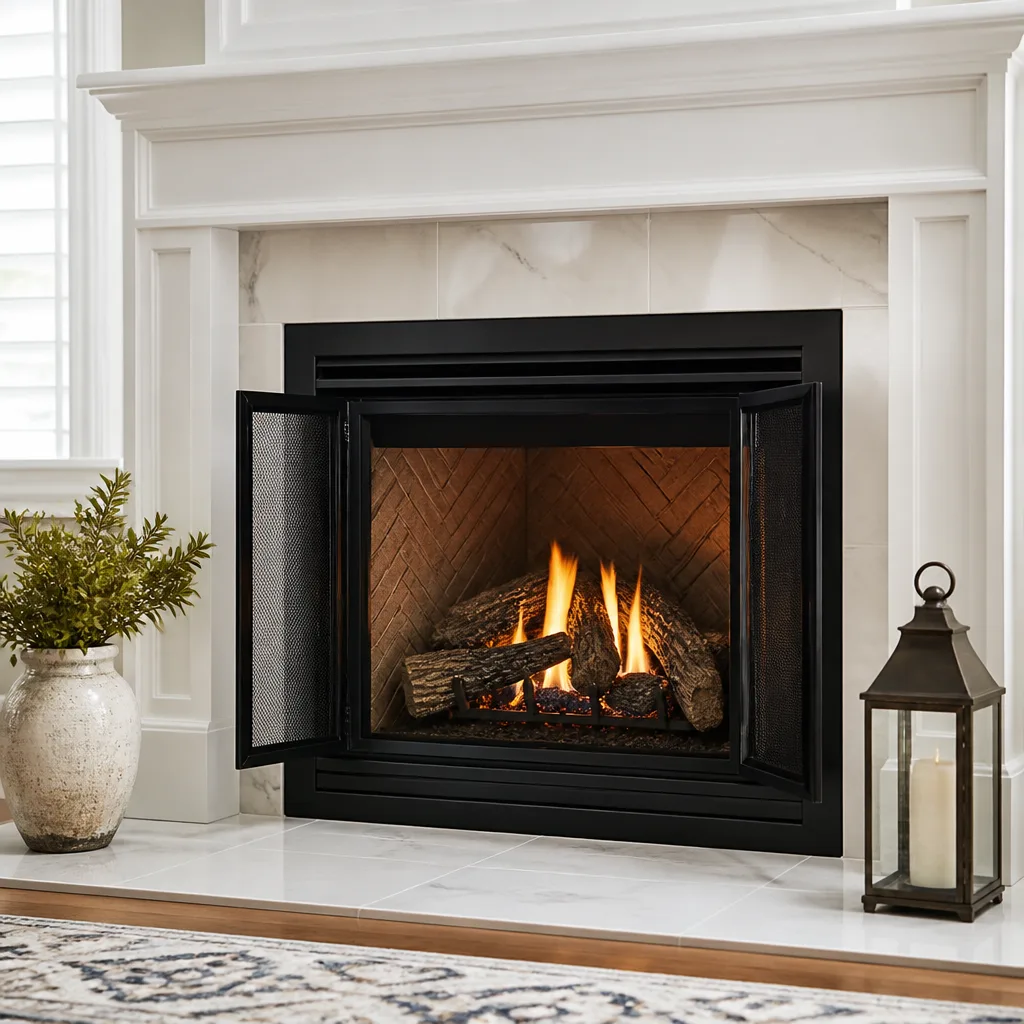
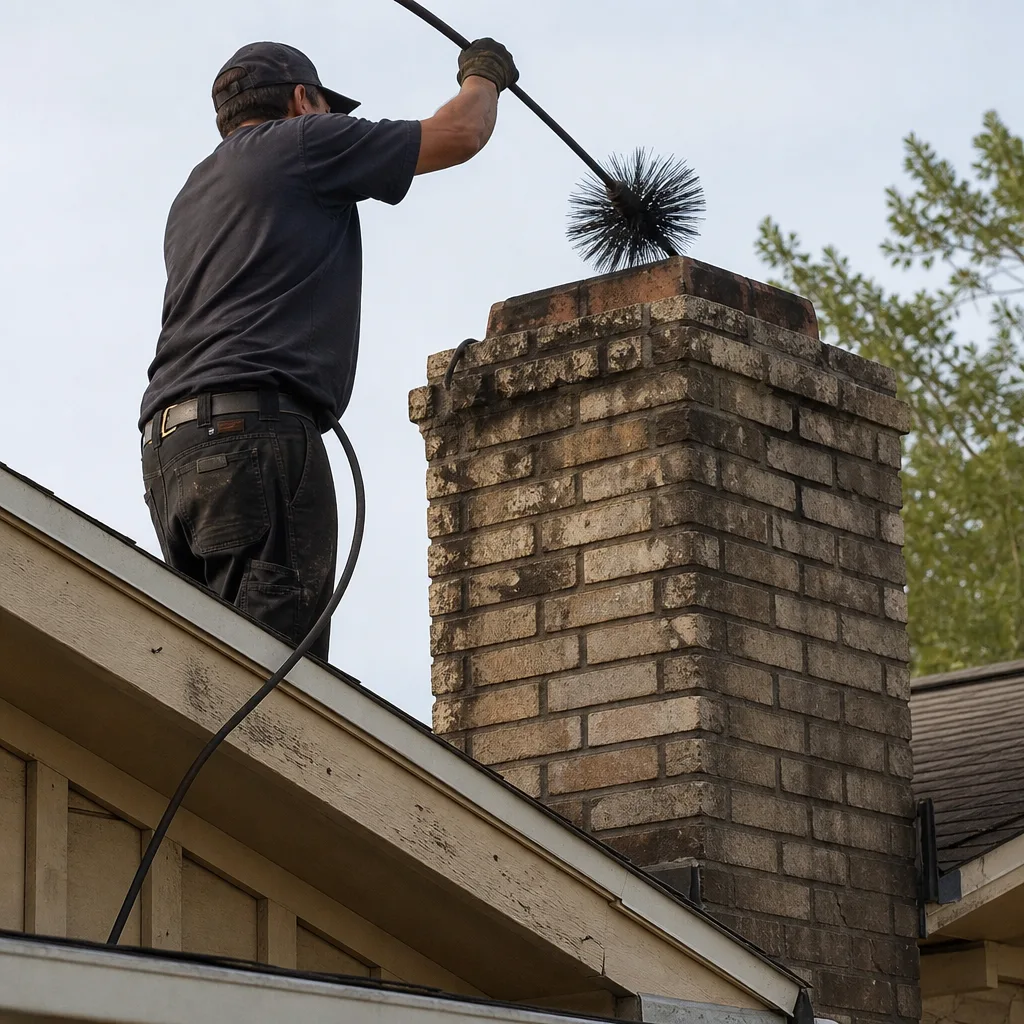 Before
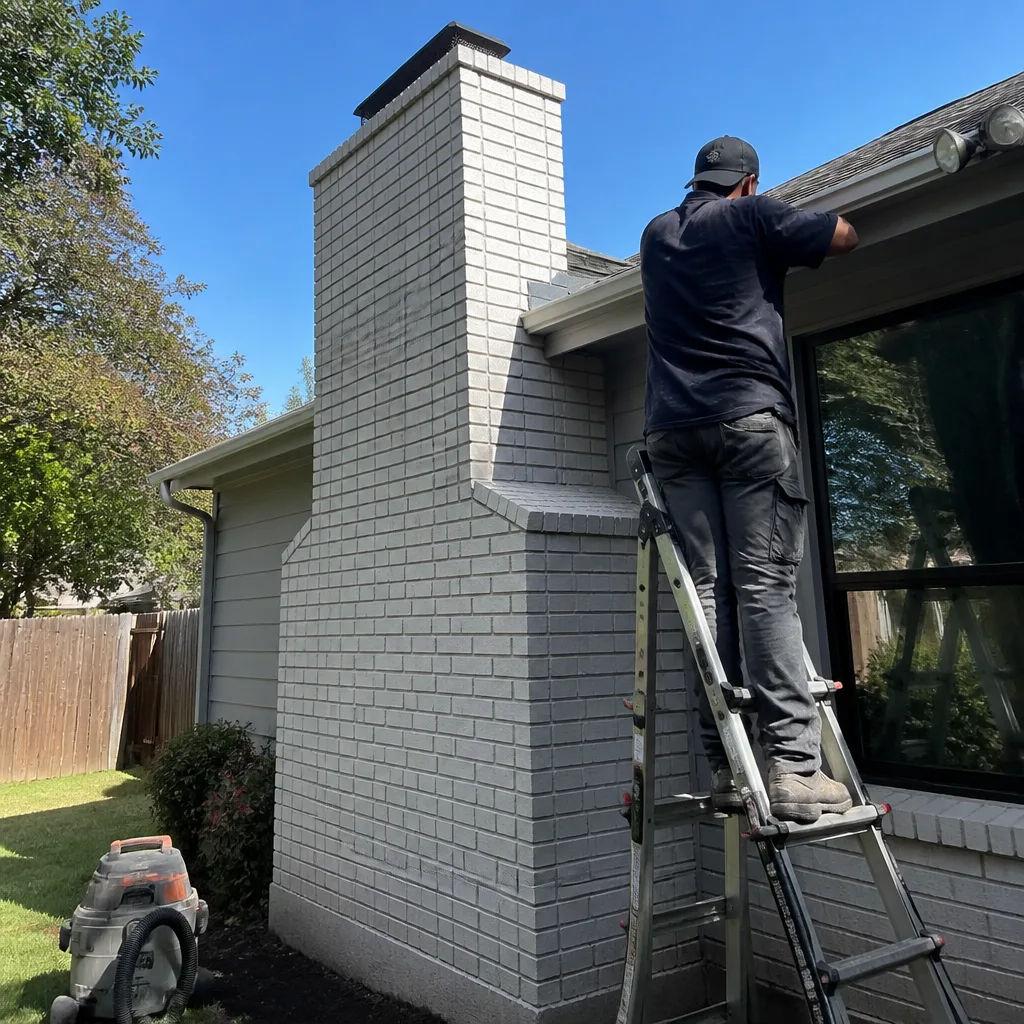 After
After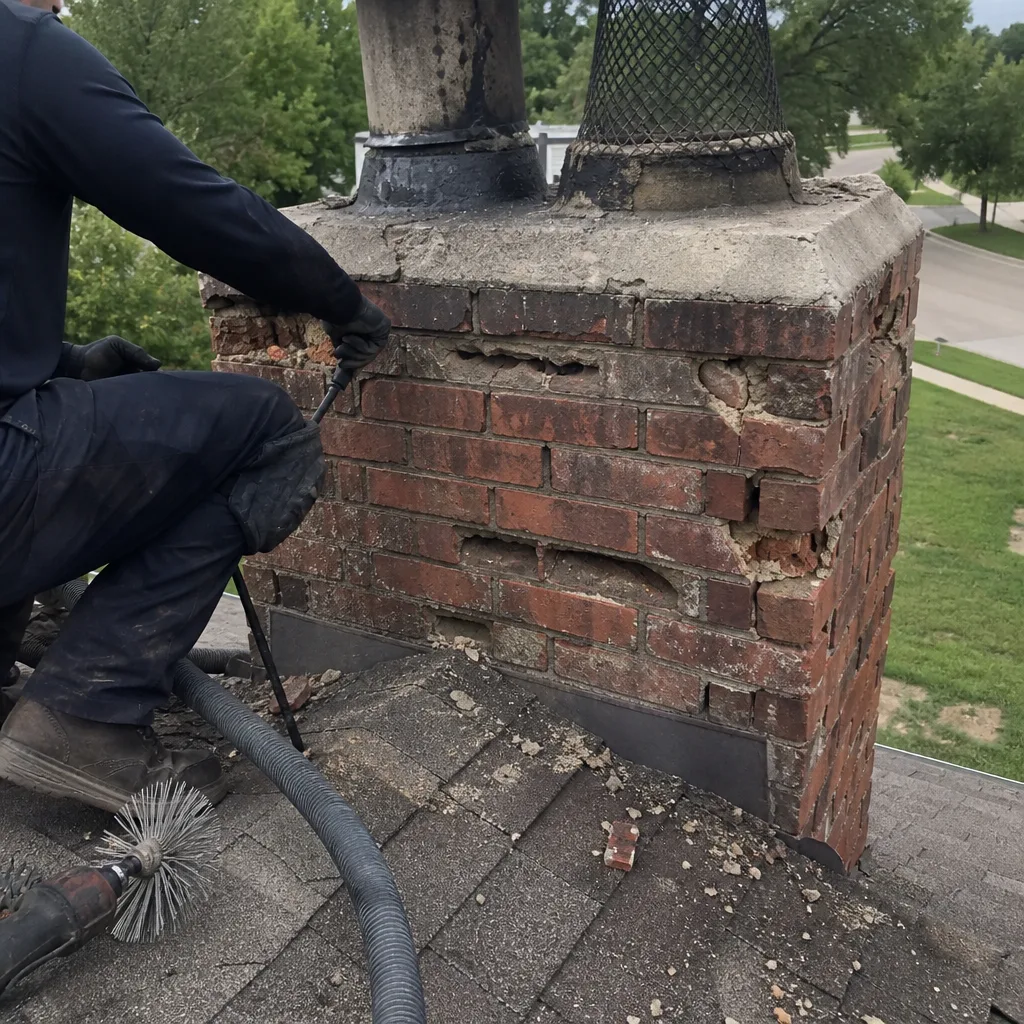 Before
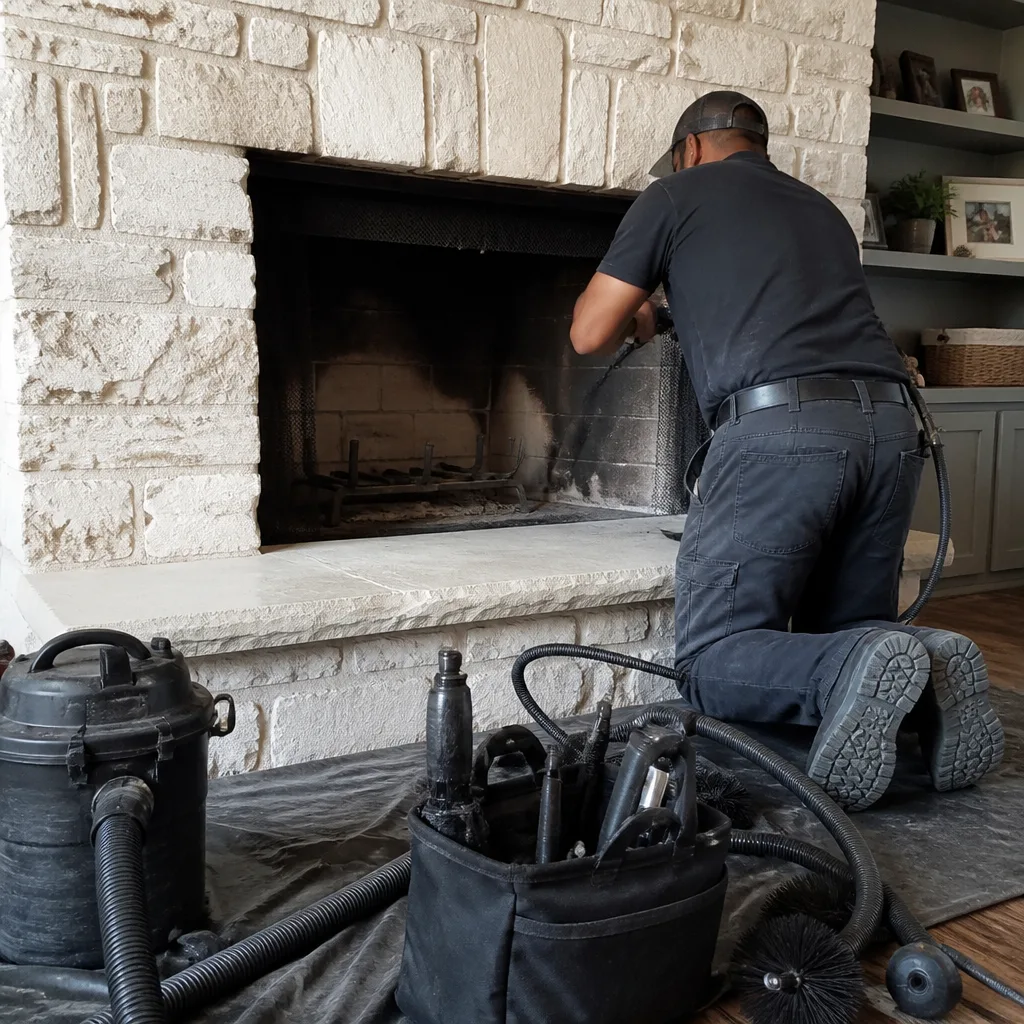 After
After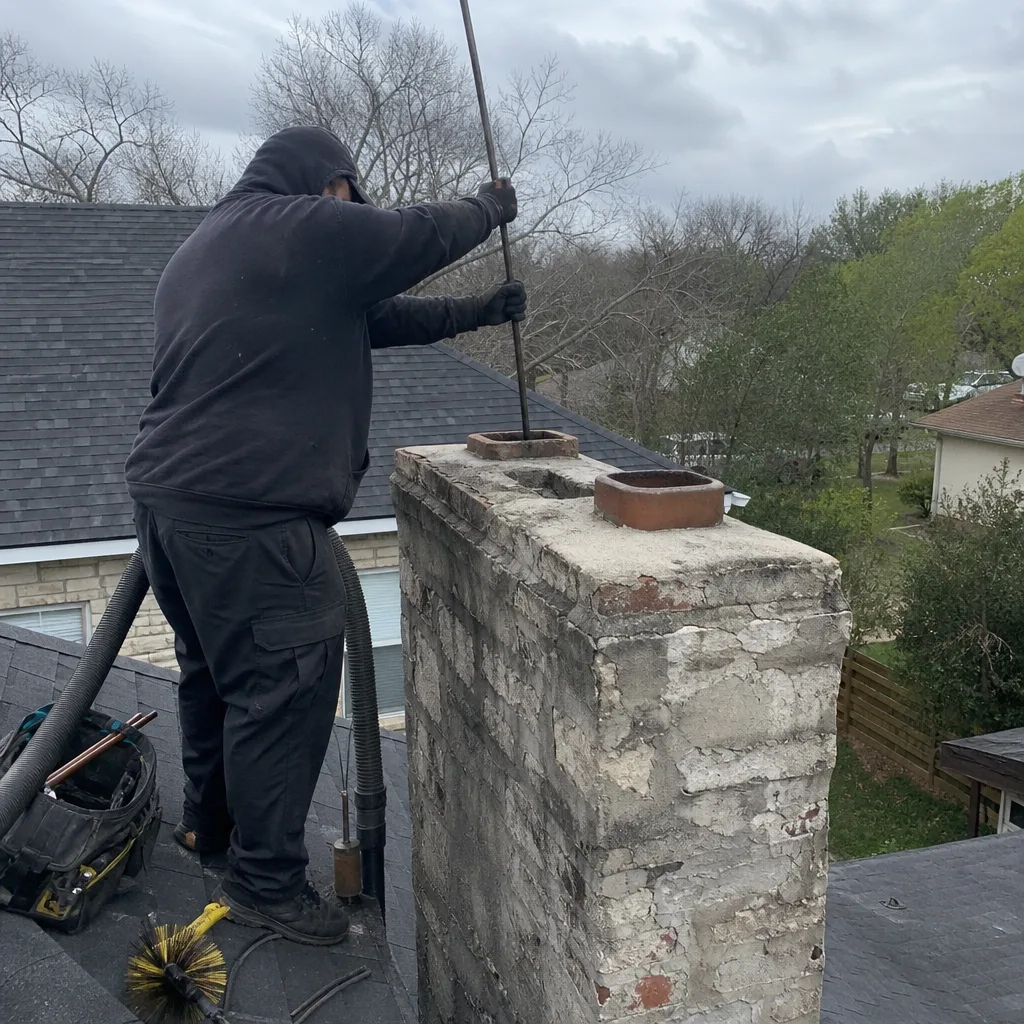 Before
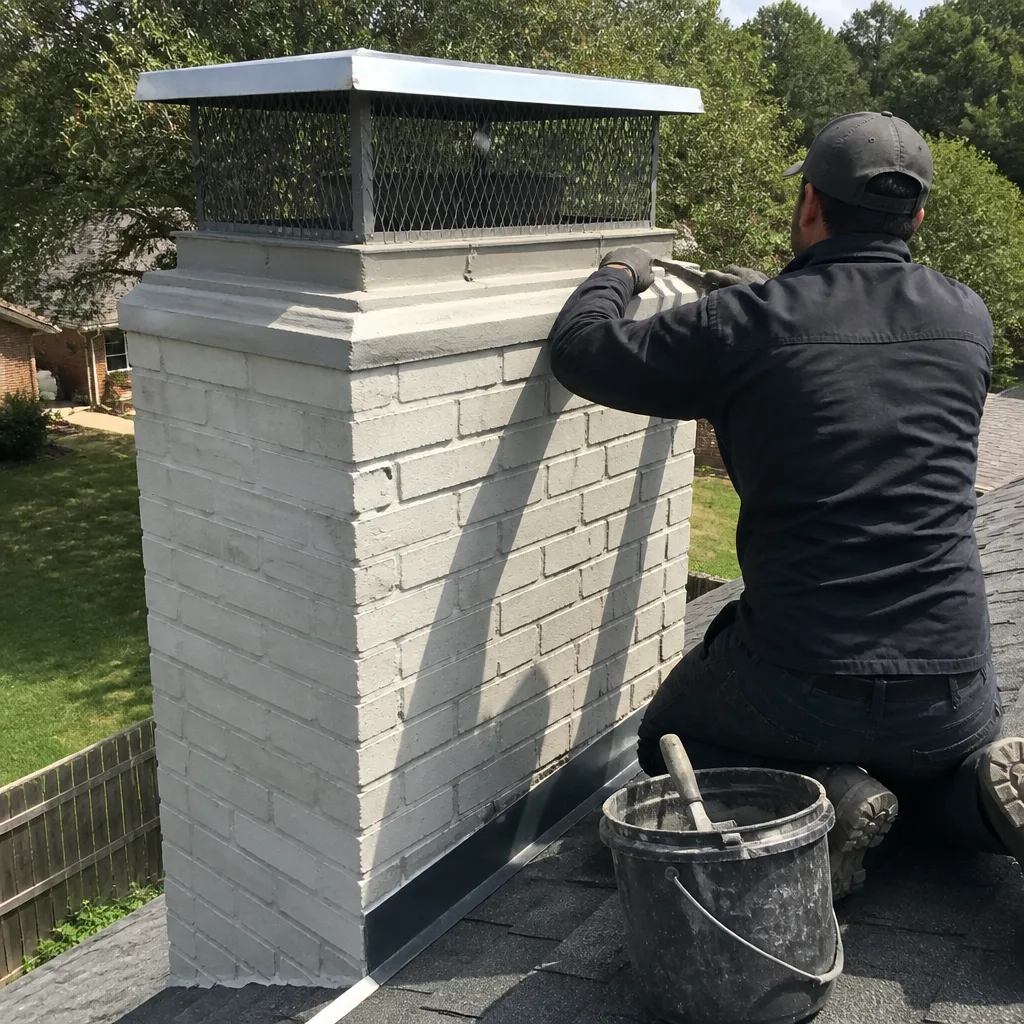 After
AfterThe Complete Guide to Chimney Cleaning in Denton
The NFPA estimates 25% of home heating fires involve chimneys, but that statistic was built on national data - not the specific creosote staging patterns that form in flues used only 60 days a year in a humid Texas winter. In Denton, we’ve found that short burn seasons create a different risk profile entirely: cool flue walls, incomplete combustion, and long idle periods produce Stage 2 glazed creosote faster than the long, steady fires of northern climates. This guide explains what a camera-documented chimney cleaning actually reveals in North Texas, why a flashlight inspection misses the conditions that matter, and how the documentation standard we’ve kept since 2009 protects your home and your insurance claim. For seasonal chimney cleaning care specific to Denton, see our year-round homeowner’s guide.
Quick Answer
A professional chimney cleaning in Denton removes creosote, debris, and obstructions from the flue system, includes a camera-scan inspection of the interior flue walls, and delivers a written report with photos. In our experience across more than 38,000 chimney visits since 2009, most Denton homes need this service annually if the fireplace is used, though the short North Texas burn season and clay soil conditions create specific wear patterns that a basic sweep alone cannot identify. The process takes 60-90 minutes, costs $199-$349 for a standard cleaning with Level 2 inspection, and should always include a documented photo record before any repair recommendation is made.
Table of Contents
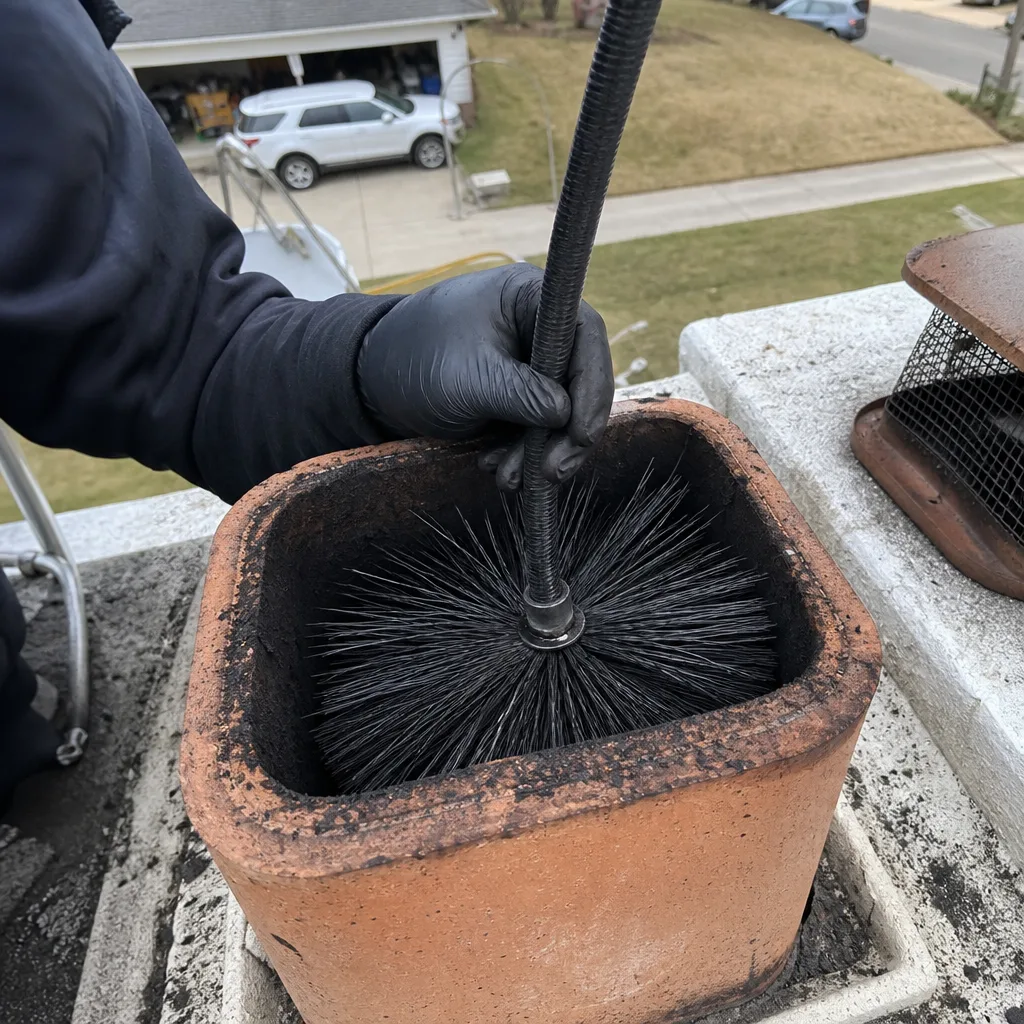
- Why Denton Chimneys Differ from National Averages
- What a Level 2 Camera Scan Actually Records
- How Denton’s Clay Soil Affects Chimney Footings and Liner Joints
- The Cleaning Process from First Call to Final Report
- What Chimney Cleaning Costs in Denton
- Why Documentation Matters for Your Homeowners Claim
- Common Mistakes to Avoid
- When to Call a Professional
- Frequently Asked Questions
BeforeAfterWhy Denton Chimneys Differ from National Averages
Most chimney cleaning guides assume a Midwest or Northeast burn pattern: four to six months of steady nightly fires, hot flue temperatures that keep creosote in its powdery Stage 1 form, and freeze-thaw cycles that stress exterior masonry. For more guides & resources tailored to Texas conditions, see our blog. Denton’s reality is almost the opposite, and those differences change what your flue needs.
Short burn seasons, cool flue walls. In Denton, the typical homeowner lights fires from late November through mid-February - roughly 60 to 75 days. Fires are often started in a cold flue, burned for a few hours, then left to cool overnight. That start-stop pattern keeps flue wall temperatures below 250°F for longer periods, which is exactly the range where Stage 2 creosote forms. Stage 2 is not the fluffy soot that brushes away easily. It’s a tar-like deposit that hardens into a glazed, nearly impermeable layer. We’ve pulled samples from homes in Southridge and Oakmont that looked clean to a flashlight but showed 3-6mm of glazed creosote on camera.
Humidity and long idle periods. From March through October, Denton chimneys sit unused in 60-80% humidity. That moisture mixes with residual soot to form mild acids that etch flue liner surfaces over time. In neighborhoods like Robson Ranch and Providence, where homes built 2015-2020 often have stainless steel liners, we’ve documented pitting at liner joints that was invisible from the firebox but clear on camera 15 feet up the flue.
Gas log conversions with hidden issues. Many Denton homes started as wood-burning and were converted to vented gas logs. The original flue liner, sized for wood combustion temperatures, may be oversized for gas - leading to condensation in the flue that accelerates liner deterioration. A standard cleaning without camera inspection misses this entirely.
What this means for scheduling. The “annual sweep” rule is a minimum, not a universal. If you burn two or three times a week through winter, or if you’ve had a chimney fire history, or if your home is in one of Denton’s older neighborhoods like Denia or University Place with original clay flue tiles, the camera scan matters as much as the cleaning itself.
What a Level 2 Camera Scan Actually Records
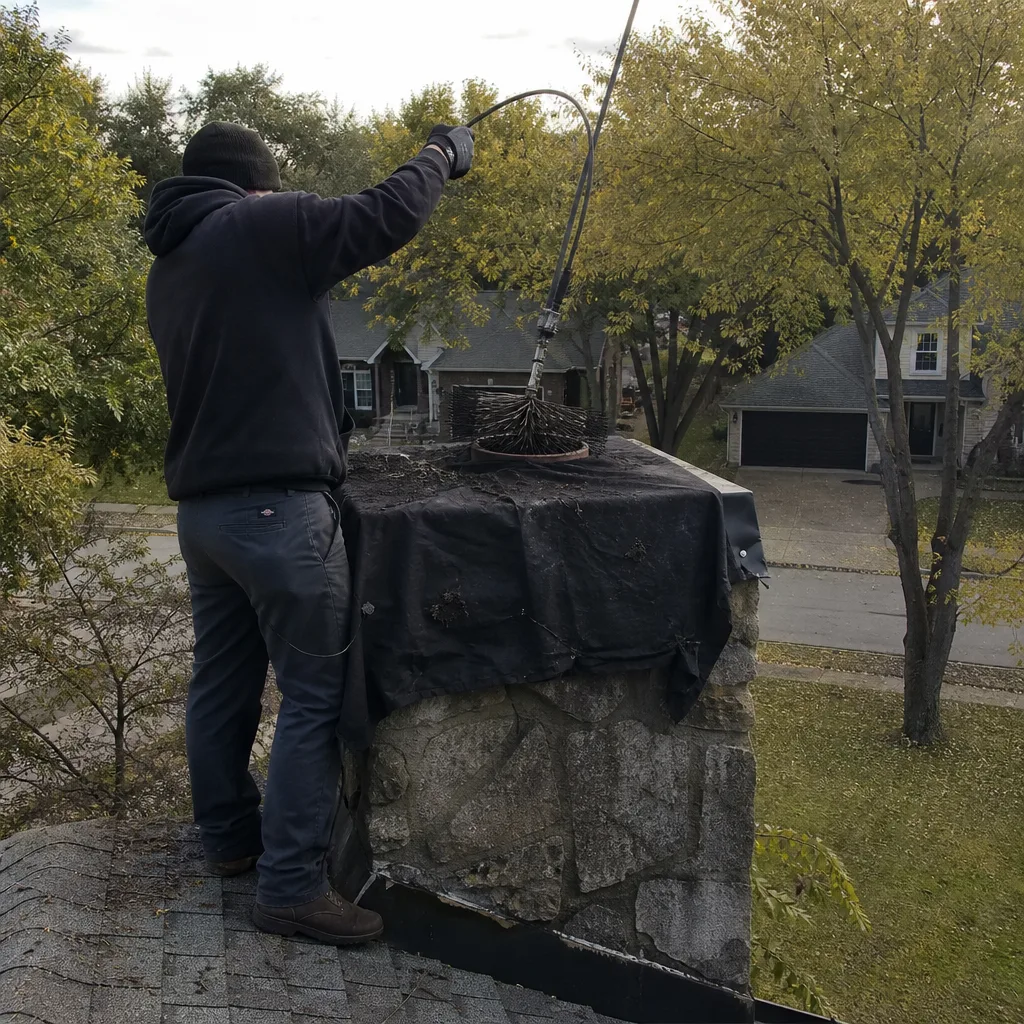
The NFPA 211 standard defines three inspection levels. Level 1 is a visual check of readily accessible areas - what you can see from the firebox or roof with a flashlight and mirror. Level 2 requires a camera scan of the interior flue surface, examination of attics and crawl spaces where the chimney passes through, and documentation of findings. Level 3 involves demolition of building materials and is reserved for suspected hazards.
Most Denton homeowners who call us believe they’ve had a “chimney inspection” in the past. When we ask what was delivered, the answer is usually a verbal “looks fine” or a checkbox form. That is Level 1 at best. Here’s what a Level 2 camera scan records that a flashlight cannot:
- Flue liner joint separation. Clay flue tiles stack with a refractory mortar joint between them. In Denton’s expansive clay soils, subtle foundation movement can open these joints 1/8-inch or more. A flashlight beam reflects off the near wall and misses the gap. A camera looking straight at the joint shows daylight - or smoke leakage into the chimney cavity.
- Spalling and flaking. Clay tiles exposed to moisture and freeze-thaw (yes, Denton gets enough winter cold) develop surface flaking that reduces liner thickness. The camera measures this against known tile dimensions. A flashlight makes everything look uniformly dark.
- Creosote staging by elevation. Stage 1, 2, and 3 creosote have different removal requirements. Stage 3 is a hardened, ignitable glaze that may require chemical treatment or rotary removal. The camera identifies the stage at each elevation so the sweep brings the right equipment and quotes the right scope.
- Smoke chamber integrity. The smoke chamber - the area above the firebox that funnels smoke into the flue - is invisible from below and too narrow for a flashlight to illuminate effectively. The camera documents corbelled brick condition, parging (smooth coating) integrity, and any gaps that could allow heat transfer to framing.
- Obstructions and animal entry. We’ve removed nests from squirrels, raccoons, and chimney swifts from Denton flues. The camera finds them before the brush does, which matters for equipment selection and for documenting that the obstruction was present before cleaning began.
Clause 4 of the Haven Standard requires this photo record on every job. We don’t offer it as an upgrade. The images are yours, stored with your job record, and available if your insurance company or home buyer ever asks.
How Denton’s Clay Soil Affects Chimney Footings and Liner Joints
Denton sits on the eastern edge of the Blackland Prairie, with soils ranging from heavy clay to clay-loam mixes that expand when wet and shrink when dry. That movement is not dramatic enough to crack foundations in most cases, but it’s constant, and chimneys are rigid structures that don’t tolerate constant well.
Fireplace footing settlement. In newer Denton subdivisions like Cross Oak Ranch and Lantana, builders often pour the chimney footing at the same time as the slab. If the slab is post-tensioned and the chimney footing is isolated, differential settlement occurs within the first five to ten years. The result is a hairline crack at the firebox-throat junction, or a slight tilt to the chimney stack. Neither is automatically dangerous, but both change how the flue liner bears load. We’ve found liner joints in 2016-built homes that were fully separated while the exterior brick showed no visible crack.
Liner joint shear. Clay flue tiles are brittle. When the chimney structure flexes even 1/16-inch, the mortar joint takes the stress. In Denton’s clay soils, that flexing happens dozens of times per year. A Level 2 camera scan in year three of ownership often reveals joint gaps that were tight at construction. This is not poor workmanship; it’s physics, and it’s why we recommend a baseline camera inspection for any Denton home purchased 2015 or later, even if the previous owner “had it cleaned.”
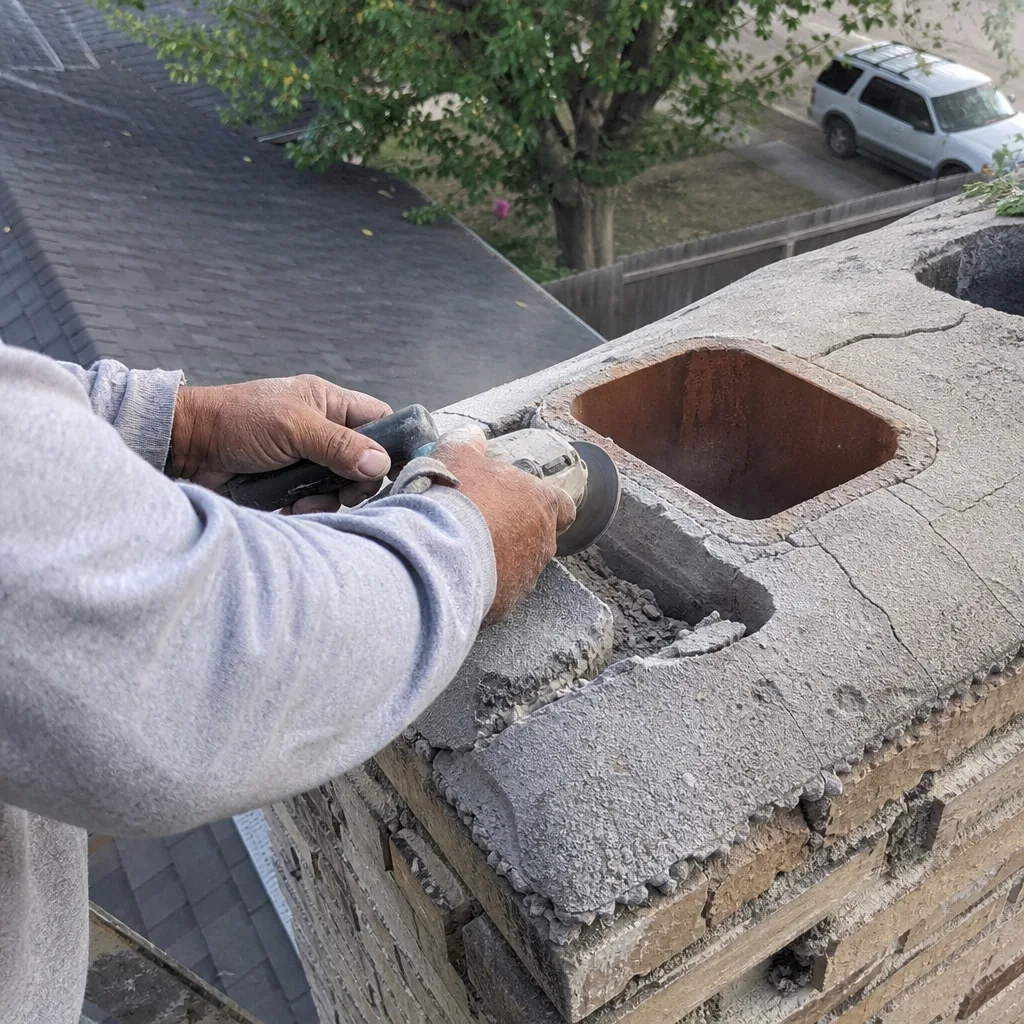
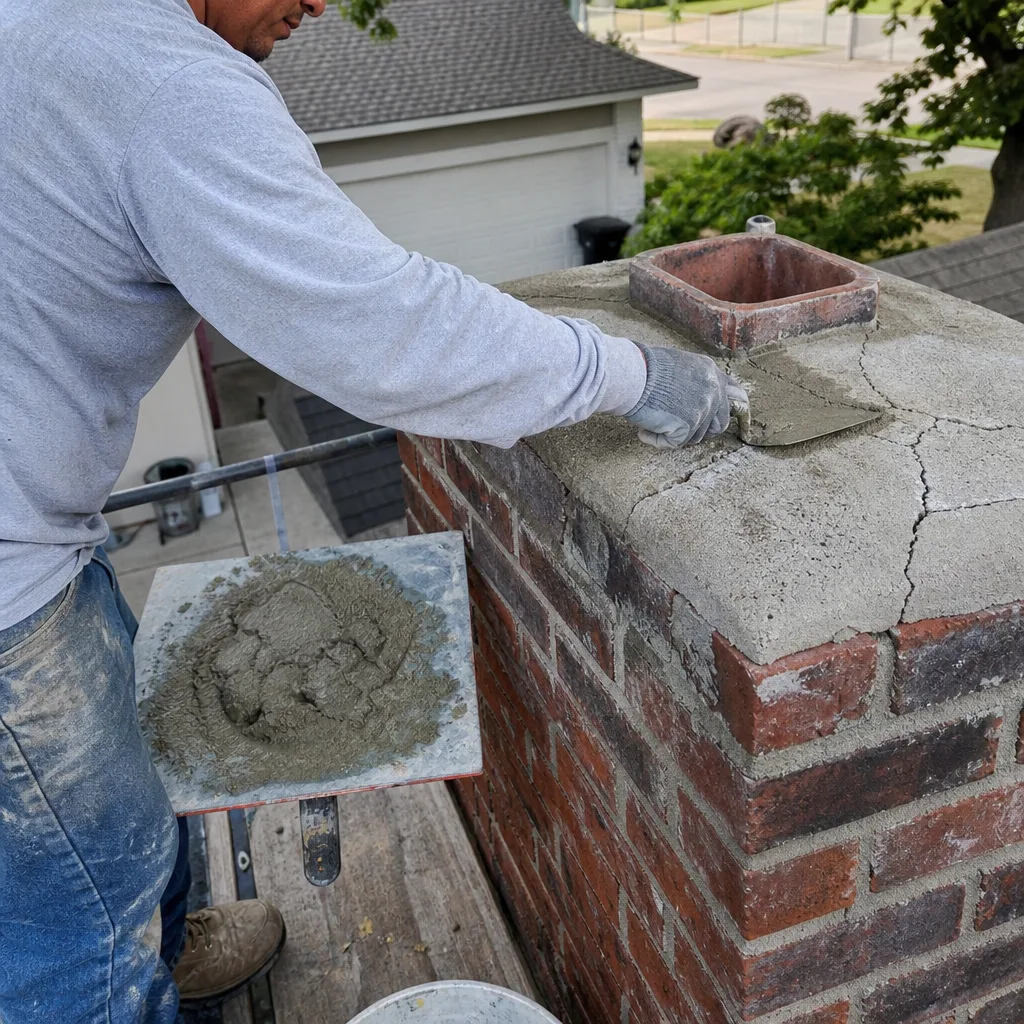
Crown and wash cracking. The concrete crown at the chimney top seals the flue liner from water entry. Clay soil movement transmits through the chimney stack to the crown, which cracks horizontally. Water enters, freezes, and accelerates the cycle. In Denton’s summer heat, a cracked crown allows rainwater to reach the liner, then the 100°F afternoon bakes that moisture into steam pressure. We’ve documented crown failures in as little as four years on homes in Paloma Creek and Savannah.
The repair for these conditions is not always major. A cracked crown can be sealed with CrownSeal or similar elastomeric coating. Separated liner joints may be repaired with HeatShield cerfractory foam, or the liner may be relined with a stainless steel DuraFlex or Olympia Chimney insert. But none of these decisions should be made without camera evidence you can see for yourself. Clause 1 of the Haven Standard - written price, written scope, written warranty before work starts - exists specifically because we’ve seen too many Denton homeowners told they need $4,000 in liner work based on a flashlight look from the roof.
The Cleaning Process from First Call to Final Report
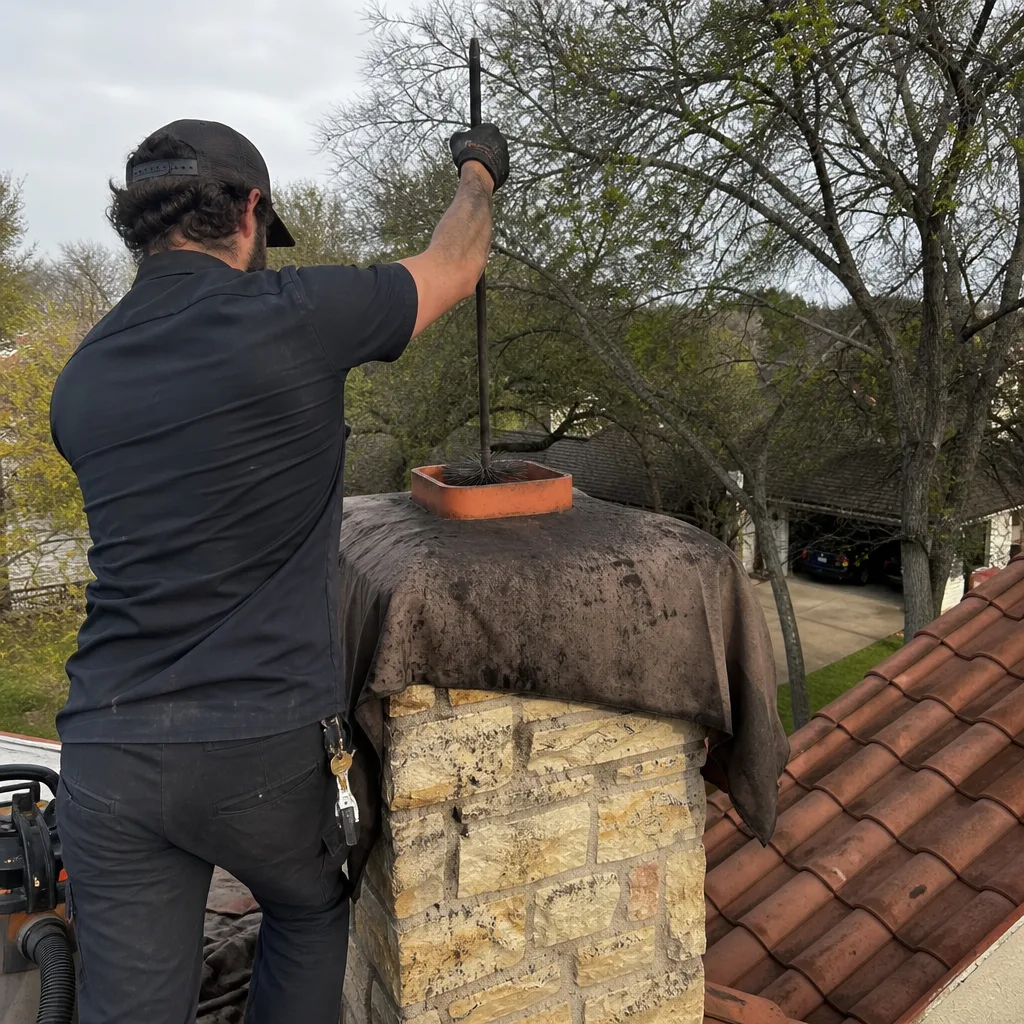
We can describe our process because it’s the same on every visit. No upsell scripts. No surprise charges. The sequence below is what happens when you call Emberly Chimney Cleaners Denton at (940) 373-6912.
Step 1: Scheduling and Preparation
A live person answers, 24 hours a day. We ask about your fireplace type (wood, gas, or dual), the last service date if known, and any symptoms you’ve noticed (odor, smoke spillage, draft issues). We schedule a 2-hour arrival window and text you when the technician is en route. You’ll receive the technician’s name and photo. Our crews are background-checked, uniformed, and carry license documentation.
Step 2: Arrival and Exterior Assessment
The technician arrives, confirms the scope and price range, and begins with an exterior check: chimney height relative to roof peak, crown condition from ground or ladder, cap presence, and any visible leaning or separation from the structure. In Denton, we pay particular attention to the chimney’s position relative to roof valleys, where water concentration accelerates crown and wash deterioration.
Step 3: Interior Setup and Firebox Inspection
Drop cloths protect your flooring. The firebox is examined for cracked firebrick, damaged throat dampers, and proper clearances to combustibles. The smoke chamber is visually assessed from below. We note the damper operation and any evidence of smoke staining that indicates past spillage.
Step 4: Camera-Scan Inspection Before Cleaning
This is the critical step that distinguishes a Level 2 service. The technician runs a high-resolution camera up the full flue length, recording video and capturing still images at joints, offsets, and any anomaly. You watch in real time if you’re present. The camera documents:
- Liner material and condition at every joint
- Creosote stage and thickness by elevation
- Any obstruction, damage, or previous repair
- Flue dimension and clearance to combustibles where visible
This pre-cleaning scan ensures we don’t brush a damaged liner or miss a condition that changes the scope. It also establishes baseline documentation.
Step 5: Cleaning and Debris Removal
Based on the camera findings, the technician selects brushes, rods, and - for Stage 2 or 3 creosote - rotary cleaning chains or chemical treatment. Debris is contained with a HEPA vacuum system. The firebox and smoke chamber are hand-cleaned. For gas log fireplaces, we inspect and clean the burner ports and verify venting configuration.
Step 6: Post-Cleaning Camera Verification
The camera runs again to confirm the flue is clean and to re-examine any areas of concern from the first pass. This two-scan protocol, standard since 2009, is what became Haven Standard Clause 4. You receive a comparison: before and after images of the same flue section.
Step 7: Written Report and Pricing for Any Repairs
Before any additional work is discussed, you receive:
- A written summary of findings
- All photos and video clips from the inspection
- A written price for any recommended repair, with scope and warranty
- The 365-Day Done Right Promise on all work performed
No price is given verbally without written backup. No work proceeds without your written approval. This is Haven Standard Clause 1: have it in writing.
What Chimney Cleaning Costs in Denton
We publish ranges because “call for a quote” wastes your time and ours. These are actual 2024-2025 price ranges for Denton-area homes, based on chimney type and condition found at inspection.
| Service | Typical Range | What Affects Price |
|---|---|---|
| Standard chimney sweep with Level 2 inspection (wood-burning, single flue) | $199 – $279 | Flue height, roof access difficulty, creosote stage |
| Gas fireplace inspection and service | $149 – $219 | Log set removal complexity, vent configuration |
| Chimney sweep with Stage 2 creosote removal | $279 – $349 | Extent of glazed deposits, need for chemical pretreatment |
| Stage 3 creosote / rotary mechanical cleaning | $349 – $499 | Flue diameter, liner material compatibility, time required |
| Multi-flue chimney (each additional flue) | $89 – $129 | Access, liner condition, shared structure |
Factors that increase cost in Denton specifically:
- Two-story homes with steep roof pitches - common in newer Denton builds - require additional safety equipment and time
- Clay flue tile with separated joints - found often in 1980s-2000s construction in neighborhoods like Windsor Ridge - may require gentle cleaning methods that take longer
- Prefabricated metal chimneys - increasingly common in 2015+ construction - need specialized brushes to avoid liner damage
Every price is written before work starts. If we find a condition that changes the scope, we stop, show you the camera evidence, and provide a revised written price. The original estimate is still valid for the work originally scoped. You choose.
We also offer a Free Second Opinion on any competitor’s written estimate. Bring us their scope and price, and we’ll review it against what our camera finds. No charge, no obligation.
Why Documentation Matters for Your Homeowners Claim
In 2023, a Denton homeowner in Pecan Creek contacted us after a chimney fire. Their insurance company denied the claim for liner replacement, stating there was no evidence the liner had been maintained. The homeowner had receipts for three “chimney sweeps” from 2019-2022, but each receipt said only “chimney cleaned - $175.” No photos. No liner condition notes. No documentation that a flue was even inspected.
The claim was denied. The homeowner paid $3,800 out of pocket.
This is why Clause 4 of the Haven Standard exists. Since 2009, every Emberly Chimney Cleaners Denton job has generated:
- Date-stamped photos of the flue interior
- Video record of the full camera pass
- Written notation of liner material, dimensions, and condition
- Written scope of work performed
- Technician identification and license information
If you ever file a claim related to chimney or fireplace damage, this documentation establishes maintenance history. It shows due diligence. It timestamps conditions before and after any incident. Insurance adjusters recognize NFPA 211 Level 2 documentation; they do not recognize a handwritten receipt that says “cleaned.”
The same documentation protects you at sale. Denton’s real estate market moves quickly, and buyers increasingly request chimney inspection reports. A documented Level 2 record from 2021, 2023, and 2025 shows continuous professional oversight. A stack of $150 receipts shows you paid someone to brush the flue, maybe.
We store records indefinitely. Call us for any past job and we can reproduce the report.
Common Mistakes to Avoid
- Hiring based on lowest price alone. A $99 sweep in Denton is almost always a Level 1 visual check with no camera, no documentation, and often no insurance. The NFPA 211 Level 2 standard requires specific equipment and training. If the price seems too low to include a camera, it doesn’t.
- Assuming gas fireplaces don’t need inspection. Gas burns cleaner than wood, but the venting system, burner orifices, and moisture condensation in the flue still require annual professional check. We’ve found deteriorated B-vent connectors in Denton homes that posed carbon monoxide risks with no visible flame problem.
- Ignoring odor in summer. A sour, smoky smell from the fireplace in July usually means creosote deposits are reacting with humidity. It’s not just unpleasant; it indicates active chemical breakdown of liner surfaces. Schedule inspection before the next burn season.
- Accepting repair recommendations without photo evidence. Any chimney professional who recommends liner replacement, crown rebuild, or masonry repair should show you the specific damage on camera. If they won’t, or if they claim “the camera is broken today,” get a second opinion. Our Free Second Opinion service exists for exactly this scenario.
- Waiting for visible exterior damage. By the time you see a crack in the exterior brick or a missing chimney cap, interior damage has often progressed for years. The camera finds conditions before they become visible problems.
- Using the wrong fuel. Burning pallet wood, treated lumber, or Christmas tree branches in a Denton fireplace accelerates creosote buildup and can release corrosive chemicals. Stick to seasoned hardwood, or use manufactured logs per the fireplace manufacturer’s specification.
When to Call a Professional
Call a professional chimney sweep if you notice smoke spilling into the room, a persistent smoky odor even when the fireplace is cold, visible creosote flakes in the firebox, or any change in draft performance. After any chimney fire, even a small one, a Level 2 inspection is mandatory before the next use - the thermal shock can crack flue tiles invisibly. If you’re buying a home in Denton, request a Level 2 inspection as part of your due diligence; the $200-$300 cost has saved our clients from $5,000+ surprises. And if you’ve received a repair estimate that feels high or lacks documentation, bring it to us. Emberly Chimney Cleaners Denton offers free estimates in Denton - call (940) 373-6912.
Frequently Asked Questions
A standard chimney cleaning with NFPA 211 Level 2 camera inspection in Denton typically costs $199-$279 for a single wood-burning flue. Gas fireplace service runs $149-$219. Stage 2 or 3 creosote removal adds $80-$220 depending on severity. Call (940) 373-6912 for an exact quote - estimates are free.
The NFPA recommends annual inspection for all chimney systems, with cleaning as needed based on creosote accumulation. In Denton’s short burn season, many homeowners can maintain safe operation with annual inspection and cleaning every 1-2 years if burning seasoned hardwood 2-3 times weekly. More frequent use, unseasoned wood, or gas log conversions with venting concerns may require annual cleaning. The camera scan determines actual need rather than calendar alone.
You need a new liner only if the existing liner is damaged, improperly sized, or missing - and only if that damage is documented with camera evidence you can see. We’ve reviewed competitor estimates in Denton that recommended stainless steel relining for “safety” when the clay tile was intact with minor joint separation repairable with HeatShield. Always demand to see the specific damage. Our Free Second Opinion service will review any written estimate against our camera findings.
Skipped cleaning allows creosote to accumulate, increasing chimney fire risk and potentially obstructing the flue. In Denton’s humid climate, residual soot absorbs moisture and forms acids that deteriorate liner surfaces during the long off-season. Carbon monoxide risk rises if the flue is partially blocked or if a damaged liner allows exhaust leakage. The cumulative cost of deferred maintenance typically exceeds regular cleaning by a wide margin - and insurance may deny claims for damage resulting from neglected maintenance.
A chimney sweep is the physical cleaning of the flue. A Level 2 inspection is the camera-scan documentation of the flue interior, smoke chamber, and accessible portions of the chimney structure. At Emberly Chimney Cleaners Denton, we do not separate these services - every cleaning includes the Level 2 inspection and photo record as standard under Haven Standard Clause 4. A sweep without inspection is incomplete; an inspection without cleaning only makes sense for real estate transactions where the system is known inactive.
Homeowners can perform basic firebox cleaning and ash removal. However, flue cleaning requires proper brushes, rods, and vacuum equipment sized to your liner material and dimensions. More importantly, without a camera scan you cannot assess liner condition, joint separation, or creosote staging - and these are the conditions that create fire and carbon monoxide hazards. For safety and documentation, professional service is strongly recommended. We do not provide DIY instructions for flue access or roof work due to fall and exposure risks.
The Bottom Line
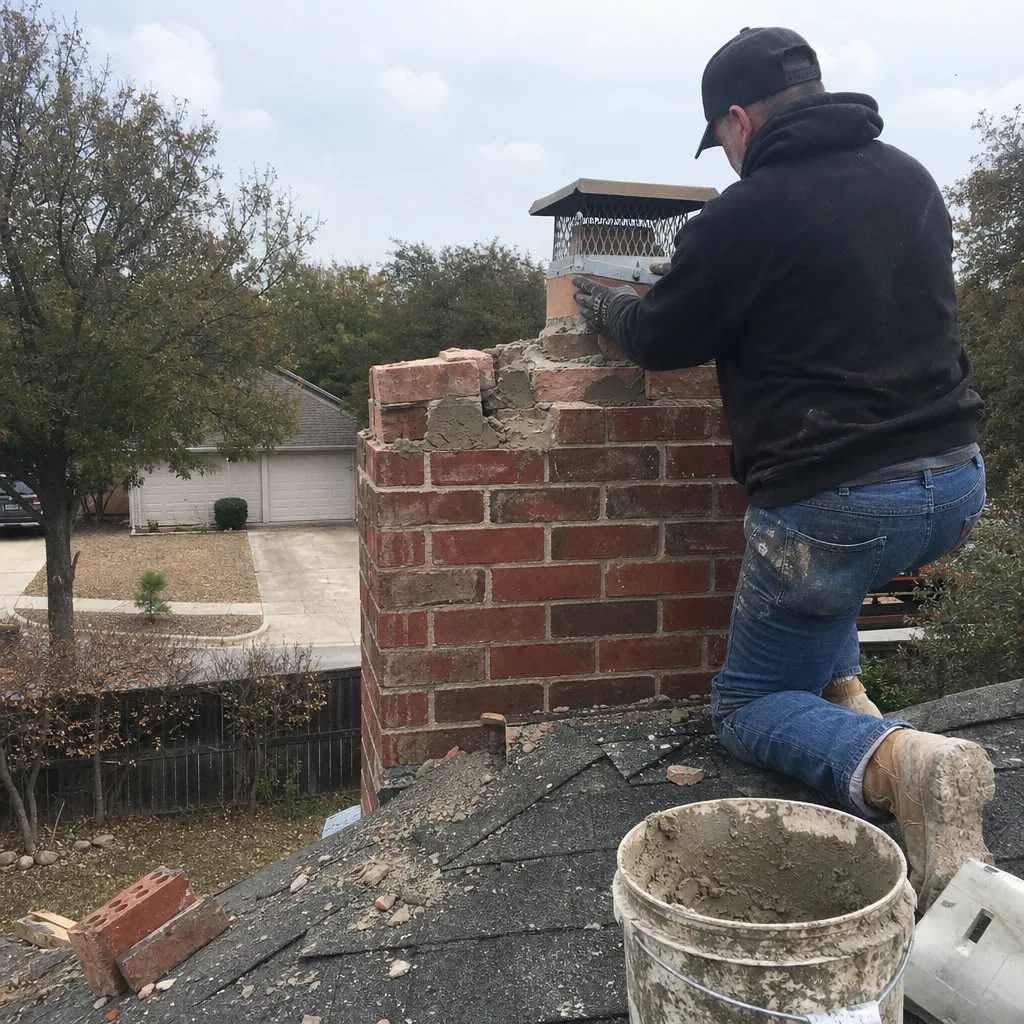
Denton chimneys face a specific risk profile: short burn seasons that promote Stage 2 creosote, clay soils that stress liner joints and chimney footings, and humid idle periods that accelerate liner deterioration. A flashlight inspection cannot find these conditions. Only a camera-documented Level 2 inspection, paired with proper cleaning, gives you the information to make informed decisions about your fireplace system. Since 2009, Emberly Chimney Cleaners Denton has delivered this standard on every visit: written price before work, camera record during, written warranty after. No exceptions, no upsell theatre, no documentation gaps that leave you exposed at claim time. If your chimney hasn’t had a Level 2 inspection in the past year, or if you’ve never seen the inside of your flue on camera, call (940) 373-6912. Not sure how to choose a provider? Read our How to Hire a Chimney Cleaning Contractor in Denton: A Step-by-Step Guide. We’ll show you what you’re actually burning in - and what it costs to keep it safe.
Written by Corrine Halstead, Owner at Emberly Chimney Cleaners Denton, serving Denton since 2009.