
Last updated September 22, 2026
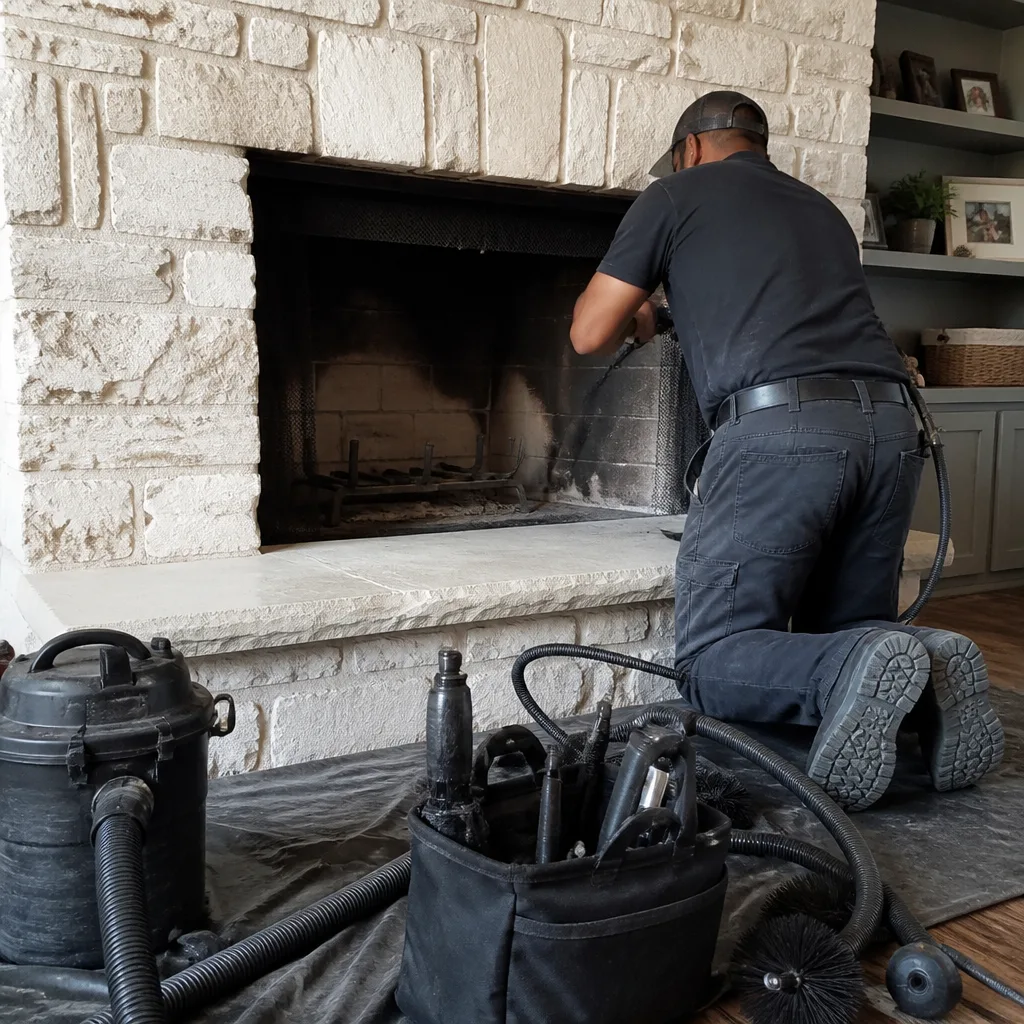
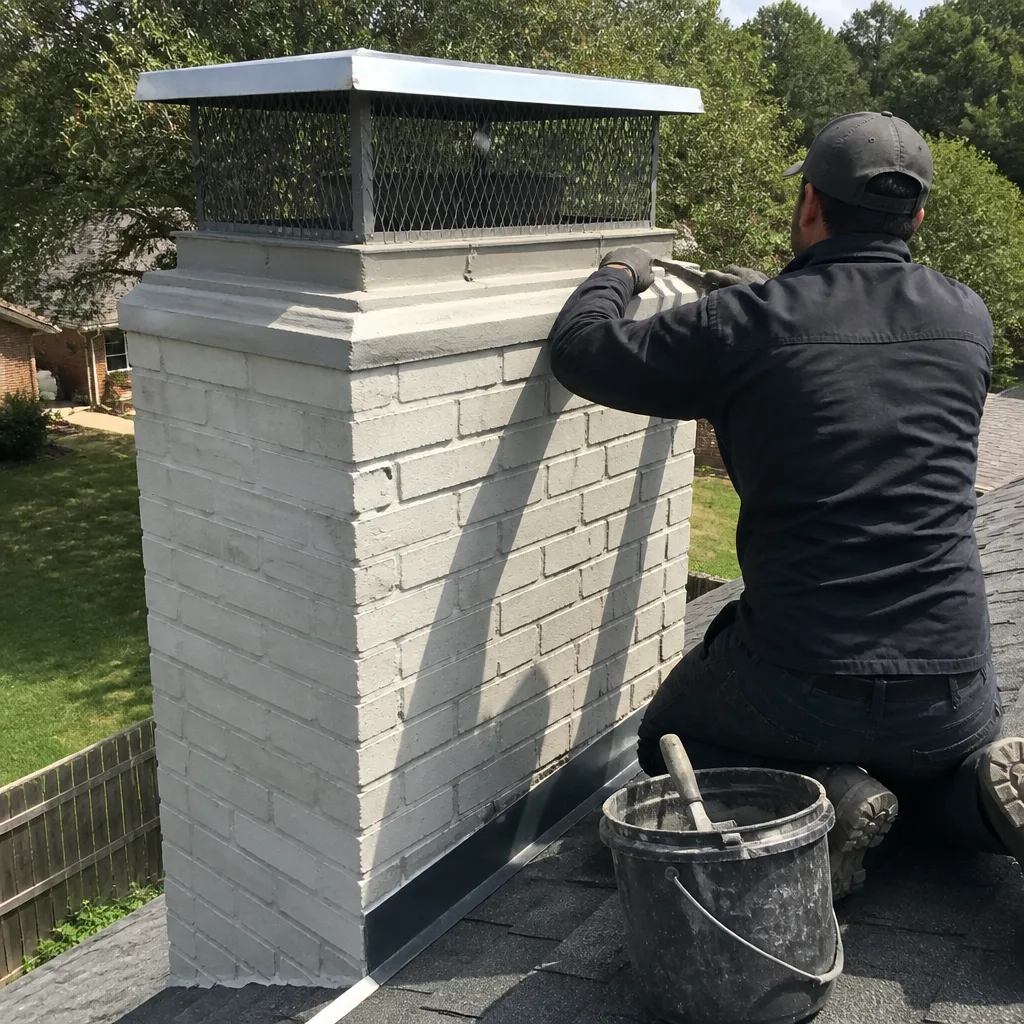
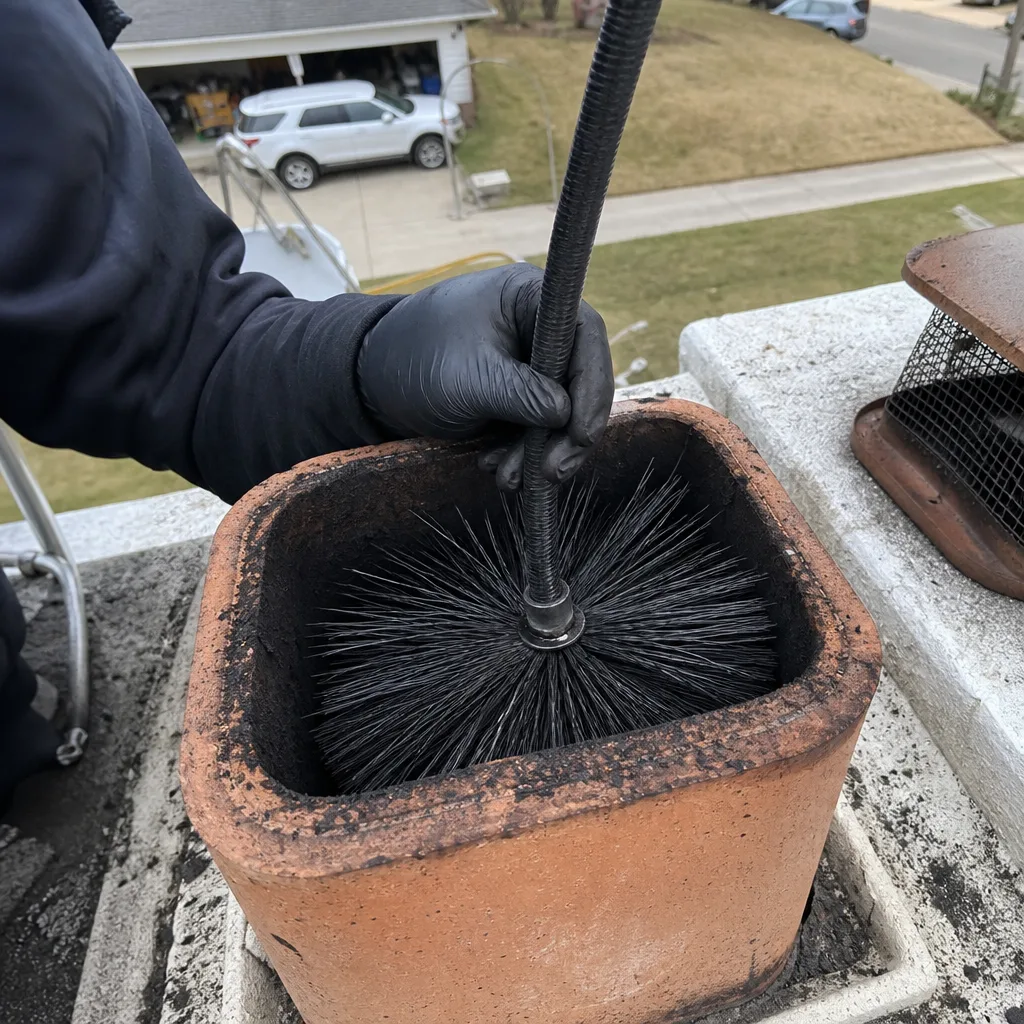
Level 1 sweep and inspection to the NFPA 211 annual standard - flue, crown, cap, and flashing checked and photographed
Chimney sweep logs do not sweep chimneys. They loosen some creosote - which then falls where a brush and vacuum still have to collect it.
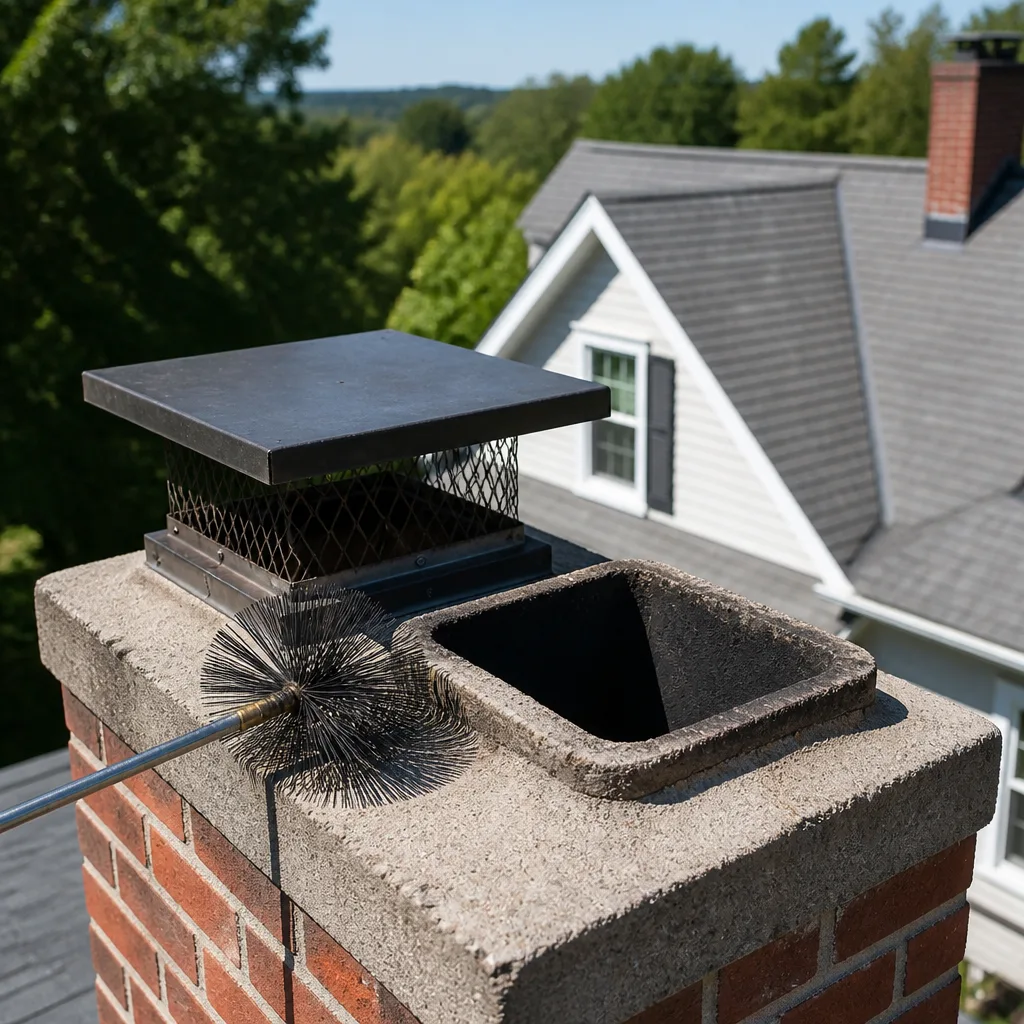
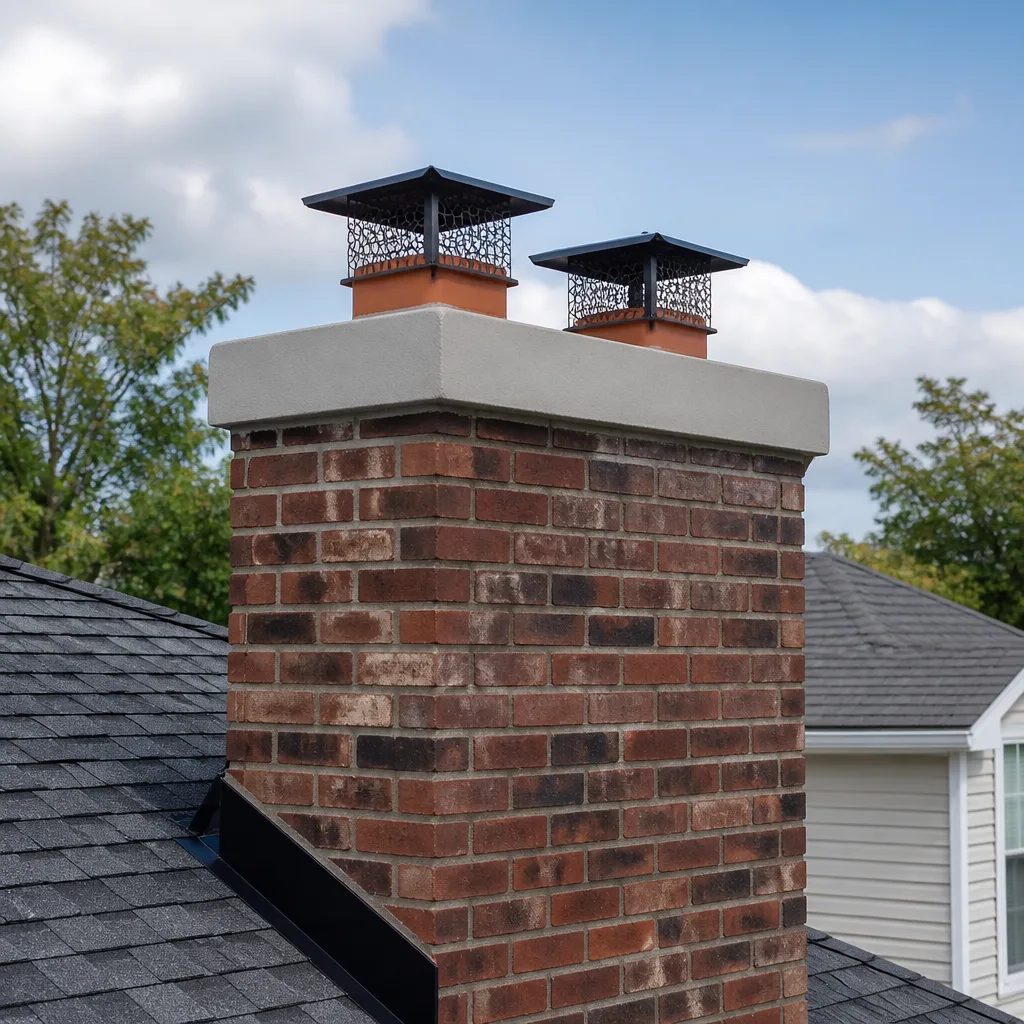
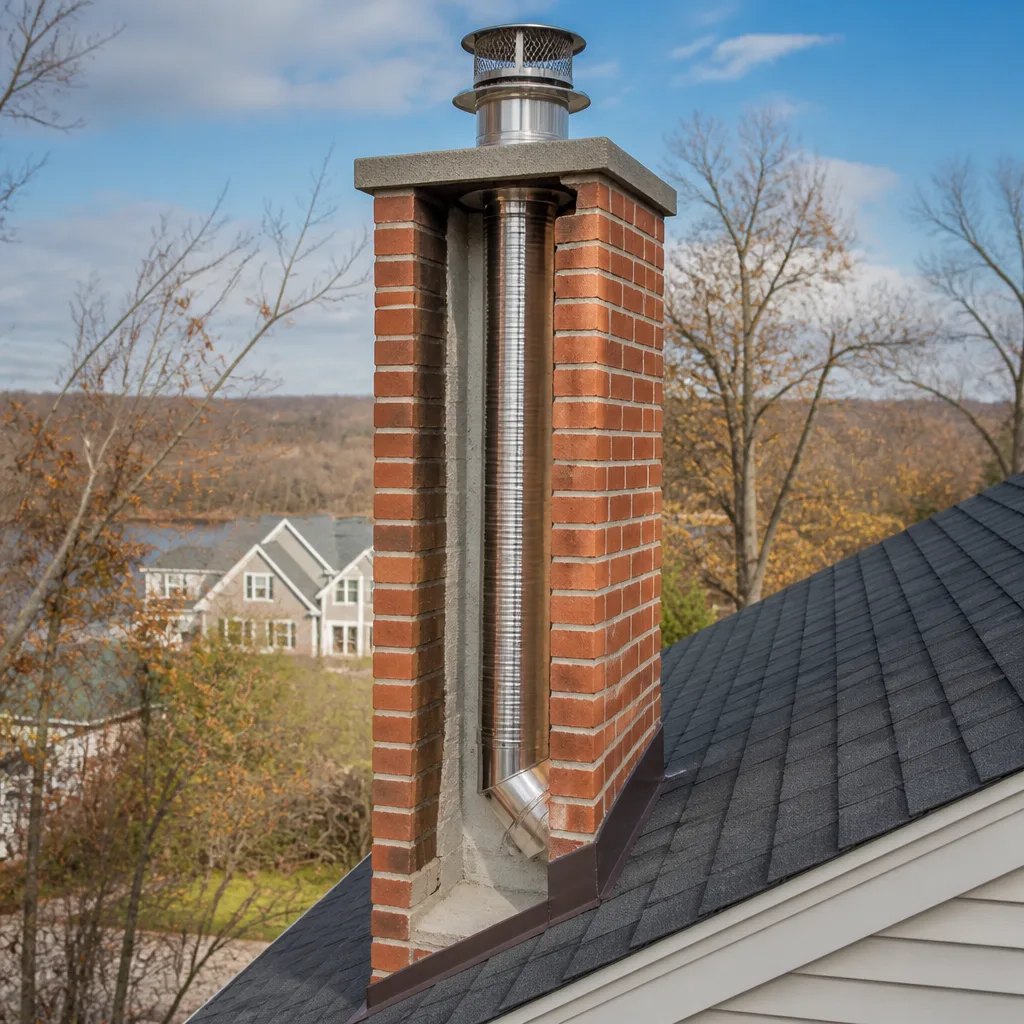
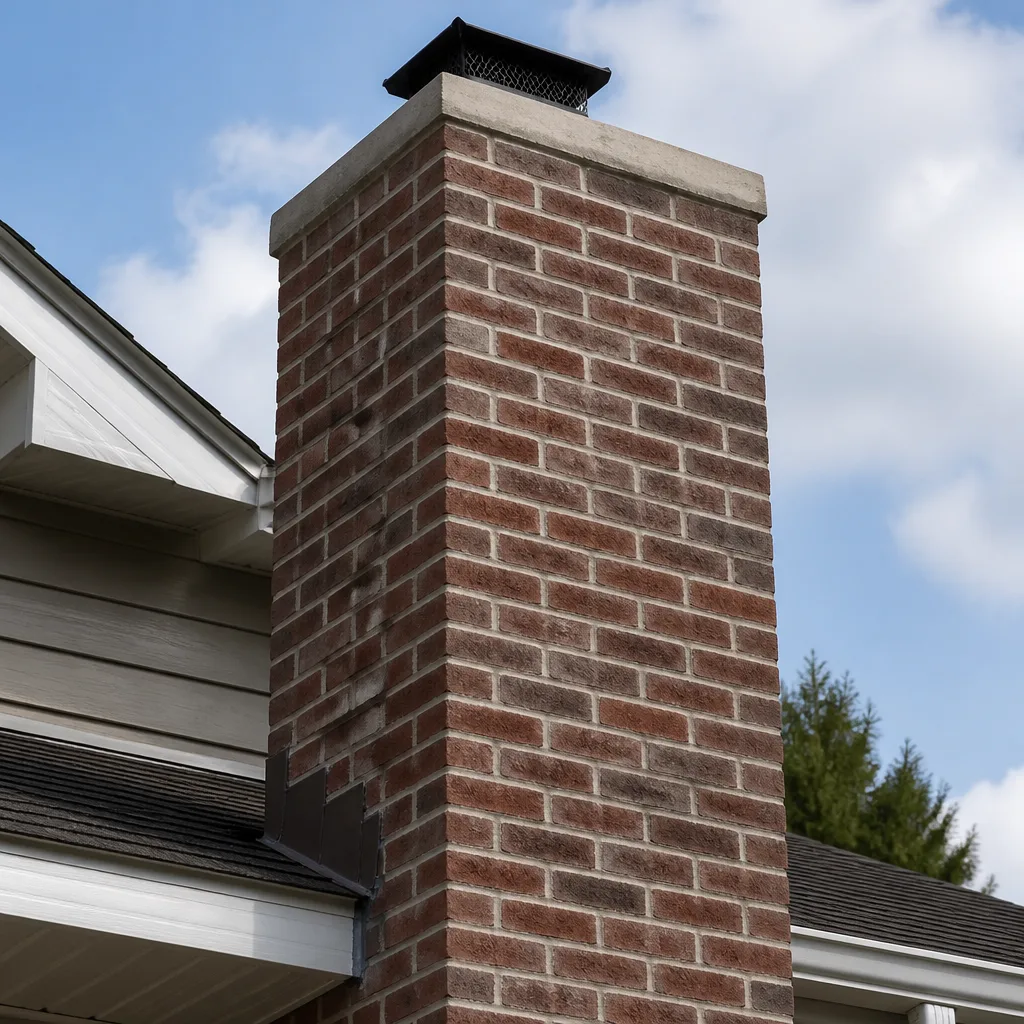
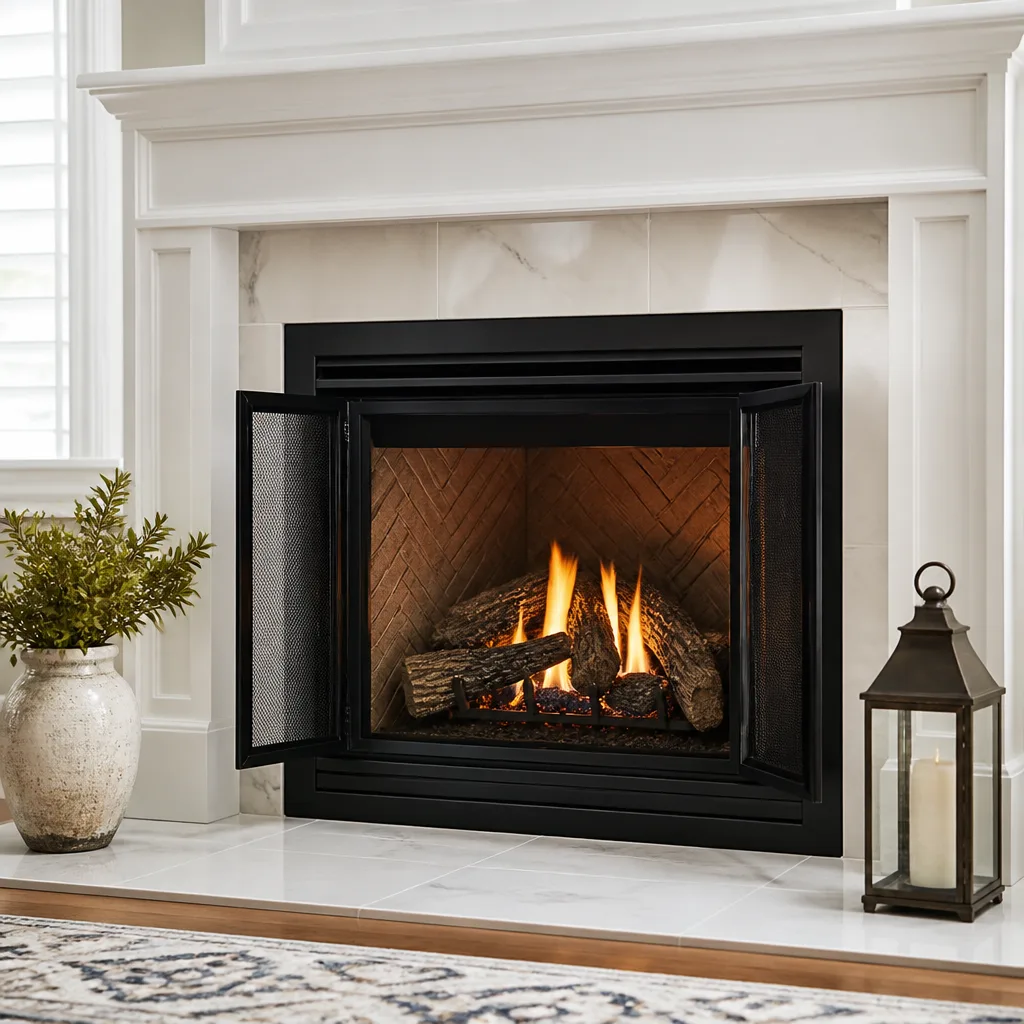
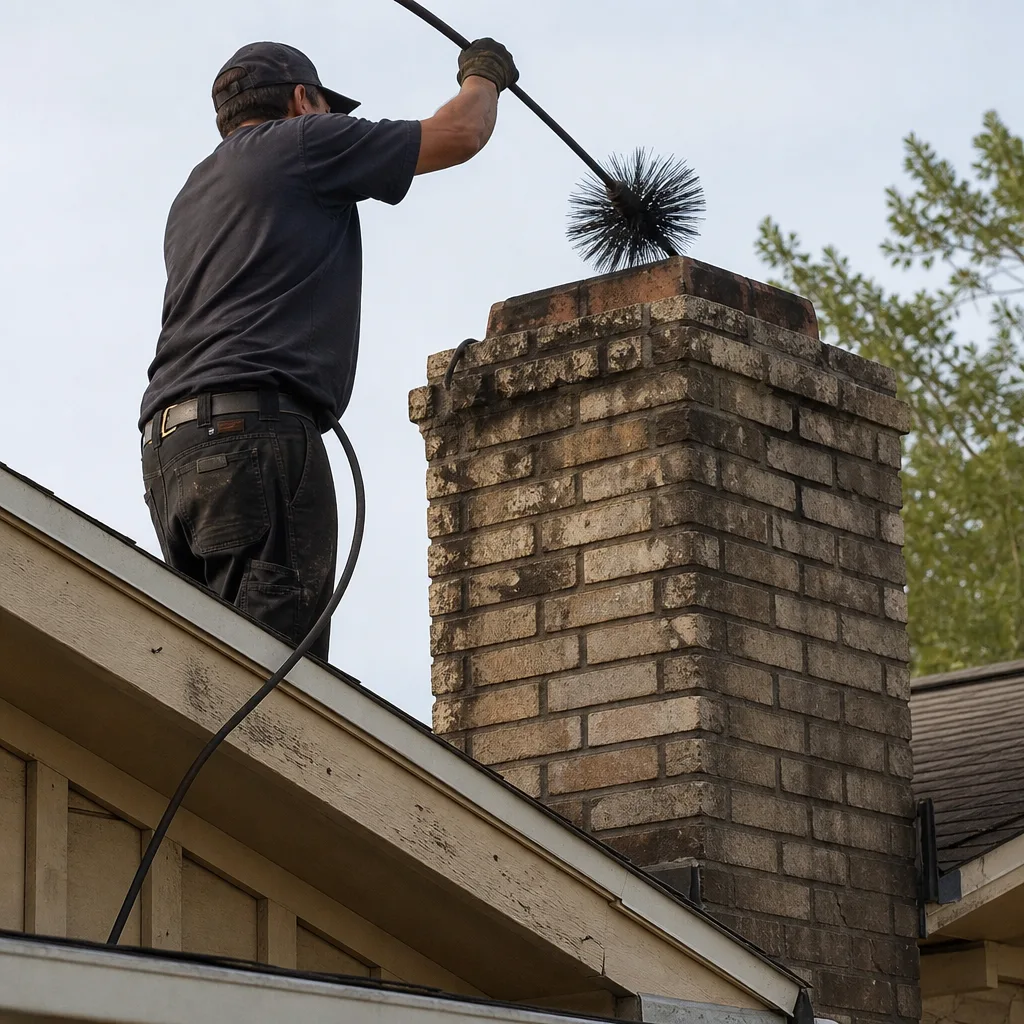 Before
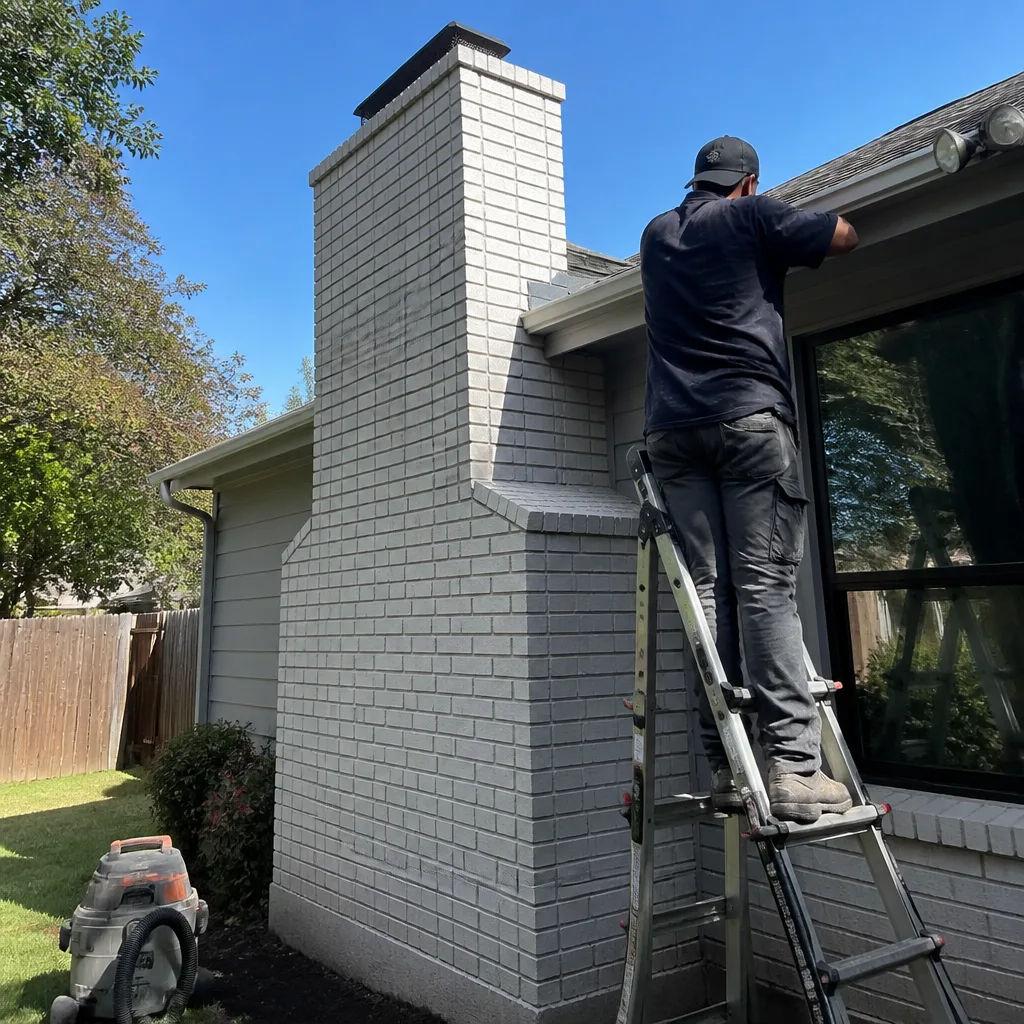 After
After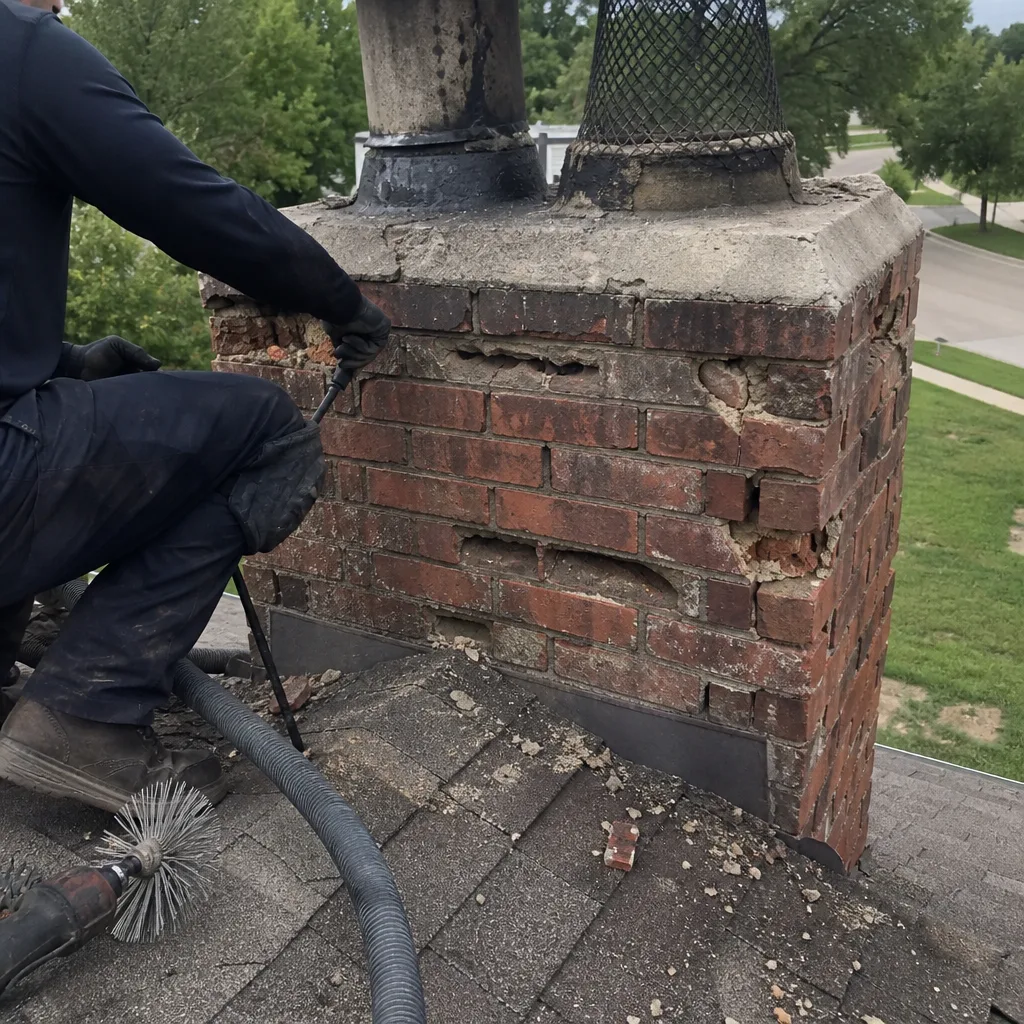 Before
 After
After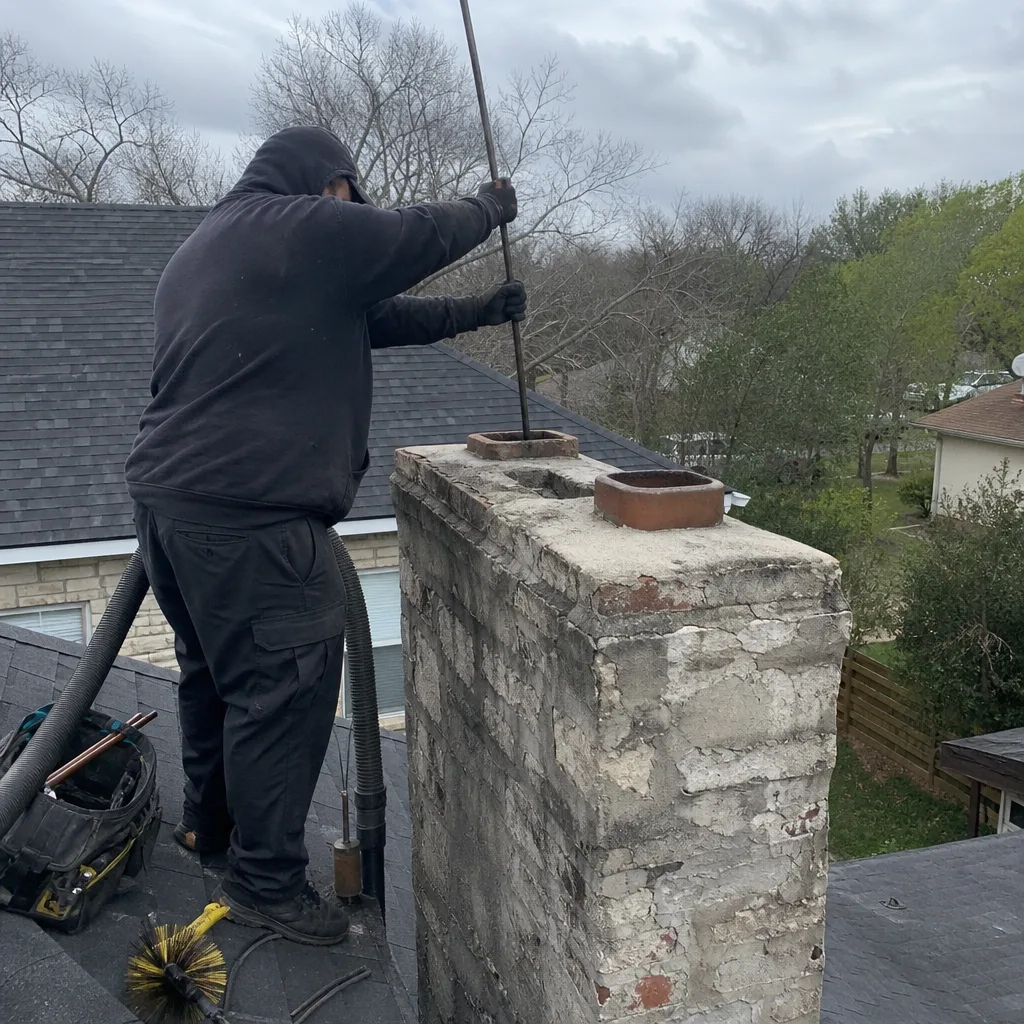 Before
 After
AfterChimney Cleaning Warning Signs: A Denton Homeowner’s Reference Guide
White staining on the outside of a chimney looks like a paint problem. It is actually efflorescence - water moving through masonry from the inside - and it reliably precedes spalling, liner cracking, and eventually carbon monoxide intrusion into the living space. In Denton, where summer temperatures routinely hit 100°F and winter nights drop below freezing, chimneys endure more thermal cycling than most national guides account for. This guide and our Complete Guide to Chimney Cleaning in Denton explain the failure mechanism behind each warning sign so you can distinguish cosmetic issues from life-safety hazards before they become expensive emergencies.
Quick Answer
The most critical chimney warning signs for Denton homeowners are: efflorescence or white staining on exterior brick (indicates active water intrusion), smoke drafting back into the room (blockage or liner failure), a persistent campfire or asphalt smell even when not in use (creosote accumulation), and visible cracks in the firebox or flue tiles (structural compromise requiring immediate attention). Most of these conditions develop silently; a camera-scan inspection is the only way to confirm what stage of damage exists inside the flue, as covered in our DIY vs Professional Chimney Cleaning guide.
Table of Contents
- Exterior Warning Signs: What Your Chimney’s Outside Reveals
- Interior & Firebox Signs: Damage You Can See from Inside
- Smell as a Diagnostic Tool: What Odors Reveal About Creosote Stage
- Hidden Damage Only a Camera Scan Finds
- Denton-Specific Warning Signs: Clay Soil and Thermal Cycling
- How Camera Documentation Protects Your Insurance Claim
- What Each Warning Sign Costs to Fix in Denton
- A Denton Homeowner’s Maintenance Schedule
BeforeAfterExterior Warning Signs: What Your Chimney’s Outside Reveals
Exterior symptoms are often the most misunderstood because they appear cosmetic. They’re not. Each signals a specific failure mechanism already in progress.
Efflorescence (White Powdery Staining)
That white, chalky residue on brick isn’t paint failure or age. It’s efflorescence - soluble salts carried to the surface by water migrating through the masonry from the inside out. The mechanism is straightforward: water enters through crown cracks, deteriorated mortar joints, or failed flashing, dissolves salts in the brick and mortar, then evaporates at the surface leaving the crystalline deposit.
Why this matters in Denton specifically: our clay soils shift seasonally, stressing chimney foundations and opening hairline cracks that admit water. We’ve inspected chimneys in the Southridge and Oakmont neighborhoods where efflorescence appeared within 18 months of construction due to settling-related crown separation. The white staining is stage one. Stage two is spalling - the face of the brick popping off in thin sheets as freeze-thaw cycles expand the water inside. Stage three is liner deterioration and potential CO intrusion.
What to check: efflorescence that returns after cleaning indicates active water entry, not past moisture. If you can scrape it off and it reappears within a month, the water source is ongoing.
Spalling Brick and Deteriorated Mortar Joints
Spalling occurs when water trapped in brick freezes and expands, fracturing the surface. In Denton’s climate, a single chimney can experience 50+ freeze-thaw cycles annually. The brick face flakes away, mortar joints erode to powder, and the structural shell weakens.
Spalling near the roofline often indicates a failed chimney crown - the concrete cap that sheds water away from the flue. A proper crown has a minimum 2-inch overhang and a drip edge underneath. We’ve replaced crowns in Robson Ranch and Cross Oaks Ranch where the original builder installed a flat wash coat instead of a formed crown, leading to complete brick deterioration within 8 years - a scenario we detail in How to Hire a Chimney Cleaning Contractor in Denton.
Rust Staining on Exterior Masonry
Vertical rust streaks indicate corroded metal components - typically the chimney cap, chase cover, or deteriorated flashing. The mechanism: galvanized steel exposed to acidic flue gases and moisture corrodes from the inside out. By the time rust appears on the exterior, the metal is often perforated. A rusted chase cover on a prefabricated chimney allows water directly onto the firebox and damper assembly.
We source replacement caps and chase covers from Gelco and Famco through our Haven buying network. Stainless steel or copper eliminates this failure mode entirely.
Chimney Leaning or Separation from the House
A chimney that tilts away from the structure or shows a widening gap at the roofline indicates foundation failure - often from Denton’s expansive clay soils. The mechanism: soil swells when wet and shrinks when dry, creating differential settlement. A chimney on its own footing moves independently from the house slab. The gap admits water, and in severe cases the chimney can collapse.
This is not a sweep issue. It’s a structural emergency requiring engineering evaluation. We’ve referred homeowners in Lantana and Savannah to foundation specialists before addressing the chimney rebuild.
Interior & Firebox Signs: Damage You Can See from Inside
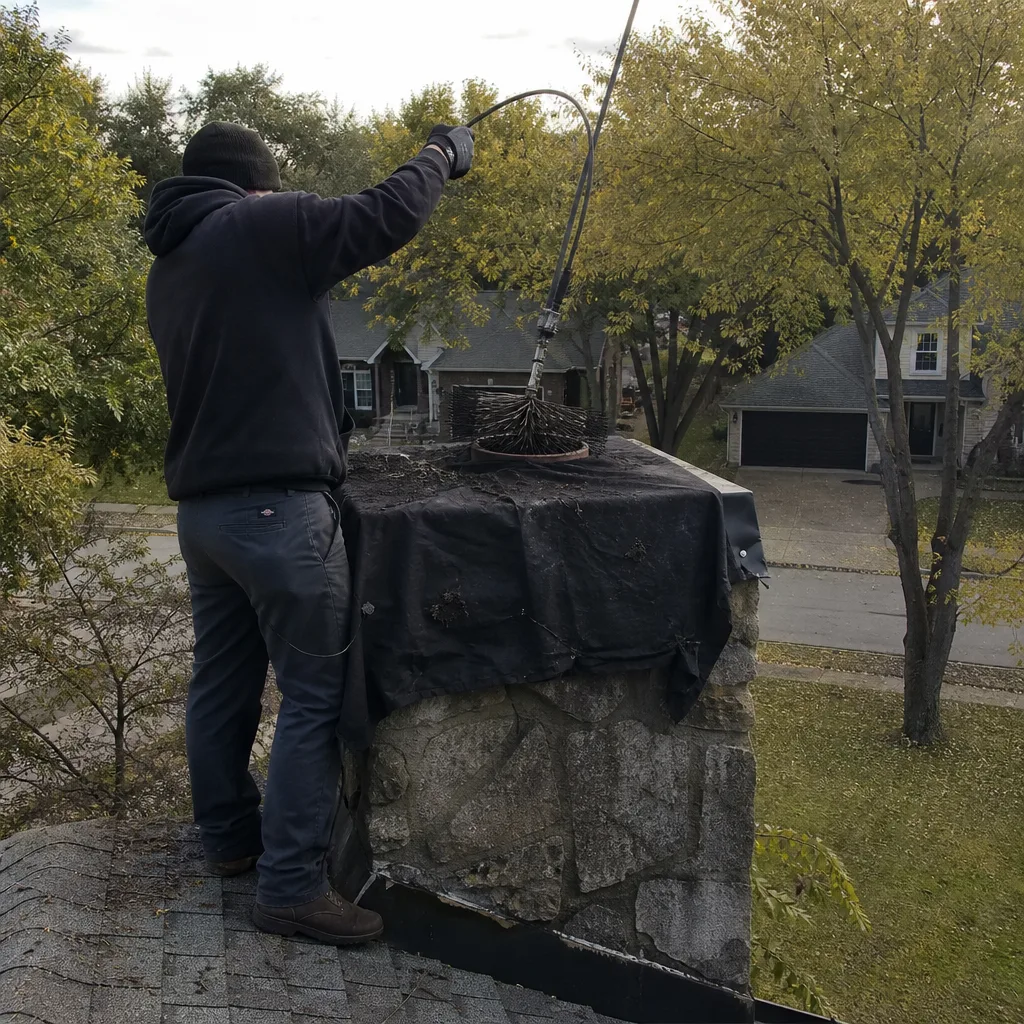
Firebox symptoms are the most immediately relevant to occupant safety because they indicate conditions that can allow fire or combustion gases into living spaces.
Cracked or Missing Firebrick
Firebrick protects the surrounding structure from temperatures exceeding 1,100°F during normal operation. Cracks allow heat transfer to combustible framing - a direct ignition hazard. The mechanism: thermal shock from rapid heating (building a large fire in a cold firebox) or long-term thermal fatigue.
Hairline cracks in firebrick are common and monitorable. Gaps larger than 1/8 inch, missing chunks, or cracks that extend through multiple bricks require replacement. We document firebox condition with photos from multiple angles under Haven Standard Clause 4.
Damaged or Missing Flue Tiles (Visible from Below)
If you can see gaps, cracks, or missing sections in the terracotta flue liner when looking up from the firebox, combustion gases are escaping the flue path. The mechanism: pyrolysis of adjacent combustibles occurs at temperatures as low as 200°F over extended exposure. A cracked liner also allows liquid creosote to seep into masonry, accelerating deterioration.
Partial liner damage sometimes permits relining with a stainless steel insert from DuraFlex or Olympia Chimney. Complete tile collapse requires full liner replacement. The camera scan determines which.
Smoke Staining Above the Firebox Opening
Black or brown discoloration on the mantel or wall above the fireplace indicates smoke spillage - combustion gases entering the room instead of exiting through the flue. The mechanism can be simple (closed or obstructed damper, cold flue, negative house pressure) or serious (flue blockage, insufficient flue capacity, or liner deterioration).
In Denton’s newer airtight construction, especially in developments like Arrowhead and Bellamy, exhaust fans and HVAC systems create negative pressure that overcomes natural draft. The fix may be a chimney fan or combustion air supply, not just a sweep.
Water in the Firebox
Standing water, damp ash, or rust on the damper indicates active water intrusion from above. The mechanism: failed crown, cap, or flashing allows water directly into the flue. This accelerates liner deterioration, corrodes the damper, and destroys firebrick through repeated wet-dry cycling.
Water in the firebox during or after rain is a definitive sign that exterior waterproofing has failed. The source must be identified before interior repairs have any lasting value.
Smell as a Diagnostic Tool: What Odors Reveal About Creosote Stage
Most warning sign guides ignore smell entirely. They shouldn’t. Creosote progression has a distinct olfactory signature, and identifying the stage determines both urgency and cost.
Stage 1 Creosote: Campfire or Slight Wood Smoke
A faint campfire smell when the fireplace isn’t in use, especially on humid days, indicates Stage 1 creosote - a flaky, sooty deposit that’s easily removed with standard brushes. The mechanism: incomplete combustion deposits unburned hydrocarbons that condense on cool flue surfaces. Stage 1 is normal, expected, and addressed with routine sweeping.
In Denton, where many homeowners burn oak and pecan from local tree services, Stage 1 accumulation typically requires annual sweeping for moderate use (2-3 fires weekly during season).
Stage 2 Creosote: Asphalt or Roofing Tar
A sharp, chemical asphalt smell indicates Stage 2 creosote - hardened, porous deposits that resemble black corn flakes or honeycomb. The mechanism: repeated heating and cooling cycles cause Stage 1 deposits to melt and resolidify, trapping gases and creating a dense, fuel-rich layer. Stage 2 cannot be removed with standard brushes.
Removal requires rotary chain systems or chemical treatment, adding $150-$300 to standard sweep costs. The smell is your early warning - by the time you see Stage 2 deposits, removal is more invasive.
Stage 3 Creosote: Sharp, Acrid, or Chemical Burn
A penetrating acrid or solvent-like odor indicates Stage 3 creosote - glazed, tar-like deposits that are essentially condensed fuel. The mechanism: sustained low-temperature fires or restricted airflow cause prolonged condensation of flue gases, building a glossy, hardened layer. Stage 3 is highly combustible and the leading cause of chimney fires.
Stage 3 removal in Denton typically costs $400-$800 and may require multiple treatments. In severe cases, liner replacement is more economical than removal. This is not a “wait and see” condition.
| Creosote Stage | Odor Signature | Removal Method | Typical Cost in Denton |
|---|---|---|---|
| Stage 1 | Campfire, faint wood smoke | Standard rotary brushes | $180-$250 (included in sweep) |
| Stage 2 | Asphalt, roofing tar | Rotary chains or chemical treatment | $330-$550 |
| Stage 3 | Acrid, chemical, solvent-like | Chemical treatment, possibly multiple sessions; liner replacement if severe | $400-$800+ or $1,800-$3,500 for liner |
If you smell any of these odors, a camera inspection determines the actual stage. Call Chimney Sweep in Denton at (940) 373-6912 - estimates are free.
Hidden Damage Only a Camera Scan Finds
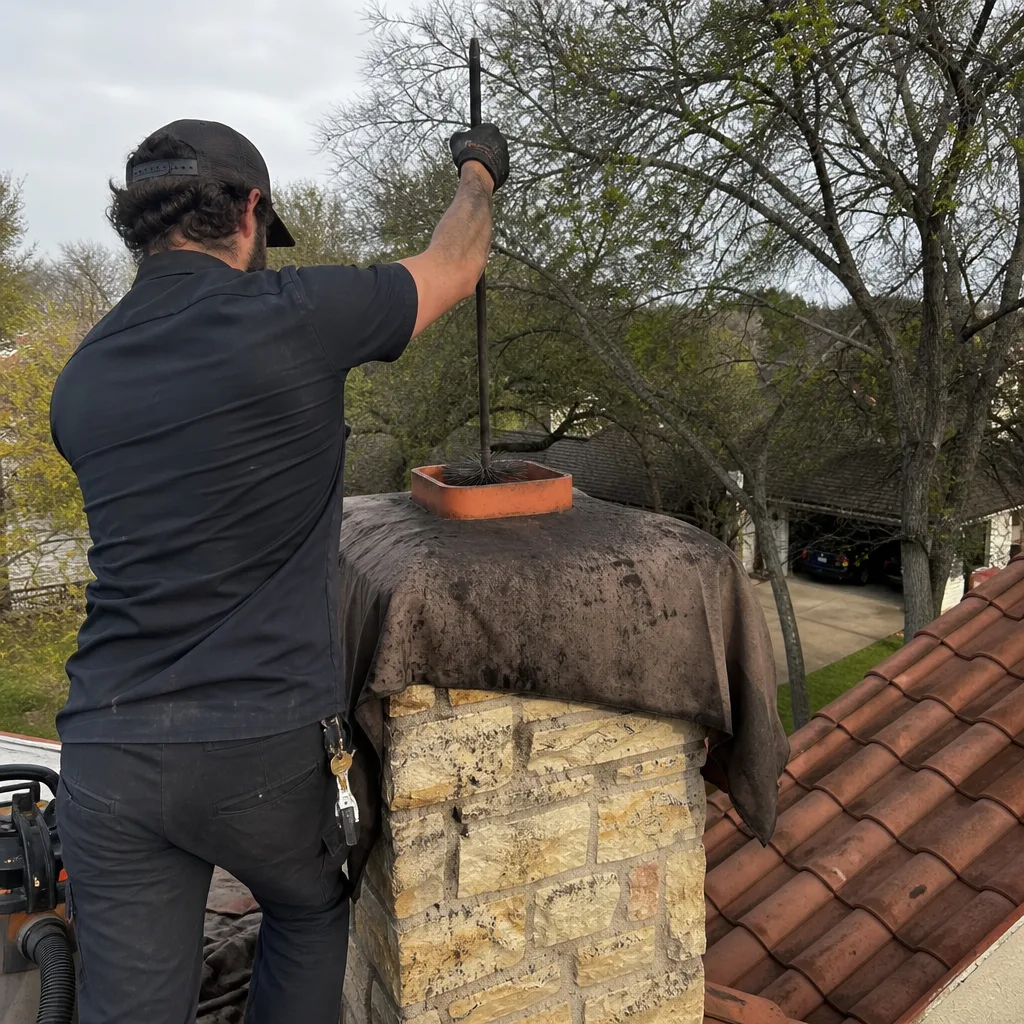
The most dangerous chimney conditions produce no visible exterior or interior symptoms. They’re found only with a camera lowered through the flue - the NFPA 211 Level 2 inspection that Emberly Chimney Cleaners Denton home makes standard on every visit.
Flue Liner Gaps and Misaligned Tiles
Terracotta flue liners are installed in 2-foot sections. Over time, thermal expansion, foundation movement, or chimney fires shift these sections apart, creating gaps that allow combustion gases into surrounding masonry. From below, the liner may look intact. The camera reveals the truth.
We’ve found 3/4-inch gaps between liner sections in 12-year-old chimneys in Denton’s Paloma Creek development - invisible from the firebox, undetectable without camera documentation. The homeowners had no symptoms. The gaps were venting carbon monoxide into the wall cavity.
Hidden Creosote Buildup in Smoke Chamber
The smoke chamber - the area above the damper that funnels smoke into the flue - is inaccessible to standard brushes and invisible from below. It’s also where the most dangerous creosote accumulation occurs because temperatures are lower and airflow more turbulent. A camera scan with side-viewing capability reveals parging loss, corbeling defects, and creosote deposits that would otherwise remain until a chimney fire occurred.
Liner Deterioration in Factory-Built Chimneys
Metal chimneys have inner liners that can separate from outer walls, creating dangerous air gaps. Factory-built fireplaces in Denton homes from the 1990s-2000s often show liner seam separation or corrosion at the offset (where the chimney turns to avoid framing). These defects are only visible with a camera and specific lighting.
How Emberly Documents What Others Miss
Clause 4 of the Haven Standard requires a documented photo record on every job - not as an upsell, but as standard practice since 2009. Every customer receives dated, labeled images of their flue condition before and after any work. This archive has resolved insurance disputes, documented pre-existing conditions in home sales, and identified progressive deterioration that annual comparisons reveal.
A flashlight look from the top or bottom cannot produce this record. We’ve reviewed competitor “inspections” that consisted of a tech shining a light up the flue and declaring it “fine.” That’s not an inspection. It’s a guess.
Denton-Specific Warning Signs: Clay Soil and Thermal Cycling
National chimney guides miss conditions specific to North Texas. Denton’s combination of expansive clay soils, extreme summer heat, and rapid temperature swings creates failure modes that don’t appear in generic references.
Thermal Shock Cracking
Denton summer temperatures regularly reach 105°F, while winter fires heat flue liners to 400-600°F within an hour. The temperature differential between the sun-heated exterior and fire-heated interior creates thermal stress that accelerates liner cracking. We’ve documented more thermal shock fractures in August and September - when homeowners light first fires after months of 100-degree days - than any other period.
The warning sign: a cracking or popping sound when first lighting a fire after summer dormancy. This is the liner or firebrick expanding against constrained masonry. Repeated occurrences warrant camera inspection.
Foundation Movement from Expansive Clay
Denton’s black clay soils expand up to 10% when wet and shrink dramatically during drought. Chimneys on independent footings move differently than house slabs, creating stress fractures at the roofline and in the firebox. We’ve rebuilt chimneys in Cooper Creek and Pecan Creek where foundation movement separated the chimney from the house by more than 2 inches.
Warning signs: new exterior cracks that follow mortar joints (step cracks), doors or windows near the chimney that bind seasonally, or gaps that open and close with weather changes.
Hail Damage to Chimney Caps and Crowns
Denton’s position in Tornado Alley means regular hail exposure. Golf-ball-sized hail fractures concrete crowns, dents metal caps, and dislodges chimney pots. The damage may not cause immediate leaks but creates entry points that worsen over subsequent seasons.
After major hail events, we perform crown integrity assessments that include tapping the crown surface with a hammer - a hollow sound indicates delamination or internal fracture. We replaced 23 crowns in Denton following the March 2023 hail event, many on chimneys that had “passed” visual inspection from the ground.
Wind-Driven Rain Intrusion
Denton’s prevailing south winds, amplified by open prairie terrain, drive rain into chimney openings that would stay dry in calmer climates. A standard chimney cap with standard mesh sides may not prevent wind-driven water entry. We specify wind-resistant caps with solid top panels and side vents from Copperfield for exposed locations.
How Camera Documentation Protects Your Insurance Claim
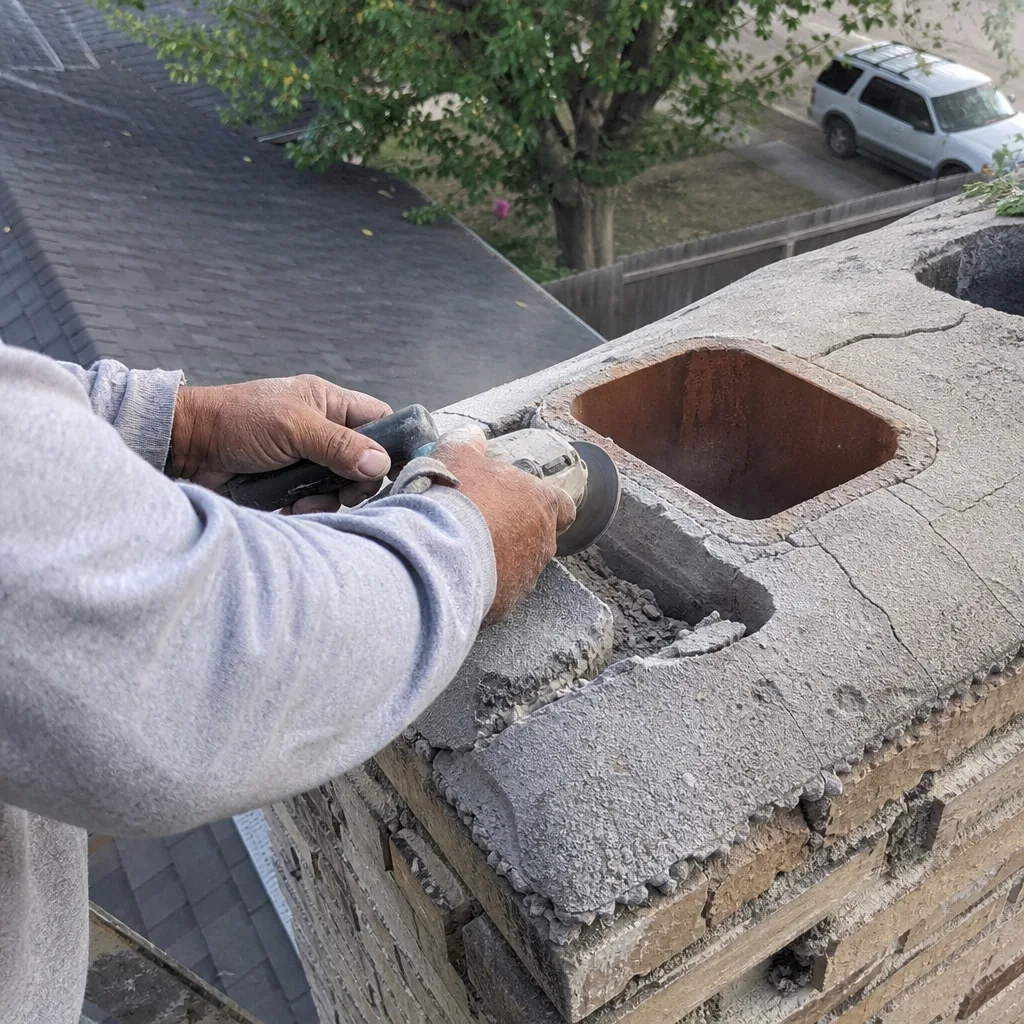
Chimney damage claims are among the most disputed homeowner insurance filings. Insurers routinely deny claims for “pre-existing conditions” or “lack of maintenance.” Camera documentation changes the negotiation.
The Before/After Record
Clause 4 of the Haven Standard requires dated, labeled photographs of flue condition at every visit. Over years, this creates a progressive record that establishes when damage began. If your 2019 scan shows intact liner tiles and your 2024 scan shows a crack at the same location, the damage is demonstrably new - not pre-existing.
We’ve provided this documentation for Denton homeowners in Hickory Creek and Providence whose insurers initially denied lightning strike and hail claims. The dated photo record reversed every denial.
Establishing Maintenance Compliance
Most policies require “reasonable maintenance” for chimney coverage. A documented sweep and inspection record every 12 months satisfies this requirement explicitly. Without documentation, you’re relying on memory and receipts - evidence that insurers routinely challenge.
Pre-Sale Disclosure Protection
Texas property disclosure requires sellers to report known defects. A camera scan before listing identifies conditions that must be disclosed - or repaired. We’ve performed pre-listing inspections for Denton sellers who used the documented “clean bill” as a marketing asset, and for others who addressed issues proactively rather than under buyer-negotiated pressure.
Our Chimney Repair in Denton includes full documentation packages for real estate transactions.
What Each Warning Sign Costs to Fix in Denton
Specific pricing helps you evaluate urgency and budget. These ranges reflect Denton’s market for professional chimney work in 2024-2025, using materials from our Haven buying network.
| Warning Sign / Condition | Typical Repair | Cost Range in Denton |
|---|---|---|
| Stage 1 creosote (routine sweep) | Standard sweep with Level 2 inspection | $180-$250 |
| Stage 2 creosote removal | Chemical treatment or rotary chains | $330-$550 |
| Stage 3 creosote / glazed removal | Multiple chemical treatments; possible liner replacement | $400-$800 or $1,800-$3,500 for liner |
| Efflorescence treatment (source only) | Crown repair, tuckpointing, or flashing replacement | $450-$1,200 |
| Spalling brick repair (localized) | Brick replacement, tuckpointing | $800-$2,500 |
| Crown replacement (formed concrete) | Demolition, forming, pouring proper crown | $1,200-$2,800 |
| Stainless steel liner installation | Insulated flexible liner, top plate, connection | $1,800-$3,500 |
| Firebox rebuild (partial) | Firebrick replacement, refractory mortar | $1,500-$3,000 |
| Chimney cap / chase cover replacement | Stainless steel or copper cap | $350-$900 |
| Complete chimney rebuild (above roofline) | Demolition, reconstruction, new liner | $4,500-$12,000 |
Every job receives a written price before work starts - Haven Standard Clause 1. No exceptions. We also offer a Free Second Opinion on any competitor’s written estimate.
A Denton Homeowner’s Maintenance Schedule
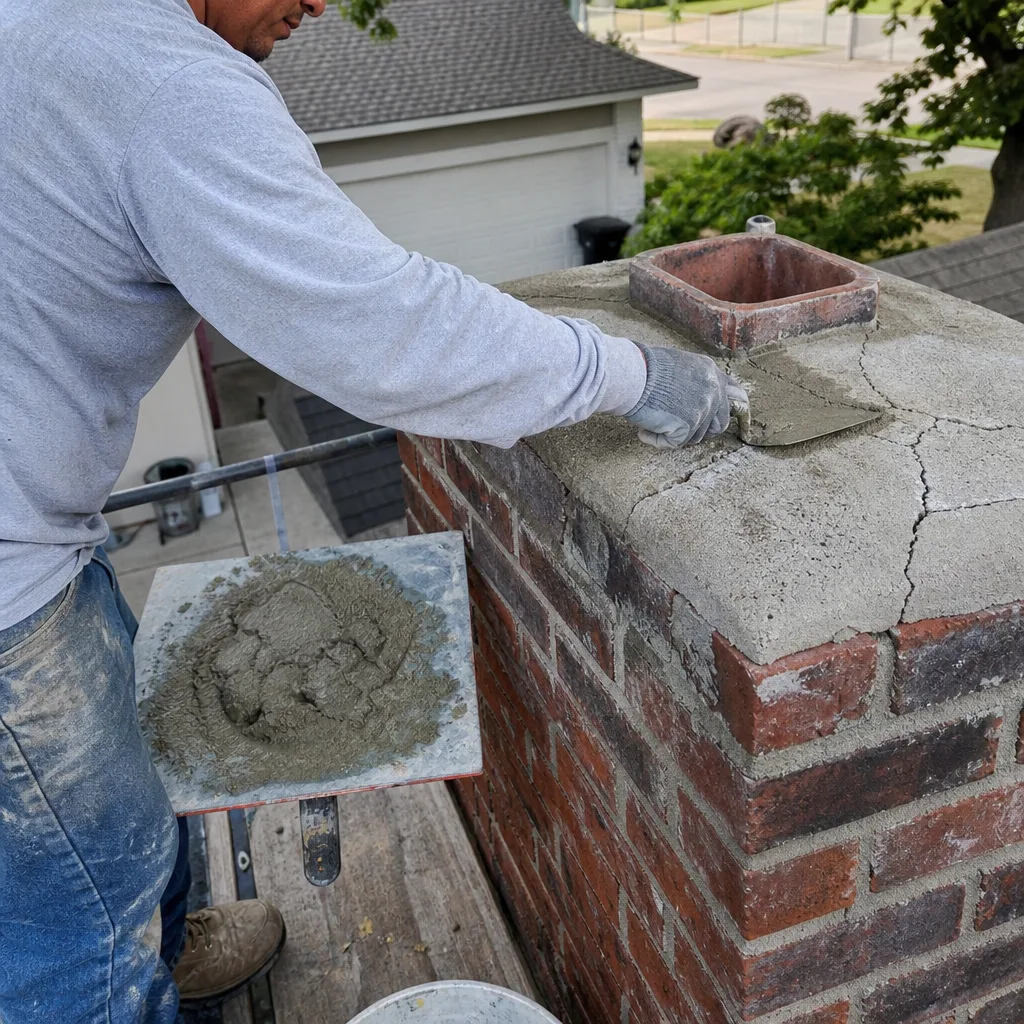
Warning signs are useful, but prevention is cheaper. This schedule accounts for Denton’s climate and typical burning patterns.
- Annual Level 2 inspection - Every September, before first fire. This timing identifies summer damage (hail, thermal stress) and allows repair before burning season. Camera documentation establishes year-over-year comparison.
- Sweep when creosote reaches 1/8 inch - NFPA 211 standard. For Denton homeowners burning 2-3 times weekly, this typically means annual sweeping. Occasional users may extend to 18 months, but the inspection remains annual.
- Post-hail event exterior check - After any hail exceeding 1 inch diameter, examine the crown and cap for fresh cracking or displacement. Schedule professional assessment if damage is suspected.
- Foundation movement monitoring - Note any new exterior cracks or interior drywall cracks near the chimney. Photograph seasonally; progression indicates need for structural evaluation.
- Cap and flashing inspection every 3 years - Even intact components degrade. Proactive replacement before failure prevents water damage that costs 10x more to repair.
- Pre-sale inspection - Before listing any Denton home, obtain documented camera scan to disclose or address conditions proactively.
Common Mistakes to Avoid
- Assuming no smell means no creosote. Stage 2 and 3 creosote often produce minimal odor until disturbed by a hot fire. The absence of smell is not evidence of safety.
- Treating efflorescence with paint or sealant. Covering the symptom traps water inside, accelerating spalling and freeze-thaw damage. The water source must be eliminated first.
- Using the fireplace after noticing smoke spillage. Even occasional smoke in the room indicates draft failure that can worsen suddenly. Stop use and schedule inspection.
- Accepting a “flashlight inspection” as adequate. NFPA 211 Level 1 is a visual inspection from accessible areas only. It cannot find hidden liner damage, smoke chamber defects, or most creosote buildup. Level 2 with camera is the appropriate standard for any suspected issue.
- Ignoring Denton’s clay soil context. Cracks that appear seasonal, or that worsen during drought and close during wet periods, indicate foundation movement that will progressively damage the chimney structure.
- Delaying repair based on “it still works.” Chimneys fail catastrophically, not gradually. A liner crack doesn’t cause a small fire - it causes a house fire or CO poisoning event. The functional fireplace masks the growing hazard.
When to Call a Professional
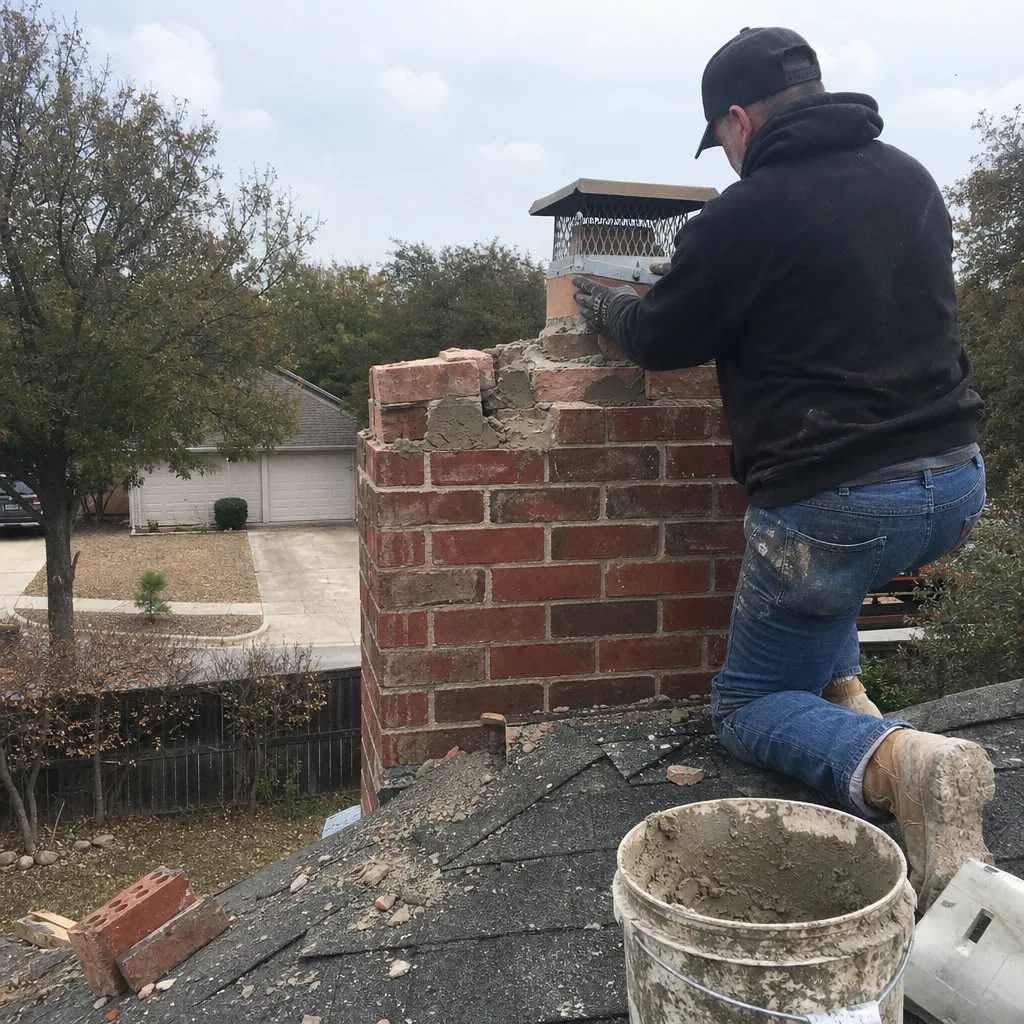
Call immediately if you observe smoke entering the room during normal operation, visible cracks in the flue liner or firebox, water in the firebox, or a persistent acrid odor. These conditions indicate active hazards that worsen with each use. For less urgent signs - efflorescence, minor spalling, or routine maintenance - schedule within the current season before burning resumes.
Emberly Chimney Cleaners Denton offers free estimates in Denton - call (940) 373-6912. Every estimate includes a written price, written scope, and written warranty before any work begins. Our background-checked, uniformed technicians arrive with license information displayed, and you’ll receive a text when they’re on the way.
Frequently Asked Questions
A professional chimney sweep with NFPA 211 Level 2 camera inspection in Denton typically costs $180-$250. This includes the documented photo record required under Haven Standard Clause 4. Stage 2 or 3 creosote removal adds $150-$550 depending on severity. Call (940) 373-6912 for an exact quote - estimates are free.
You need a new liner if the existing liner is cracked, misaligned, or missing sections - conditions that allow combustion gases and heat into surrounding structures. A camera scan determines this definitively. We show you the footage and explain what you’re seeing before recommending any work. If the liner is intact, we say so plainly. Call (940) 373-6912 for a free second opinion on any liner replacement quote.
Annually for regular use (2+ fires weekly during season), or when creosote buildup reaches 1/8 inch - whichever comes first. Denton’s oak and pecan firewood produces more creosote than dry hardwoods, and our temperature swings accelerate liner stress that inspections catch early. Occasional users may inspect annually and sweep every 18-24 months. Call (940) 373-6912 to schedule.
Skipped maintenance allows creosote to progress from removable Stage 1 to hardened Stage 3, which is the leading cause of chimney fires - over 25,000 annually in the U.S. It also permits water intrusion that destroys liners and masonry from the inside, and misses liner cracks that vent carbon monoxide into living spaces. The cost of prevention is a fraction of the cost of repair or the consequences of failure. Call (940) 373-6912 for a free estimate.
An asphalt or tar smell indicates Stage 2 creosote - hardened deposits that release odor when warm, humid air moves through the flue. Denton’s summer humidity and temperatures activate these deposits even without a fire. The smell is a diagnostic signal that removal is needed before the next burning season. Call (940) 373-6912 - we can assess the stage and provide a written price for treatment.
A flashlight inspection from the firebox or roof can identify obvious damage but cannot evaluate the full flue length, smoke chamber, or hidden liner gaps. NFPA 211 specifies Level 2 inspection with camera for any suspected issue, home sale, or change in system use. We’ve found critical defects in chimneys that “looked fine” from below. The camera investment is why we include it on every visit - no extra charge. Schedule at (940) 373-6912.
The Bottom Line
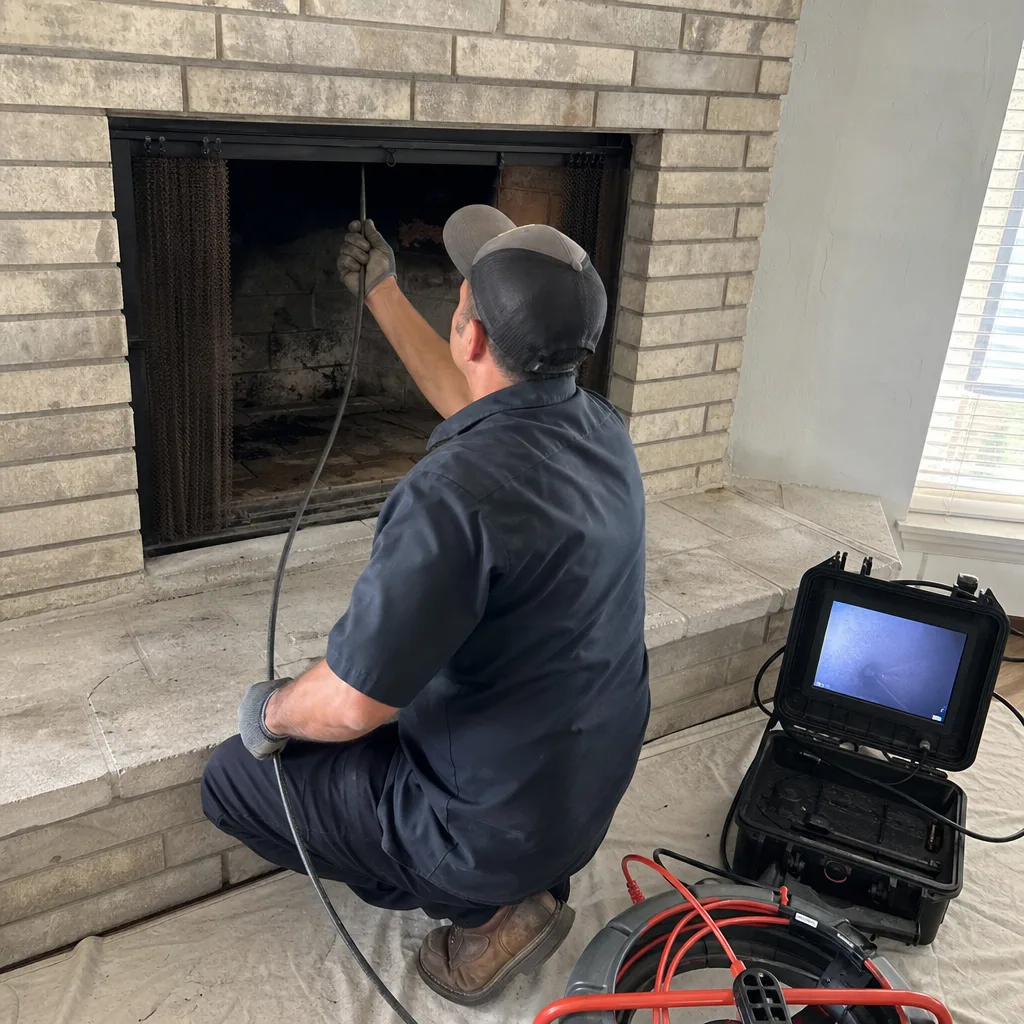
Chimney warning signs are not mysterious omens - they’re physical evidence of specific failure mechanisms. White staining means water is moving through masonry. Asphalt smell means creosote has hardened to a combustible stage. Smoke in the room means draft failure or liner breach. Understanding what each sign indicates, rather than simply labeling it “bad,” lets you prioritize urgency and evaluate repair scope.
In Denton, clay soils and thermal cycling create conditions national guides don’t address. A maintenance schedule that accounts for local climate, documented with camera scans that establish progressive condition, protects both safety and property value. The 38,000+ chimneys we’ve inspected since 2009 have taught us that the homeowners who fare best are those who treat warning signs as information, not alarm - and act on that information before the mechanism progresses to failure.
For a free estimate with written price, written scope, and written warranty before any work begins, call Emberly Chimney Cleaners Denton at (940) 373-6912. Live phone support is available 24 hours a day, 7 days a week.
Written by Corrine Halstead, Owner at Emberly Chimney Cleaners Denton, serving Denton since 2009.